Two months with Uzbekali Zhanibekov: How the Yasawi Mausoleum Museum Was Born
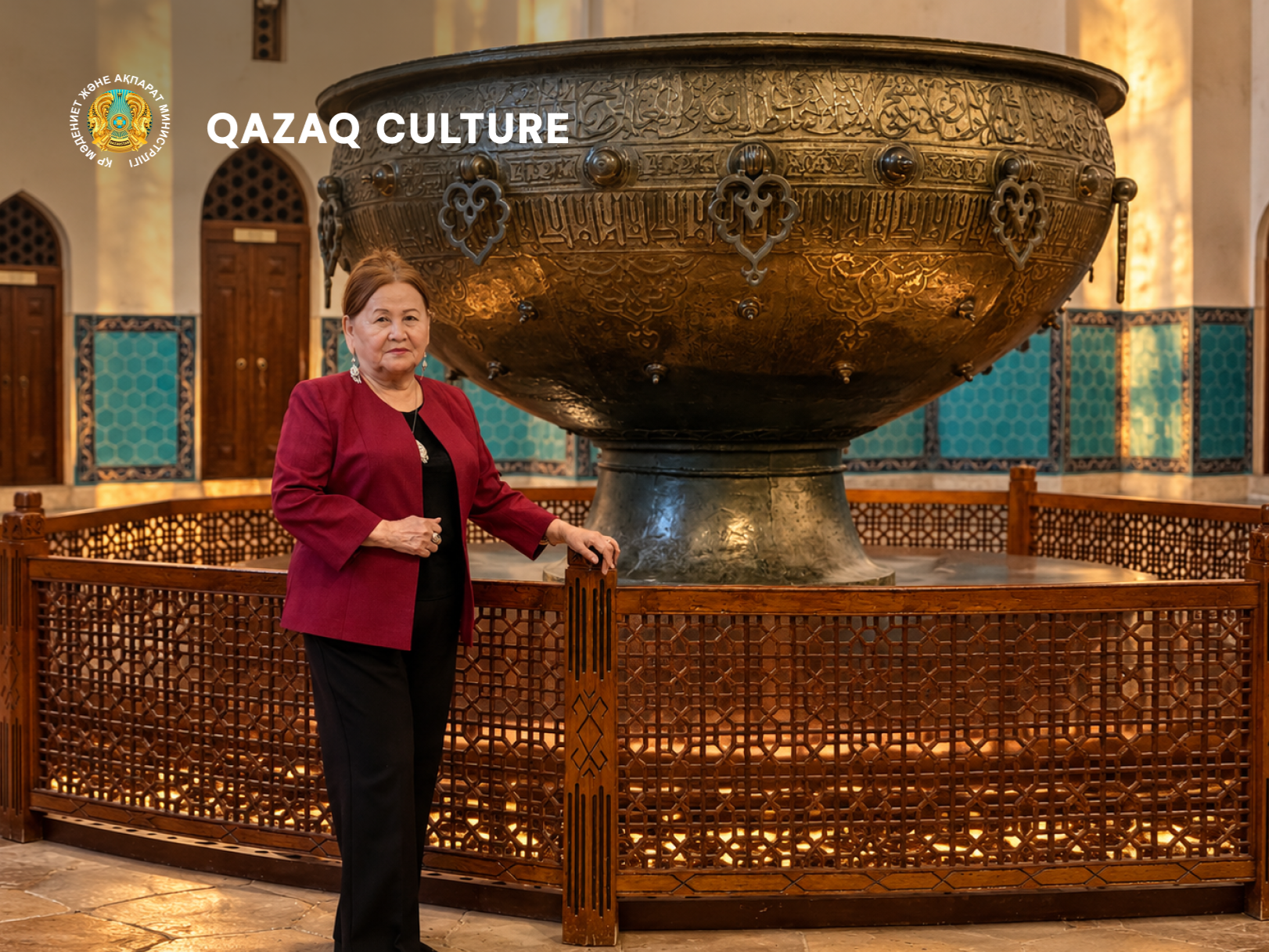
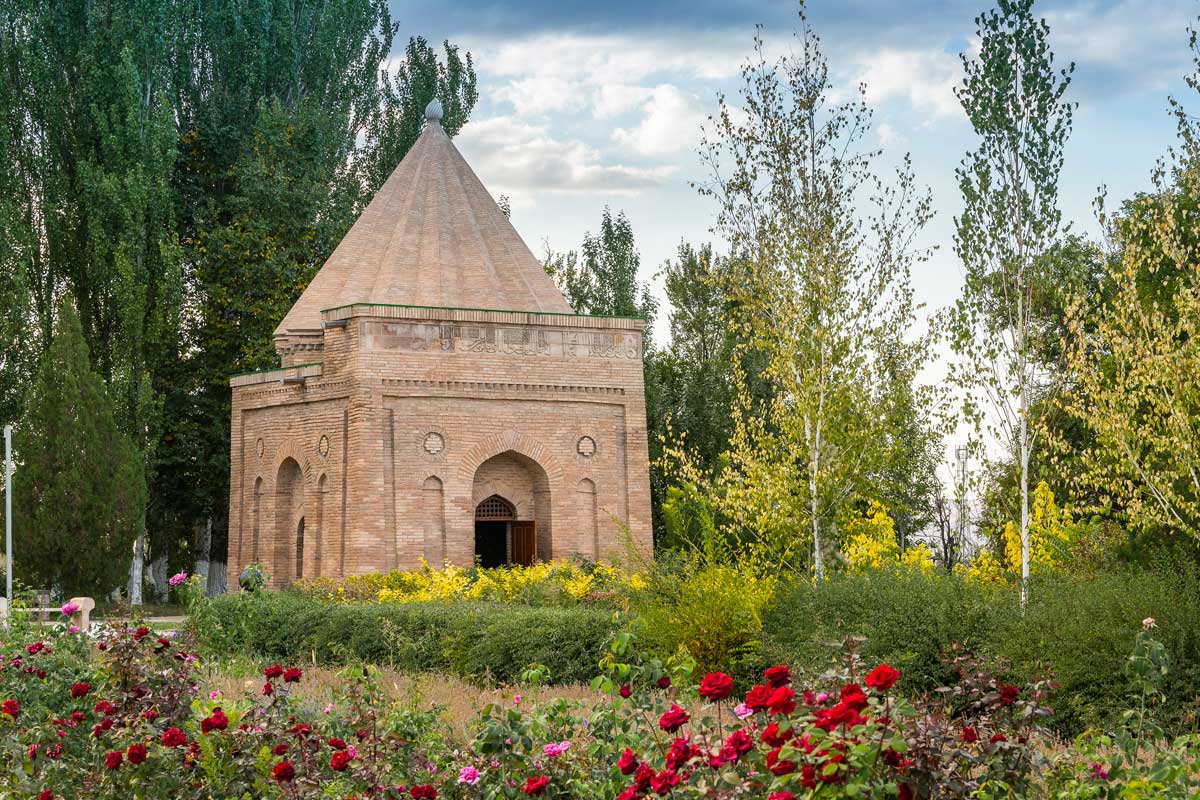
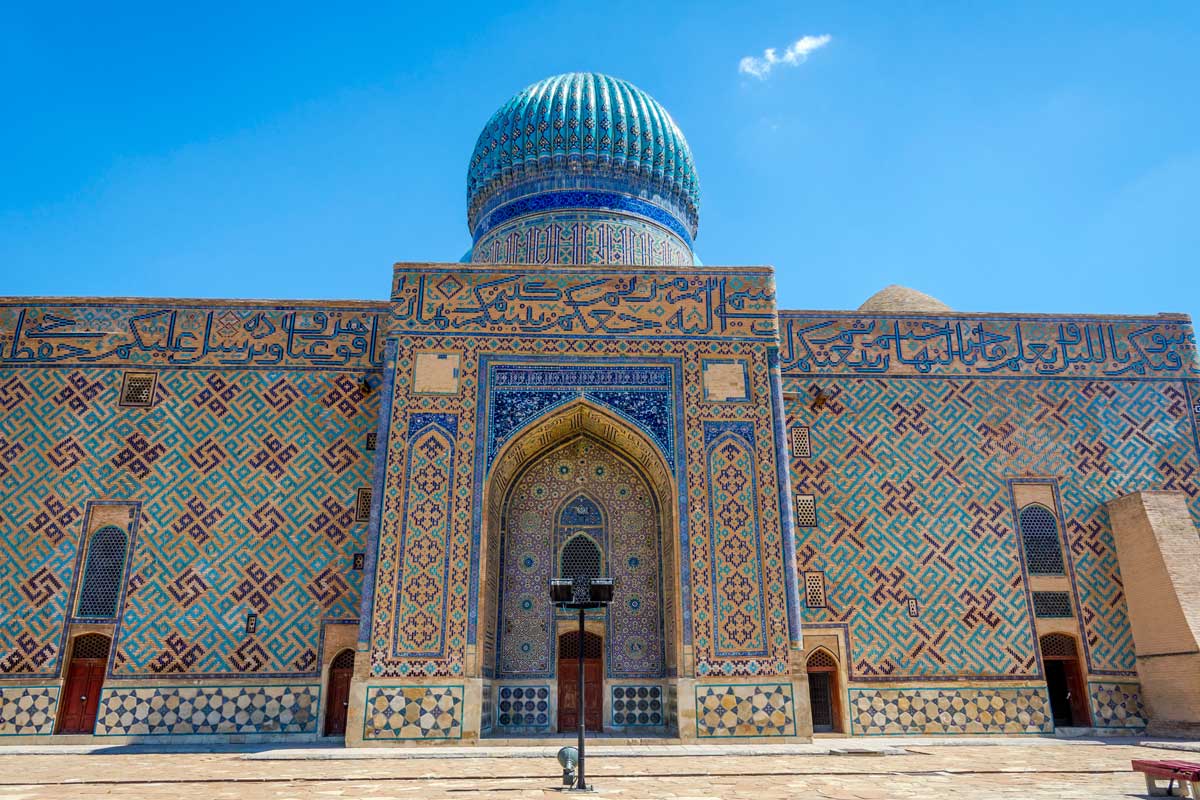
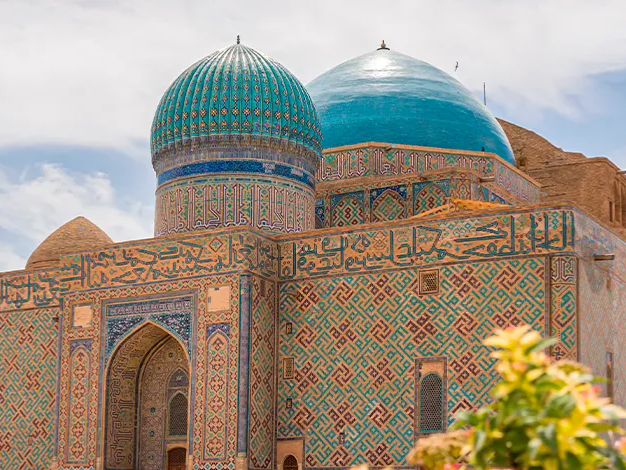
In the summer of 1978, Rakhiya Zhuzbayeva returned from Almaty to her native Turkestan after studying. She had a German language teaching diploma, but there were no jobs for the young specialist in the city schools. Little did she know that this failure would lead her to the work to which she would dedicate almost her entire life.After several weeks of fruitless searching, her mother suggested contacting the city party committee. There, Rakhiya was advised to visit the Khoja Ahmed Yasawi Mausoleum – the monument was just being prepared for its new opening, and the work was being overseen by Deputy Minister of Culture Uzbekali Zhanibekov.Thus, in August 1978, her museum career began. And with it, an opportunity to witness from the inside one of the most important processes in the history of Turkestan's cultural heritage: the transformation of the Yasawi Mausoleum into a fully-fledged museum.Today, Rakhiya Suleimenkyzy Zhuzbayeva is a veteran museum professional, a museologist, and a person who has dedicated almost half a century to this field. In a conversation with Qazaq Culture, she recalls Uzbekali Zhanibekov's daily work, how the first exhibition was assembled, why he was thinking about new museum technologies back in the 1980s, and how the return of Taikazan became a shared cause for many people.– You came to the museum completely by chance. What was that first August of 1978 like?– Indeed, chance played a huge role. I graduated from the German language teacher training department at the Almaty Institute of Foreign Languages and returned to Turkestan. I spent the entire summer trying to find a job in my field, visiting practically every school, but there was no work to be found.Then my mother suggested we contact the city party committee. The second secretary received us and told us that major work was underway to create a museum at the Khoja Ahmed Yasawi Mausoleum, and that Deputy Minister of Culture Uzbekali Zhanibekov was located there.So, on August 10th or 11th, I saw the mausoleum itself for the first time with completely different eyes, and Uzbekali Aga, who literally lived and breathed this work. Until September 30th, when the Republican Museum of the Khoja Akhmed Yasawi Architectural Complex opened, we saw him almost every day. He gave us assignments, explained things, and showed us things. Over those few weeks, I realized how little I knew about the history and traditional culture of my own people. Sometimes we even felt embarrassed by our ignorance, but it was then that we truly began to learn.– You often call those few weeks a real school. What was the most memorable thing about Zhanibekov himself?– I always try to clarify: it would be an overstatement to say that I worked with Uzbekali Zhanibekov for a long time. I witnessed his intense work for about two months on the creation of the museum. But sometimes that's enough to understand a person.I was amazed by his knowledge. History, ethnography, traditional life, crafts – he had a profound understanding of everything.Earlier, while working in Arkalyk, he created a museum and built one of the first exhibitions around the theme "From the Sakas to the Modern Kazakh." It's important to understand the time when this was happening. This approach required not only professional knowledge but also a certain amount of courage.At the same time, in everyday life, he was a remarkably simple man. He never judged people by their position, background, or status. If he saw curiosity and a desire to learn, he helped.We observed how he could work on some unfinished piece of work alongside ordinary workers. I never heard him speak arrogantly to people.Sometimes something else was surprising: a man of such stature could show us with his own hands how to properly twist thread, embroider, or perform other completely mundane tasks. For him, traditional culture didn't exist in the form of abstract reasoning. He knew it practically—through objects, gestures, and crafts.– Today, the Yasawi Mausoleum is perceived almost naturally as a museum space. But what did the collection look like in 1978?When the decision was made to create a museum, the mausoleum itself contained only a few works of medieval applied art, surviving from the time of Amir Timur.And a museum cannot be created without objects.Therefore, even after the decision to open the museum, Uzbekali Aga instructed specialists to collect historical materials, traditional household items, and ancient books related to the teachings of Khoja Ahmed Yasawi.He also worked on this personally. Several ethnographic objects that had previously been housed in the mausoleum were returned from the collections of the Central State Museum of Kazakhstan in Almaty.The exhibition itself was also being created at the same time. There were six large halls on the ground floor, and Uzbekali Aga developed a separate thematic concept for each. In terms of scale, it truly resembled the creation of several independent museums at once.Today we see a completed space, but back then, practically everything had to be assembled from scratch—the collection, the exhibition structure, the content of the tours.Did his work in Turkestan not end with the opening of the museum in the mausoleum?No. He continued to take an interest in the museum and assist with various issues.In 1979, the historic Eastern Bath Complex was converted into a museum. This was done not only to preserve the monument itself but also to showcase the depth of everyday culture. The exhibition even included an ancient text describing the rules of bathing.In 1980, the historic Friday Mosque on the complex's grounds was restored, and a museum of archaeological finds was opened there.But there's another episode that not everyone knows about.As early as the early 1980s, Uzbekali Aga wanted to organize a light and sound panorama on the mausoleum—essentially a prototype of what we now call video mapping. Similar performances were then shown on Registan Square in Uzbekistan.A script was prepared for Turkestan, and attempts were made to implement the project. As far as I know, the plan was never completed due to a lack of necessary funding. When large-scale multimedia performances are created on historic buildings today, it's interesting to realize that similar forms of heritage work in Turkestan were already being considered over forty years ago.– The museum collection has certainly changed over the past decades. What is it like today?– Currently, the museum-reserve's collection contains over 26,000 items registered by the state. About 70 percent of them are originals.But for a museum, quantity should never be more important than preservation.Particularly valuable originals cannot be kept on display permanently. Light, temperature, and humidity all affect the material. Therefore, one of the most important tasks today is creating high-quality copies of those items that could be damaged by prolonged display.A museum must simultaneously display its heritage to the public and preserve it for those who come after us. Sometimes, a very delicate balance must be struck between these two objectives.– One such complex item is the famous kabirzhapkysh, a shroud from a mausoleum. What have you learned about its history? This item was among the items Uzbekali Zhanibekov returned from the Central State Museum.At first, we didn't even realize its full historical value. Later, experts determined that it was a unique piece of decorative and applied art from the 14th-15th centuries.I was particularly interested in how it ended up in the Almaty museum's collections.In the 2010s, I made a special trip there to work with archival documents. I discovered a deed from 1926: it turns out the kabirzhapkysh was purchased for 25 rubles. Unfortunately, the name of the person who sold it is not indicated in the document.Today, the main problem is different – the condition of the item itself. The fabric is gradually deteriorating, peeling, and becoming extremely fragile. Therefore, it is necessary to address the issue of its further conservation and strengthening on a special base.For me, this is a good example of how a museum's work never ends when an item enters the collection. Sometimes, real research begins decades later.And, of course, it is impossible to talk about the history of the museum without Taikazan. How fair is it to attribute its return solely to the name of Uzbekali Zhanibekov?– I wouldn't say that the return of Taikazan is the work of one person.First and foremost, it was the will of the people. Many people wanted the sacred relic to return to its proper place.There were people who directly carried out the instructions, traveled, handled the paperwork and transportation. Their contribution should also be remembered in history.But the fact that Uzbekali Zhanibekov was one of the main initiators of the process is undeniable to me.Back in 1987–1988, he raised this issue at the state level, organized trips, and corresponded.I myself traveled to Leningrad, to the Hermitage, in August 1988. I was received by the museum's director, Boris Piotrovsky. He wrote a resolution in response to my official request stating that he did not object to the return of Taikazan and signed it.Therefore, the return of Taikazan is the story of a collective effort. But without the people who kept this issue on the agenda for years, the outcome could have been completely different.– You've dedicated almost half a century to museum work. What has changed most during this time?– A great deal has changed – Turkestan itself, the scale of the museum, and the demands placed on museum work.But the most important thing, in my opinion, remains the same.A museum doesn't exist for the sake of a pretty display case. Its purpose is to provide people with reliable, scientifically grounded knowledge of culture and history.This is especially acute when visitors from other countries come to Turkestan. It's not enough to simply show an ancient object. You need to understand its origin, era, purpose, and be able to explain all of this so that people truly understand what's in front of them.A modern tour guide must know history, speak languages, and constantly learn.In this sense, I often think back to 1978.Back then, alongside Uzbekali Zhanibekov, we also constantly felt that we didn't know enough. Perhaps it was precisely this feeling that became one of the main lessons of the museum profession for me: the deeper you delve into history, the more clearly you understand how much more there is to learn.