WELCOME TO KAZAKHSTAN

An unforgettable adventure awaits you

19

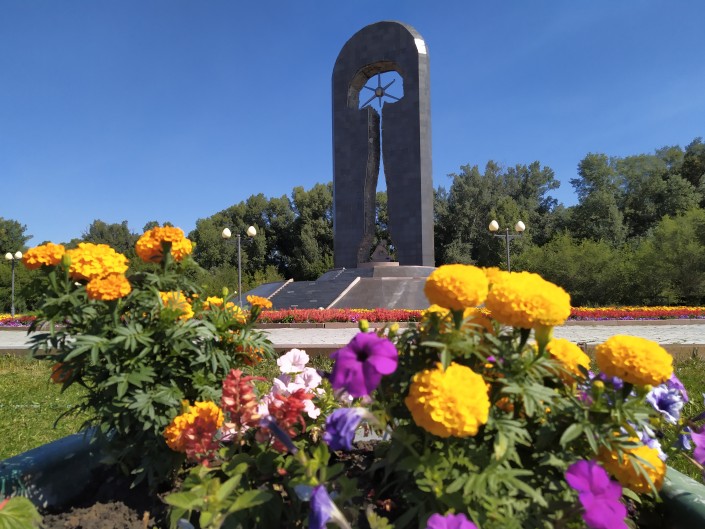
March 19 is Renewal Day. The tradition of spring tree planting continues on this day.

Album Art

Culture of the Great Steppe

Kazakhstan is located in the heart of Eurasia - at the intersection of key transportation routes. For millennia, the country's territory has served as a connecting bridge between the East and the West. Its strategic position has facilitated not only the active growth of trade but also the exchange of cultural and scientific achievements. The Great Silk Road passed through the lands of modern Kazakhstan. Caravans transported furs, gold, spices, and silk. Since ancient times, the vast steppes have united peoples and preserved many valuable artifacts. The word of Turkic origin 'Kazakh' means 'Free man,' and Kazakhstan is a country historically inhabited by freedom-loving nomads. At various stages of history, unique civilizations arose and developed here, and their heir is the modern state with a rich past and a multicultural heritage
ARTICLES

Martebeli Bauyrzhankyzy: Dombyra is a national treasure worth showing to the world

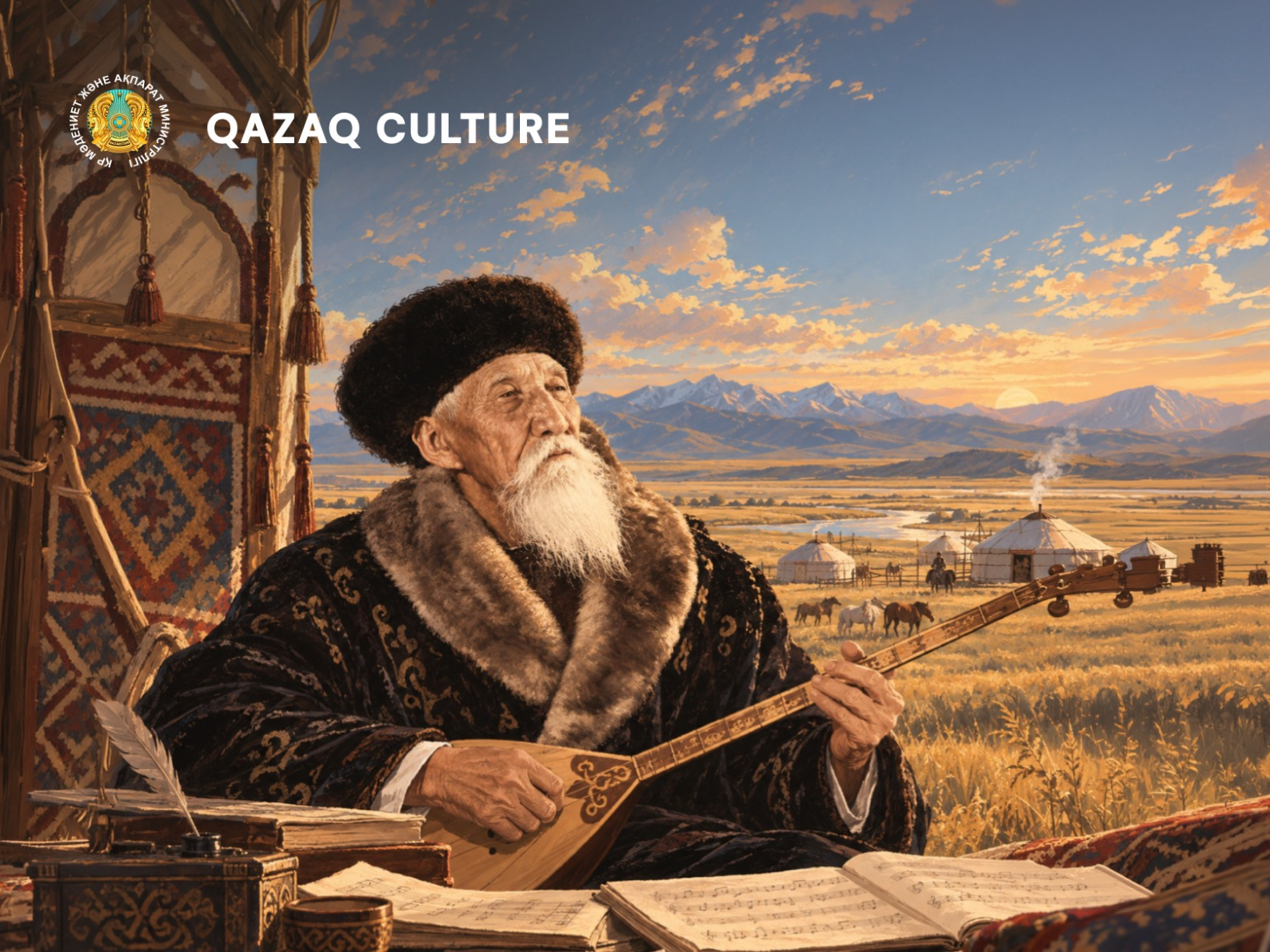
For the Kazakh people, the dombra is more than just a musical instrument; it is a symbol of cultural continuity and spiritual support. Its significance has evolved over centuries and is today perceived as an integral part of national identity. It is through the dombra that history, worldview, and value system have been passed down from generation to generation in Kazakh society for centuries. To understand how this tradition continues today, we spoke with dombra player and master Martebeli Bauyrzhankyzy, a specialist who develops the dombra not only as a performing art but also as a professional instrument-making craft.– What, in your opinion, is the place of the dombra in Kazakh culture and spiritual life?– I consider it exceptional and truly sacred. The dombra is an instrument that conveys the soul of the people, its history, and its destiny. Through its sound, people have expressed joy, sorrow, dreams, and innermost experiences. Kui is a kind of oral history. It reflects difficult periods in history, heroic deeds and heroism, melancholy and hope. Therefore, the dombra is rightfully considered the custodian of the people's spiritual memory.Moreover, the dombra cultivates unity, endurance, and depth of thought. Its soft, velvety sound warms the soul, brings inner peace, and purifies. Even today, the dombra has not lost its significance. On the contrary, it is becoming an important tool for preserving national identity and educating the younger generation.Its educational role was historically especially noticeable during turning points. Before military campaigns, sages, elders, and batyrs gathered the youth, performed terme and heroic epics to the accompaniment of the dombra, raising morale, and giving instructions. By glorifying the exploits of their ancestors, they awakened a sense of honor and courage in the hearts of the young. While in other countries the formation of spiritual and cultural guidelines is more often associated with the work of scientists and philosophers, in Kazakh society this mission was largely fulfilled by the kuishi, zhyrshy, and zhyrau. They served as spiritual mentors, shaping public consciousness and setting a moral direction.Therefore, the dombra and the entire repertoire associated with it—songs, kuis, termes, and epics—represent a priceless heritage, reflecting the centuries-old history of the people and their undying spirit.—How did you get involved in art? Where did your interest in dombra come from?—It's a truly interesting story. My love for dombra stems from several factors. My maternal grandmother was very fond of this instrument. She tried repeatedly to enroll my mother in a music club, but for various reasons, it didn't work out. Before I was born, my mother, having given birth to three sons, no longer hoped for a daughter. And then my grandmother said: if it's a girl, name her "Märtebeli"—may her dignity and status be high. This was a blessing of sorts. Since my grandmother held the dombra in such high regard, I'm told she prayed for a girl who would be a kyuishi player, gifted and creative. When I was seven, my late father brought home a dombra. This was in 2004—back then, there weren't any gadgets like today, at most a television. The instrument hung on the wall in our house, and I constantly looked at it with curiosity.My older brother was a creative person, and my father also loved to sing, but there were no professional musicians in the family. It was my brother who first introduced me to the dombra and began teaching me simple melodies. My mother, however, dreamed of me becoming a doctor, not a musician, so at first she didn't take my passion seriously. From the age of seven, I asked permission to go to music school. It wasn't until fifth grade that I was accepted into the dombra class at the Kazalinsky District Music School. Since then, I've continued to learn, develop, and grow alongside the dombra.– Tell us about your workshop. How are dombras made?– I've been working in this field for about ten years. Dombras are generally divided into amateur, semi-professional, and professional grades, depending on the quality level and requirements of the instrument. Accordingly, production times vary.For a professional dombra, the quality and aging of the wood are particularly important. We source most of our materials from abroad. We use birch, spruce, pine, maple, hornbeam, mahogany, and others. Dombra making is a complex and painstaking craft. The instrument must be not only aesthetically beautiful but also acoustically precise: the sound must be clear and full-bodied, the body comfortable for the player, and the neck resistant to deformation. The varnish coating is also very important. If the coating is too thick, the instrument is literally "muffled" and loses its sound. Dombras come with 7, 9, and 11 rivets. One of the key stages is shaping and assembling the body from individual parts. Intermediate-grade instruments are produced more quickly, as their components are easier to machine and glue together. However, woods such as hornbeam, amaranth, maple, or mahogany require lengthy drying and particularly careful assembly. Therefore, crafting a professional dombra can take several months.To ensure a clear and resonant sound, special attention is paid to the top. It should not be excessively thick, as its precise craftsmanship directly affects the timbre and depth of the sound. A combination of patience, experience, and an innate sense of the material plays a crucial role in this process.There are also dombras carved from a single piece of wood. In this case, the body is not assembled from parts, but is carved from a single block. This is a more complex technology, so these instruments vary in cost, production time, and quality. Sometimes, at the customer's request, the neck or body can be additionally decorated—for example, with gold or silver trim. – What do you see as the main meaning of your creative work and your work as a master?– For me, the most important thing is to make this instrument truly relatable and understandable to young people. The history of the people, their epics and terme—these are our inner cultural code. When its strings sound, a Kazakh's heart invariably responds, awakening a sense of belonging and pride. It's not just a musical instrument, but a part of our deepest identity, passed down from generation to generation.– What advice would you give to young musicians?– The modern world demands professionalism and the ability to compete. Music is constantly evolving, new forms and approaches are emerging. Therefore, it's important to be open to new things, think broader, and continually improve. This instrument isn't a local attribute of celebrations or a piece of folklore. It's a cultural heritage worthy of the world stage. And if you choose this path, you need to take it seriously—as a profession, not just a hobby.

Regions and places to visit

Discover the best places to visit in Kazakhstan. Explore the regions and find out what makes them unique.

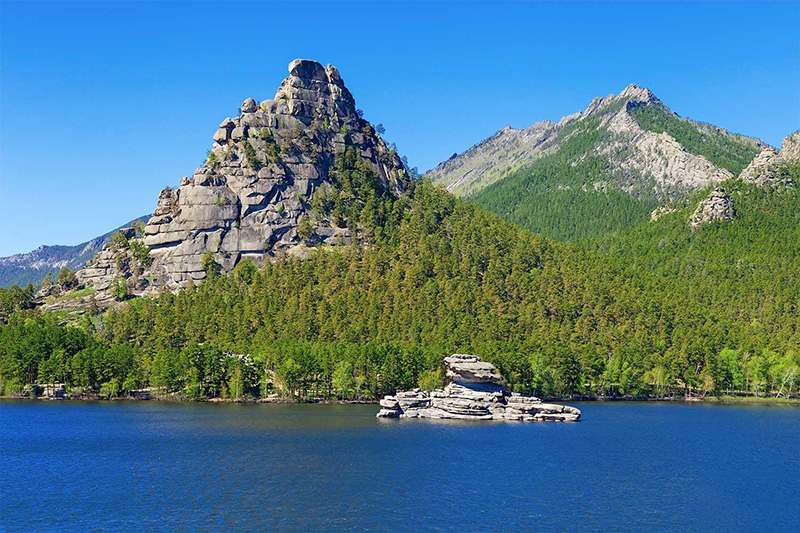
Akmola region

Akmola region is one of the largest and most developed regions of Kazakhstan and ranks ninth in size. It borders with Kostanai region in the West, North Kazakhstan region in the North, Pavlodar region in the East and Karagandy region in the South.

Read more →

Heritage

card

CUSTOMS AND TRADITIONS

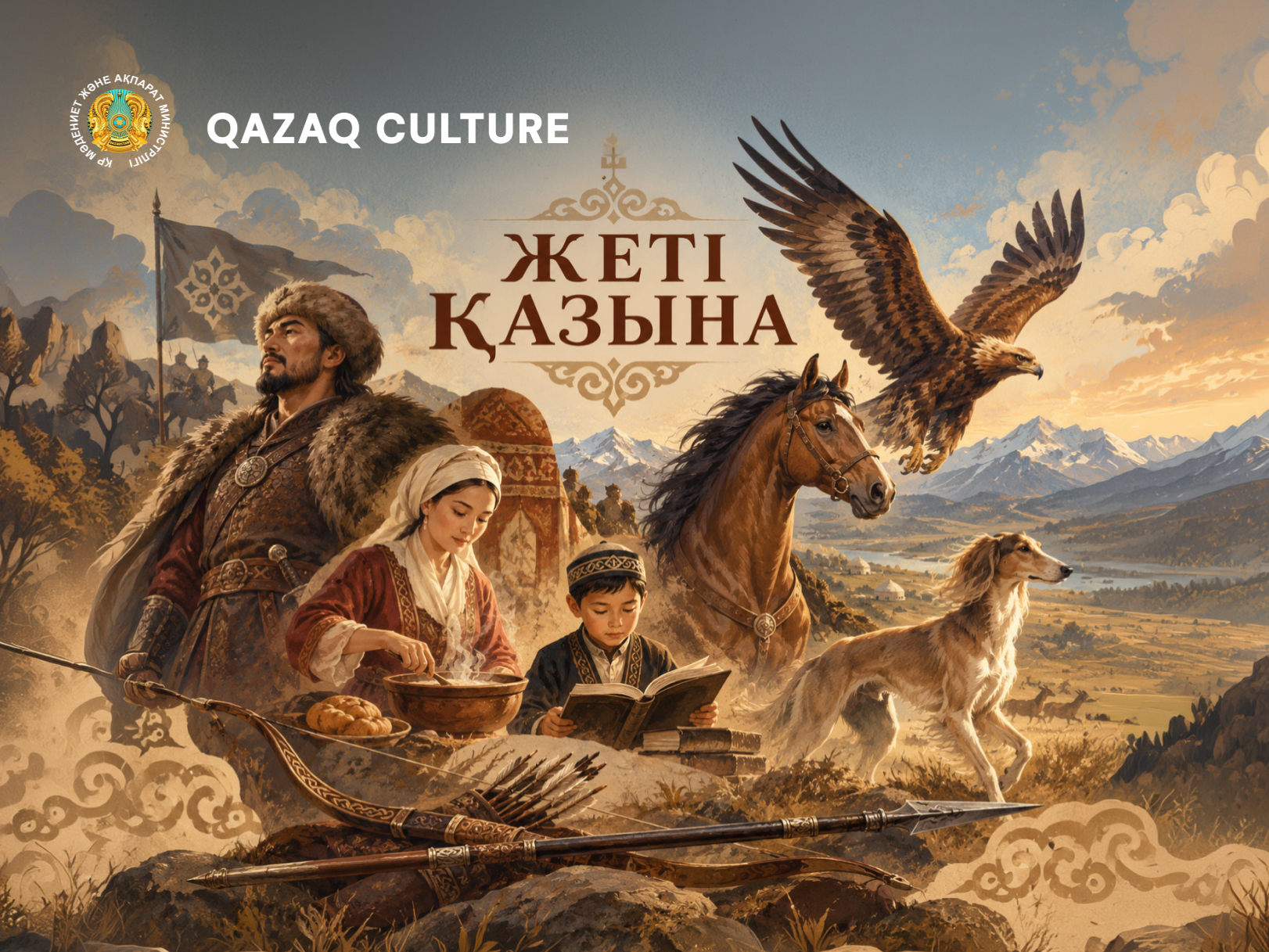
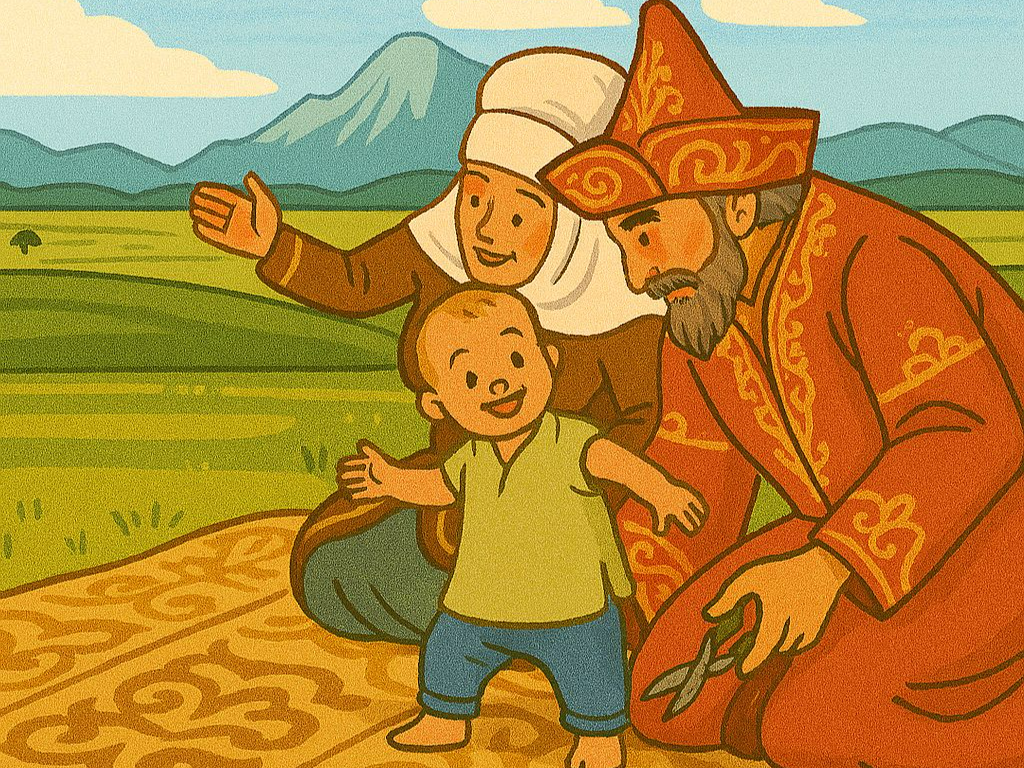
This section contains unique customs and traditions of the Kazakh people - rituals, holidays, folk crafts and family values passed down from generation to generation.

Read more →
card

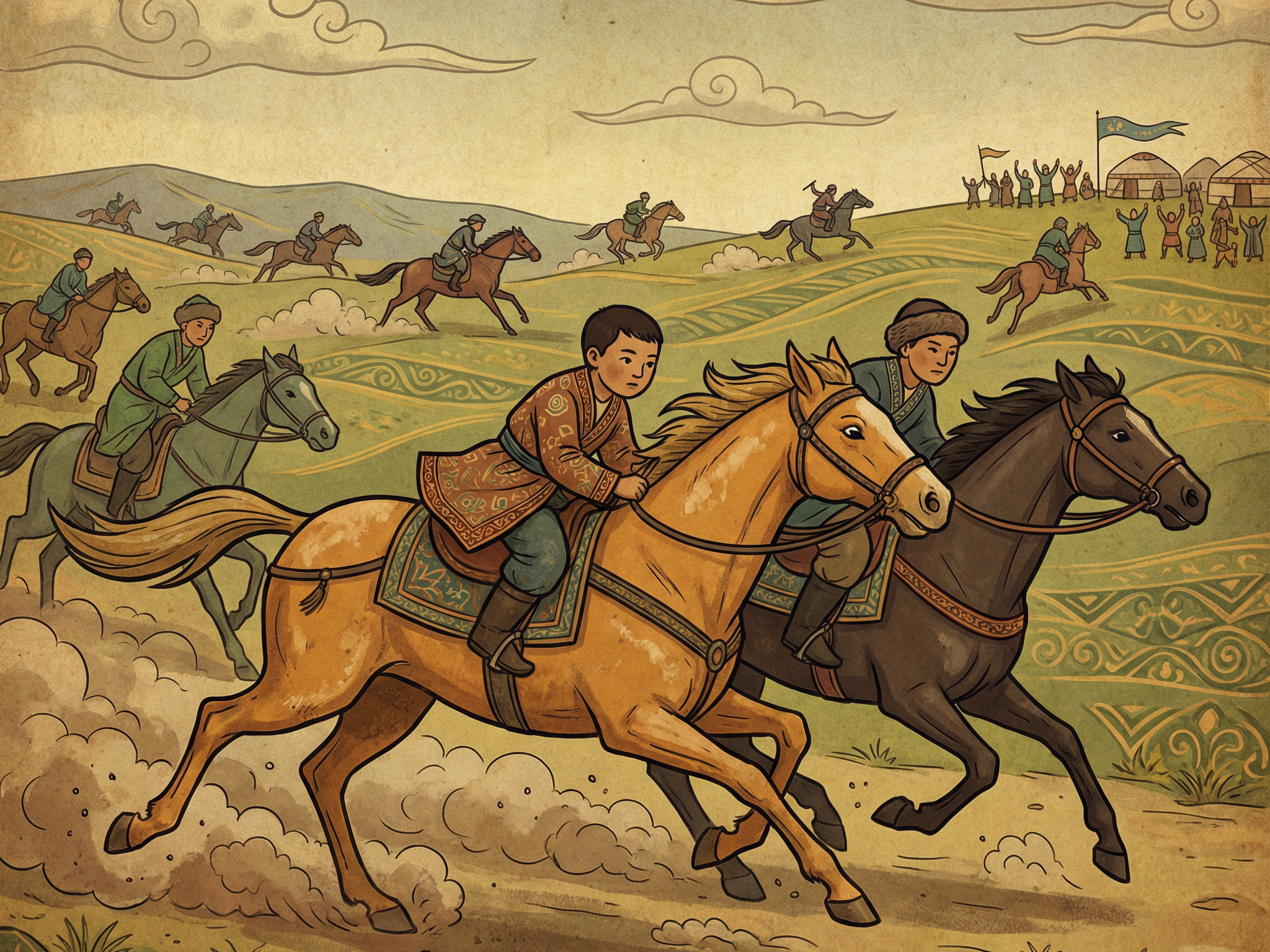
CHILDREN'S LITERATURE

The world of Kazakh children's literature reveals a wealth of folk legends and heroic stories to young readers. It contains Kazakh myths, poems about batyrs, and other works that bring ancient legends, the courage of heroes, and the wisdom of ancestors to life. These texts help children experience the beauty of their native culture and connect with the people's spiritual heritage.

Read more →
card

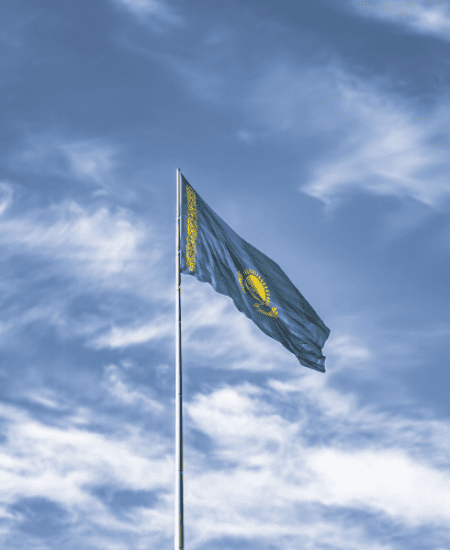
ABOUT KAZAKHSTAN

In this section, the users will find information about the development and prospects of Kazakhstan

Read more →
card

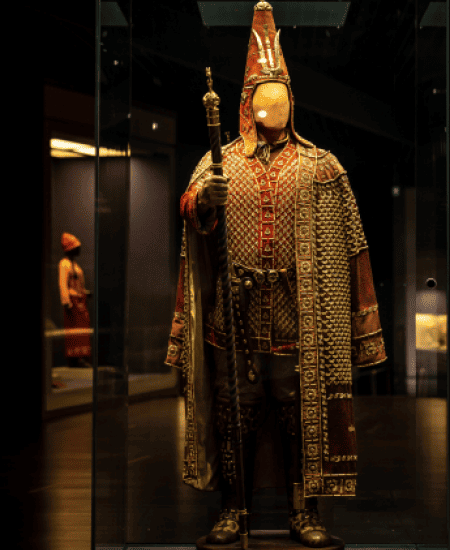
HISTORY

In this section, there is an opportunity to immerse yourself in the rich cultural heritage of Kazakhstan

Read more →
card

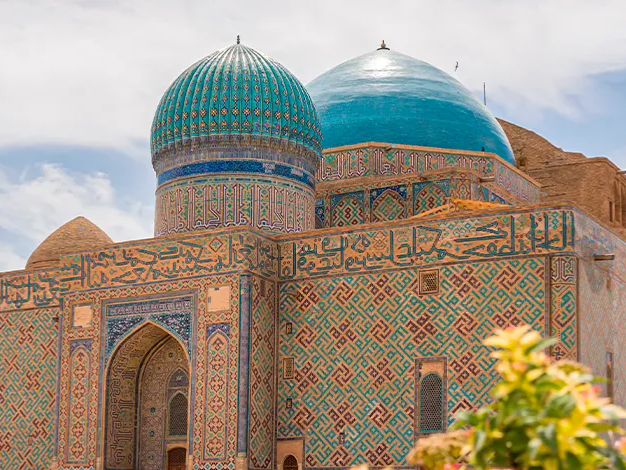
UNESCO HERITAGE

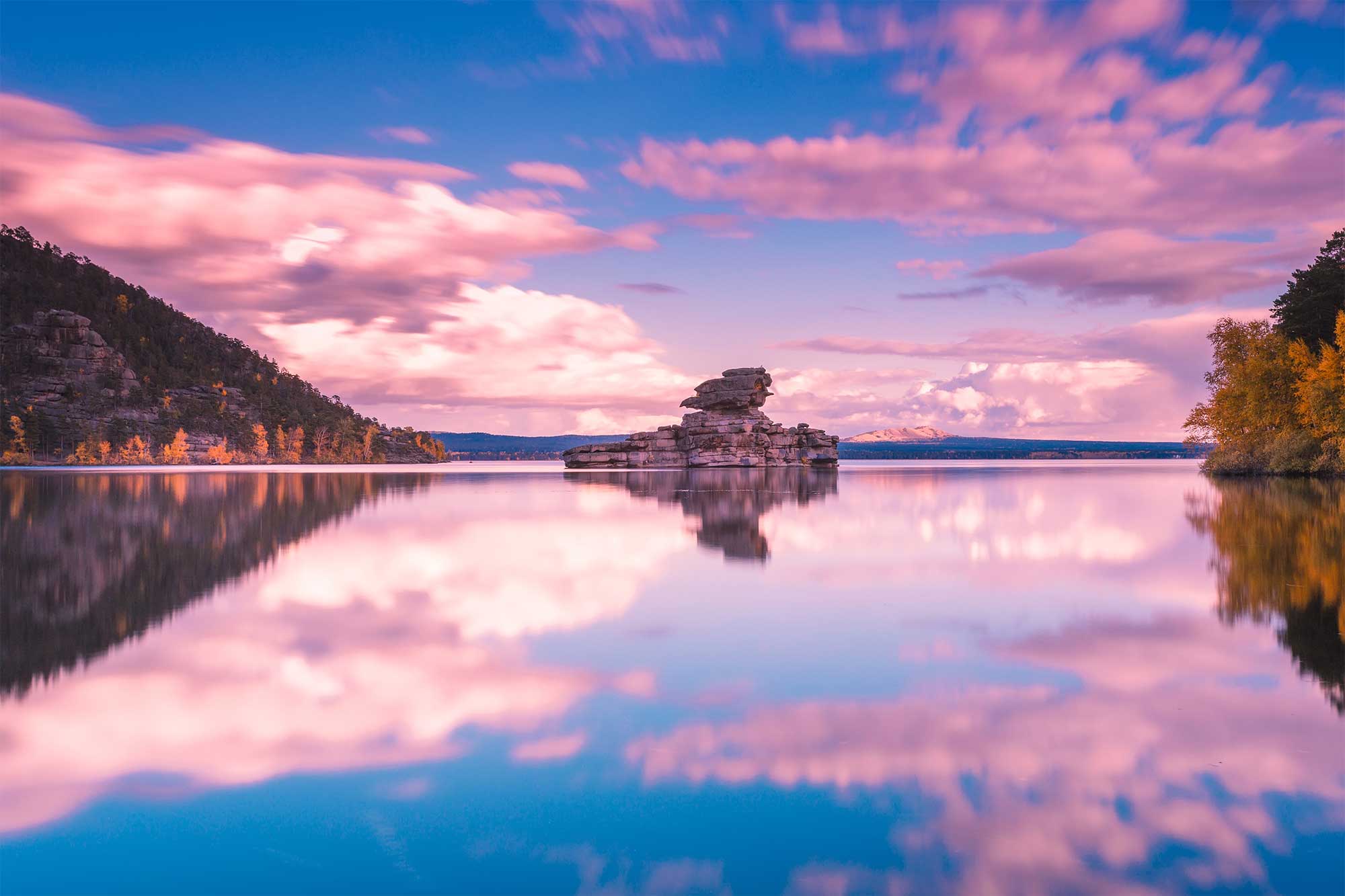
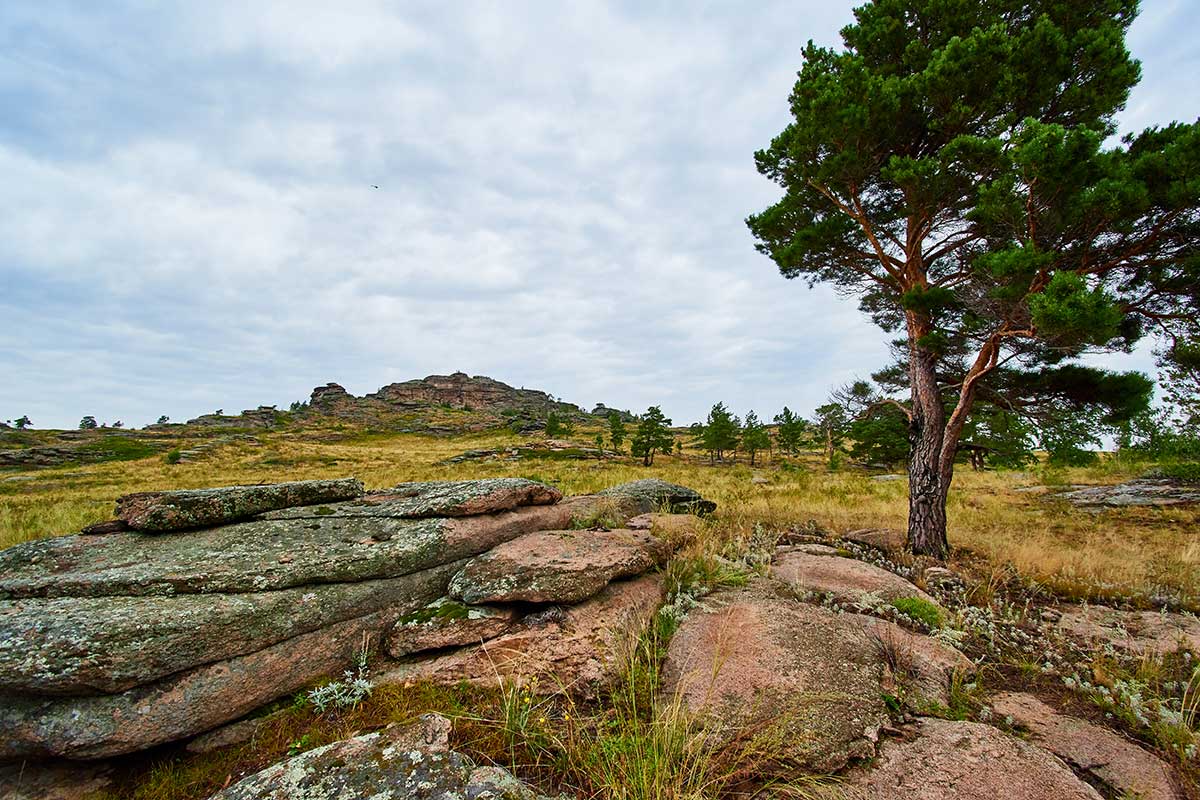
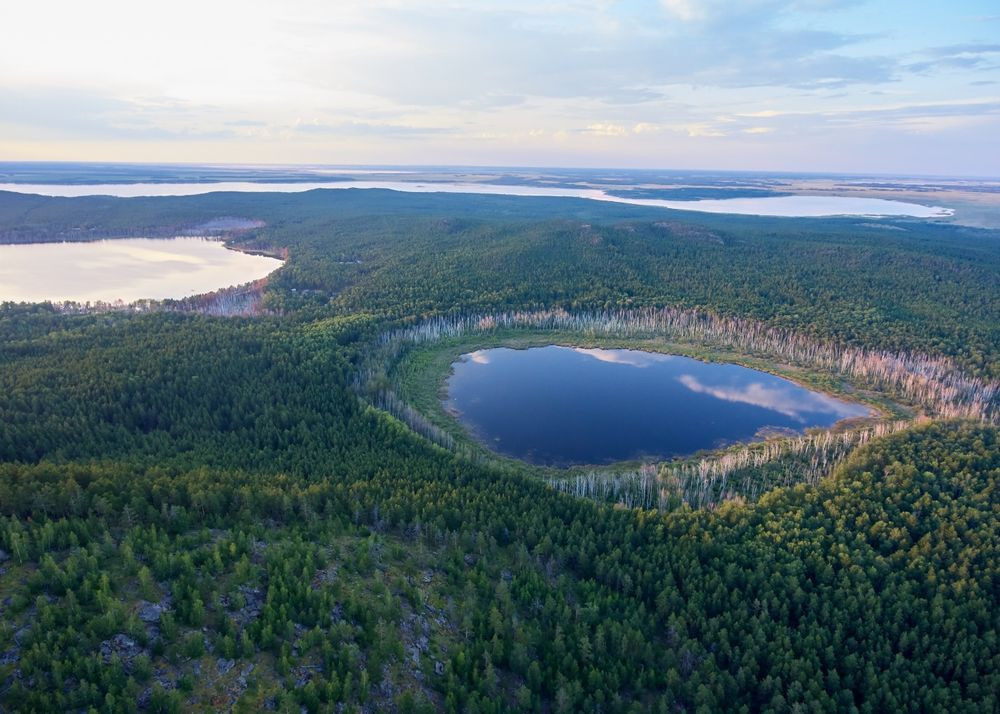
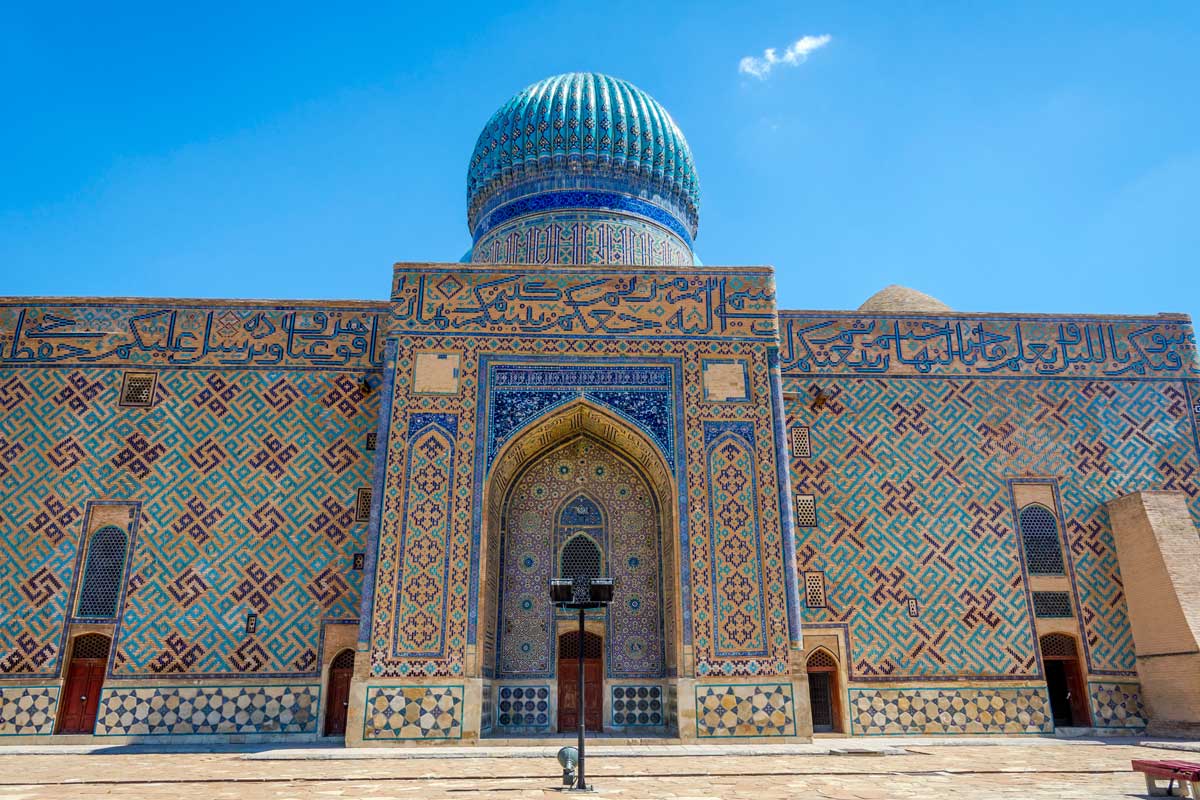
The UNESCO World Heritage List includes both natural and cultural monuments of Kazakhstan. These include the Mausoleum of Khoja Ahmed Yasawi, the petroglyphs of Tamgaly, Saryarka - Steppes and Lakes of Northern Kazakhstan, the Turan Deserts, the Western Tien Shan, as well as a complex of sites of the Great Silk Road in the Chang'an-Tianshan Corridor.

Read more →
card

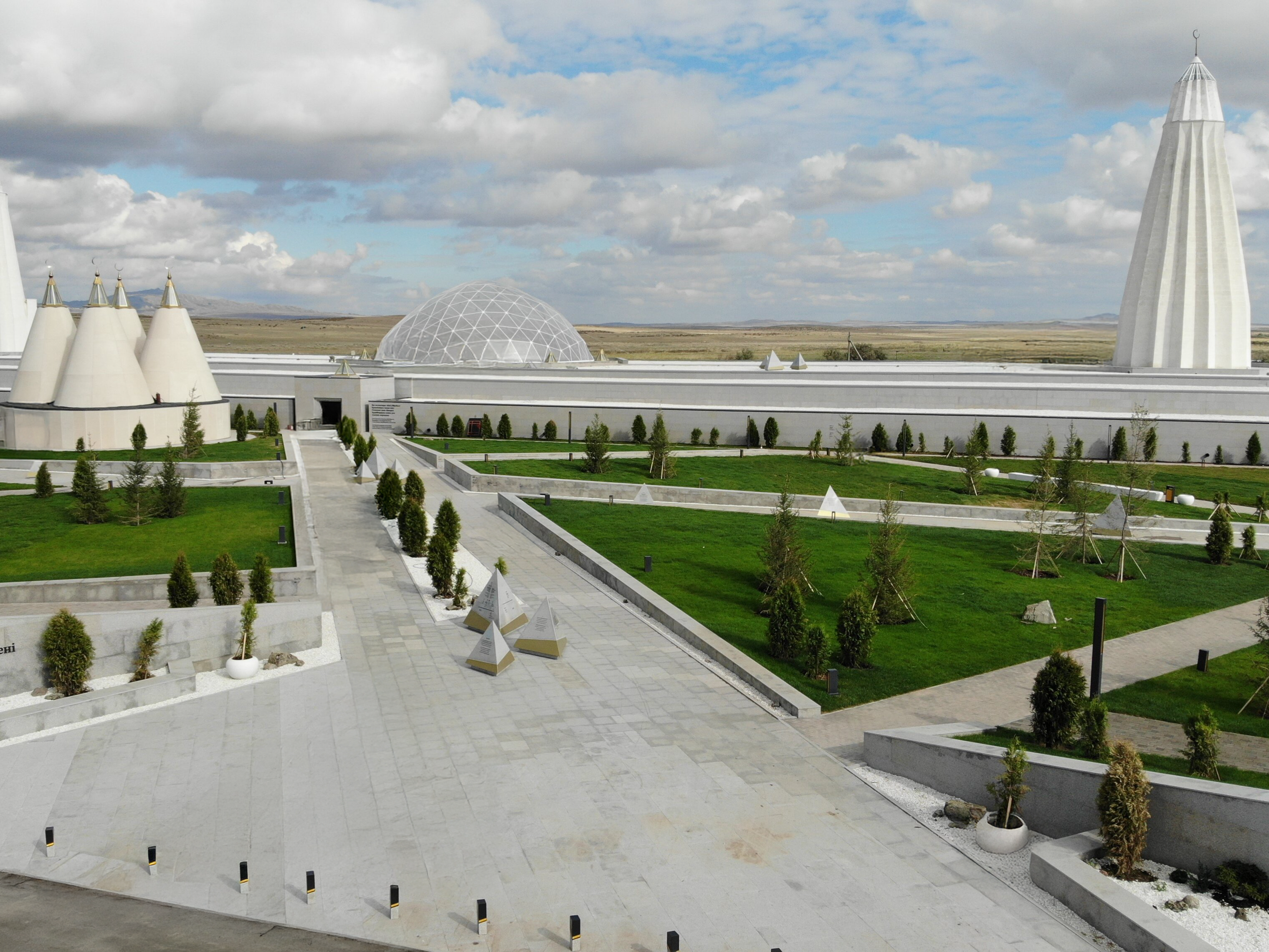
MUSEUMS AND RESERVES

Museums and reserves are important institutions that preserve cultural, historical and natural heritage. Museums collect and display works of art and historical artefacts, while reserves protect natural resources and ecosystems, ensuring their safety for future generations.

Read more →
card

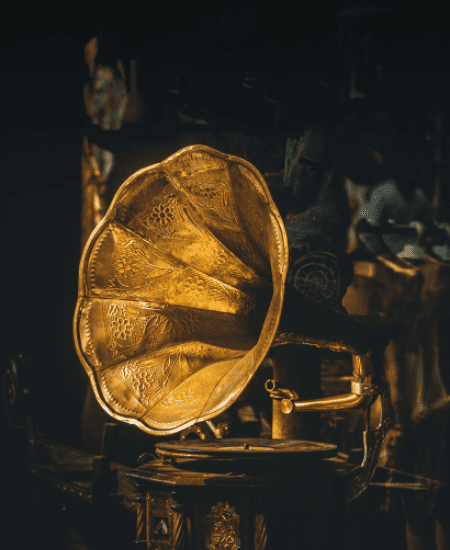
GOLDEN FUND

In this section, the users can get acquainted with the Kazakh talents who have gained worldwide fame

Read more →

card

CINEMA

Pearls of national cinema: retrospectives and long-awaited premieres

Read more →
card

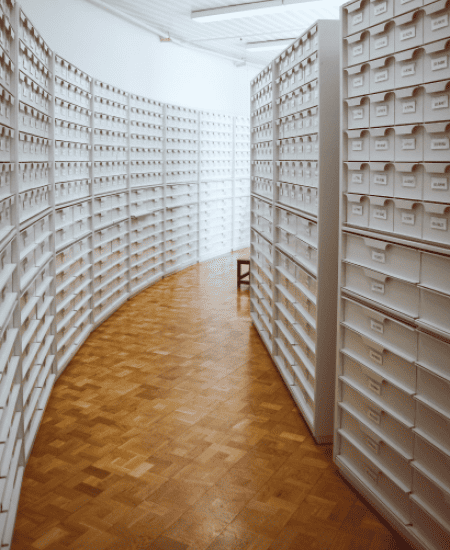
ARCHIVES

This section provides access to a rich historical collection of documents and archival materials of Kazakhstan

Read more →

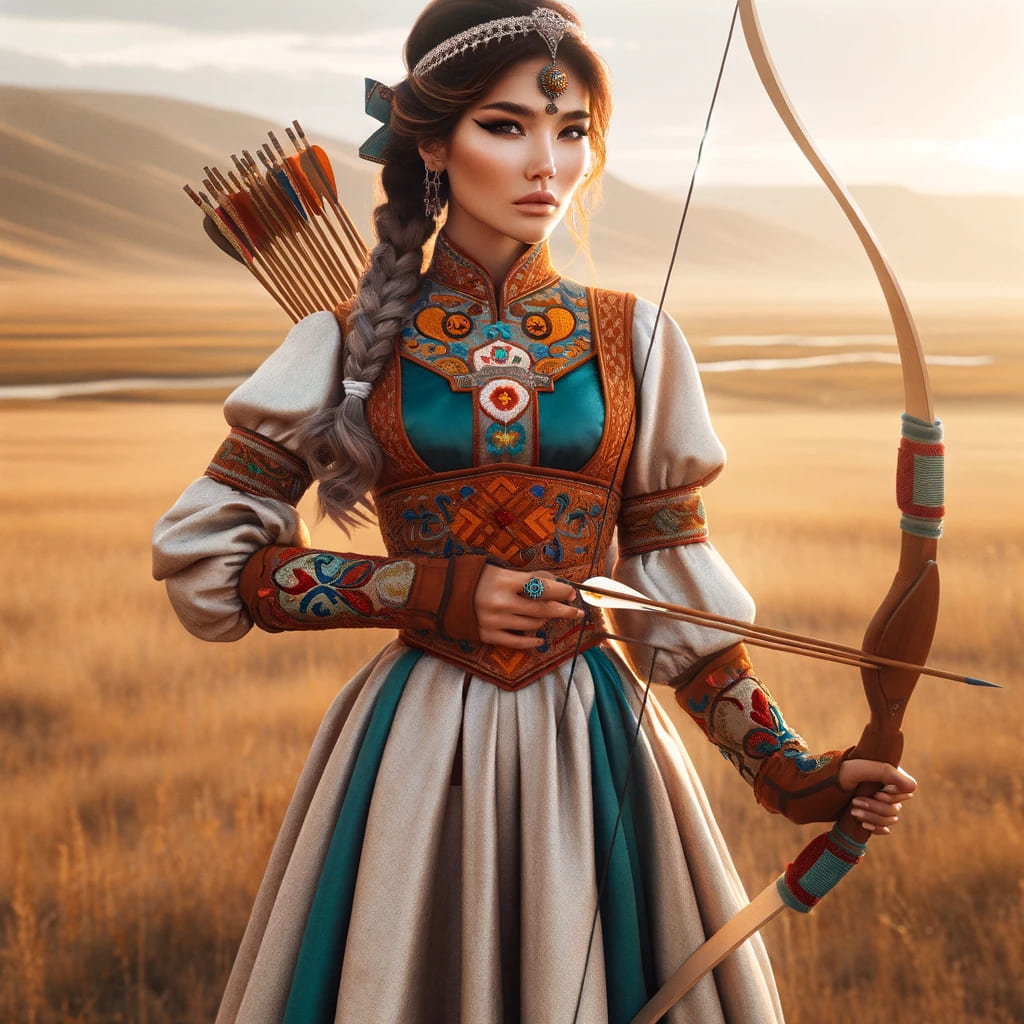
Become a batyr

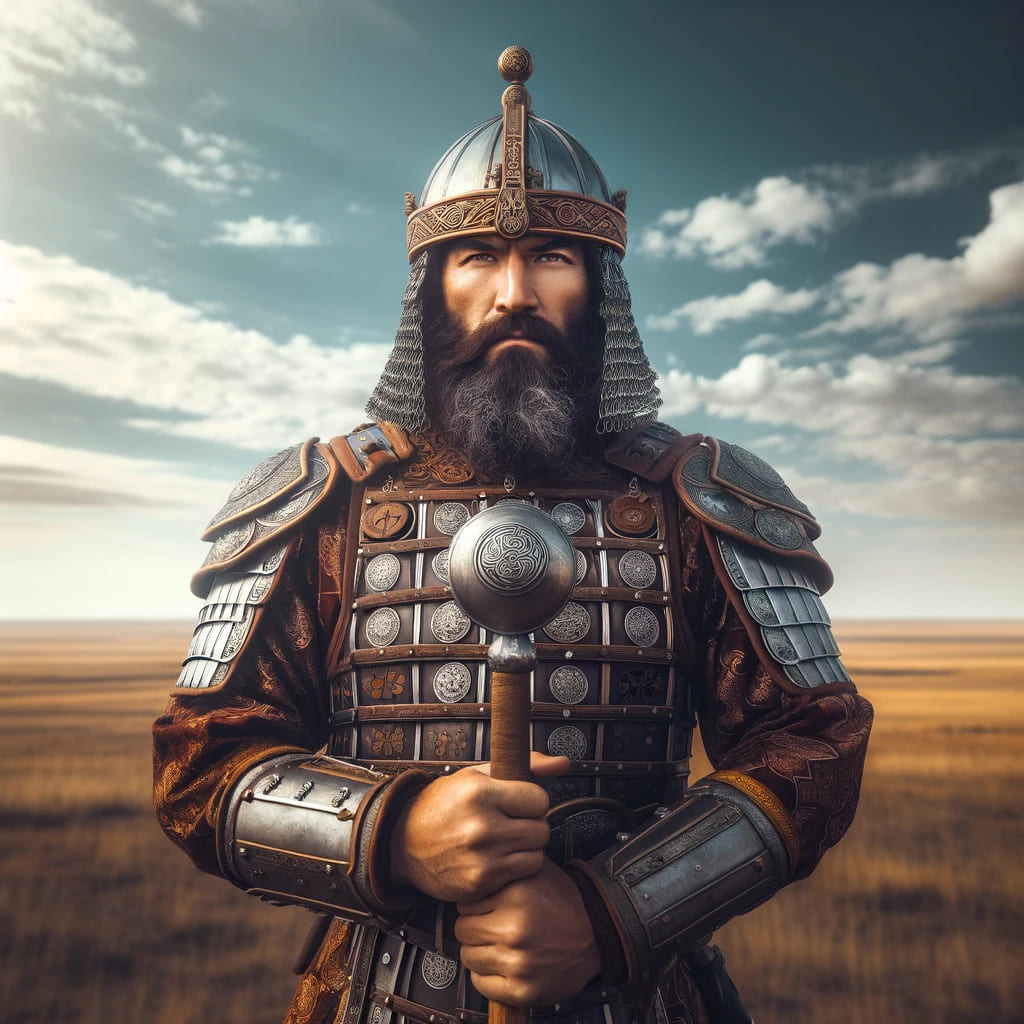
Upload your photo and try on the look of a Kazakh batyr or a Turkic amazon with the help of artificial intelligence

card
card
card
card
card