CUSTOMS AND TRADITIONS
This section contains unique customs and traditions of the Kazakh people - rituals, holidays, folk crafts and family values passed down from generation to generation.
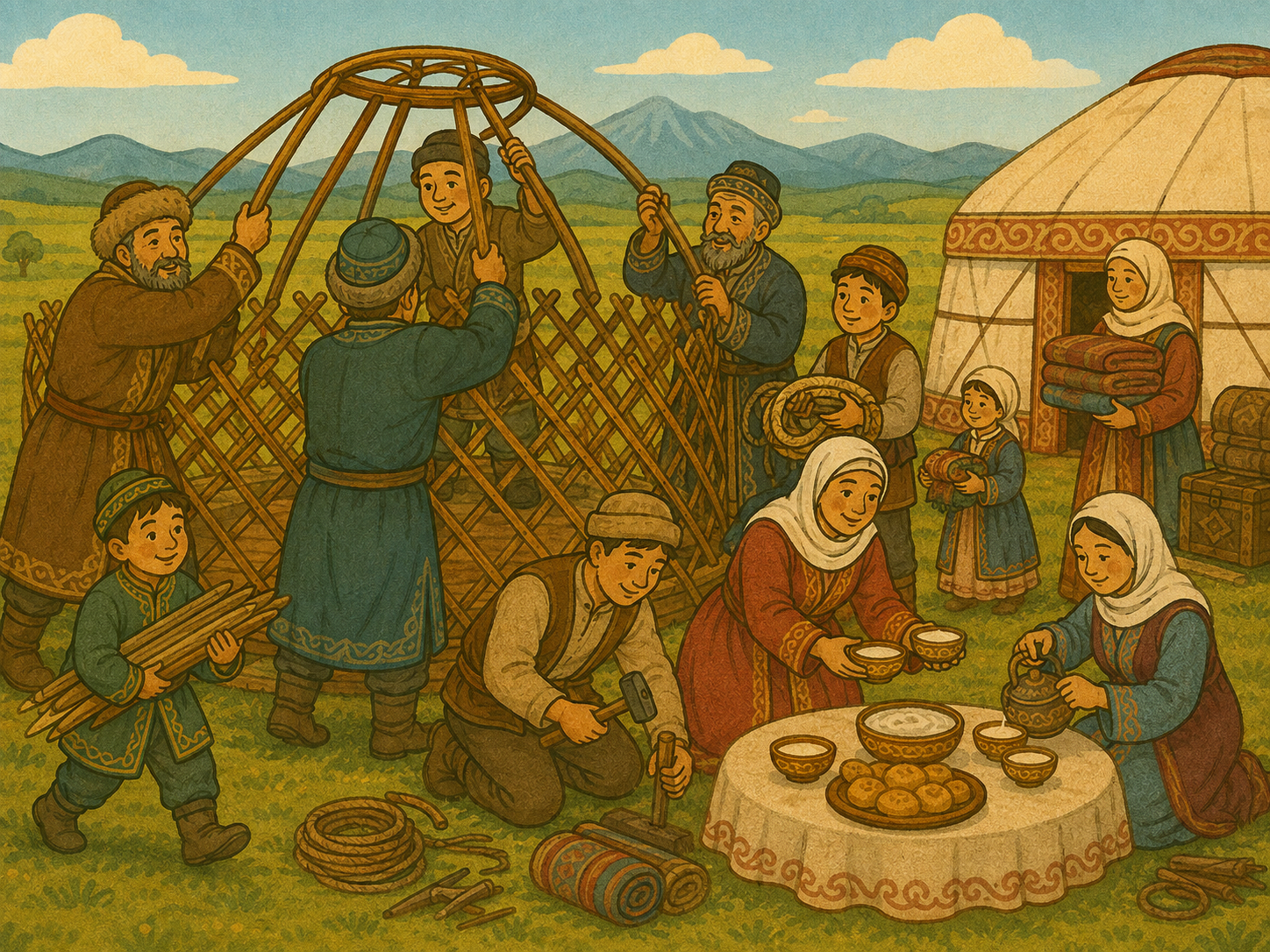
"Asar" is a tradition of collective mutual assistance
"Asar" is an ancient Kazakh tradition based on voluntary and unpaid assistance to an individual or family struggling to cope with a major task on their own. Village residents, relatives, and neighbors would gather together to jointly accomplish the necessary work.
Read more →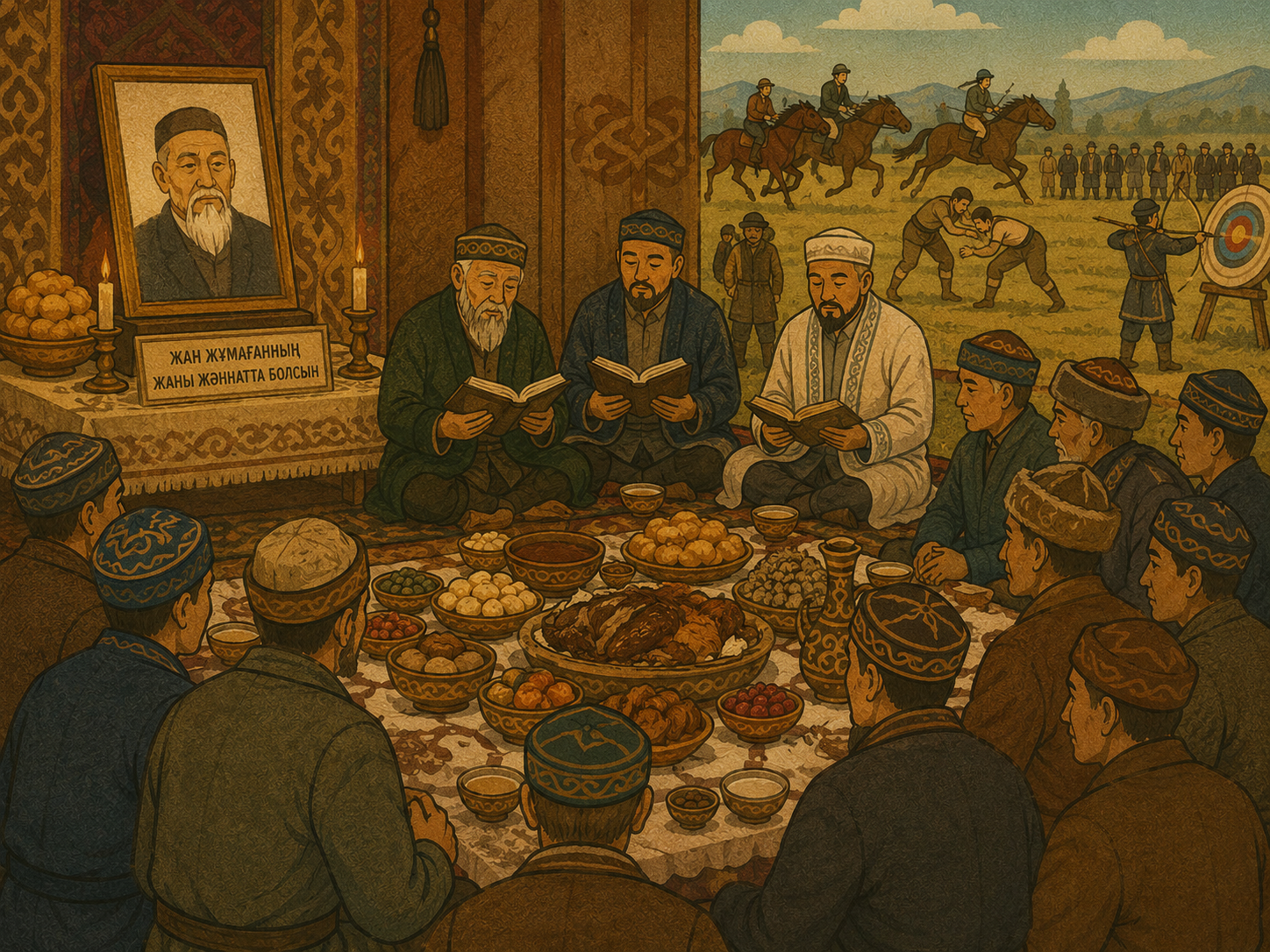
"As Beru" is a memorial rite in memory of the departed.
"As beru" is one of the most significant traditions of the Kazakh people, associated with the commemoration of the deceased, expressing respect for their memory, and bringing together relatives, friends, and fellow countrymen. Traditionally, a particularly large as was held a year after the death of a famous and respected person. This ritual was called an anniversary – "zhyldyk as." In traditional Kazakh society, the as could last several days and attract a large number of guests from various places. During the memorial gathering, the Quran was read, the batah was recited, and the merits of the deceased were commemorated. Aksakals, influential and respected people, attended the as.
Read more →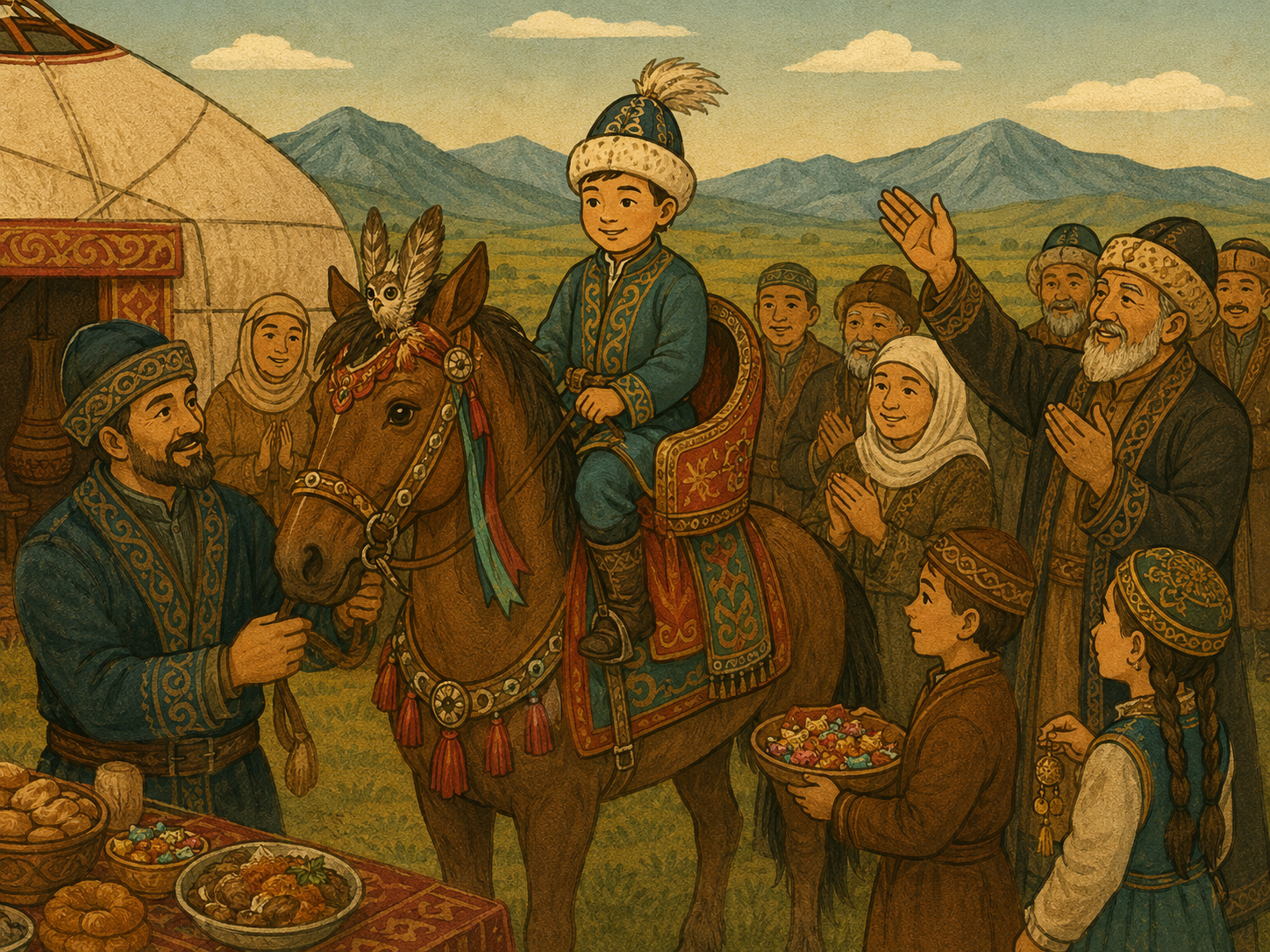
"Ashamaiga mingizu" – the first initiation of a child into the horsemen
"Ashamaiga mingizu" is an ancient Kazakh rite during which a child is mounted on a horse for the first time. This day symbolizes the end of early childhood and the beginning of a new stage in life, one marked by independence, responsibility, and an immersion in traditional steppe culture.
Read more →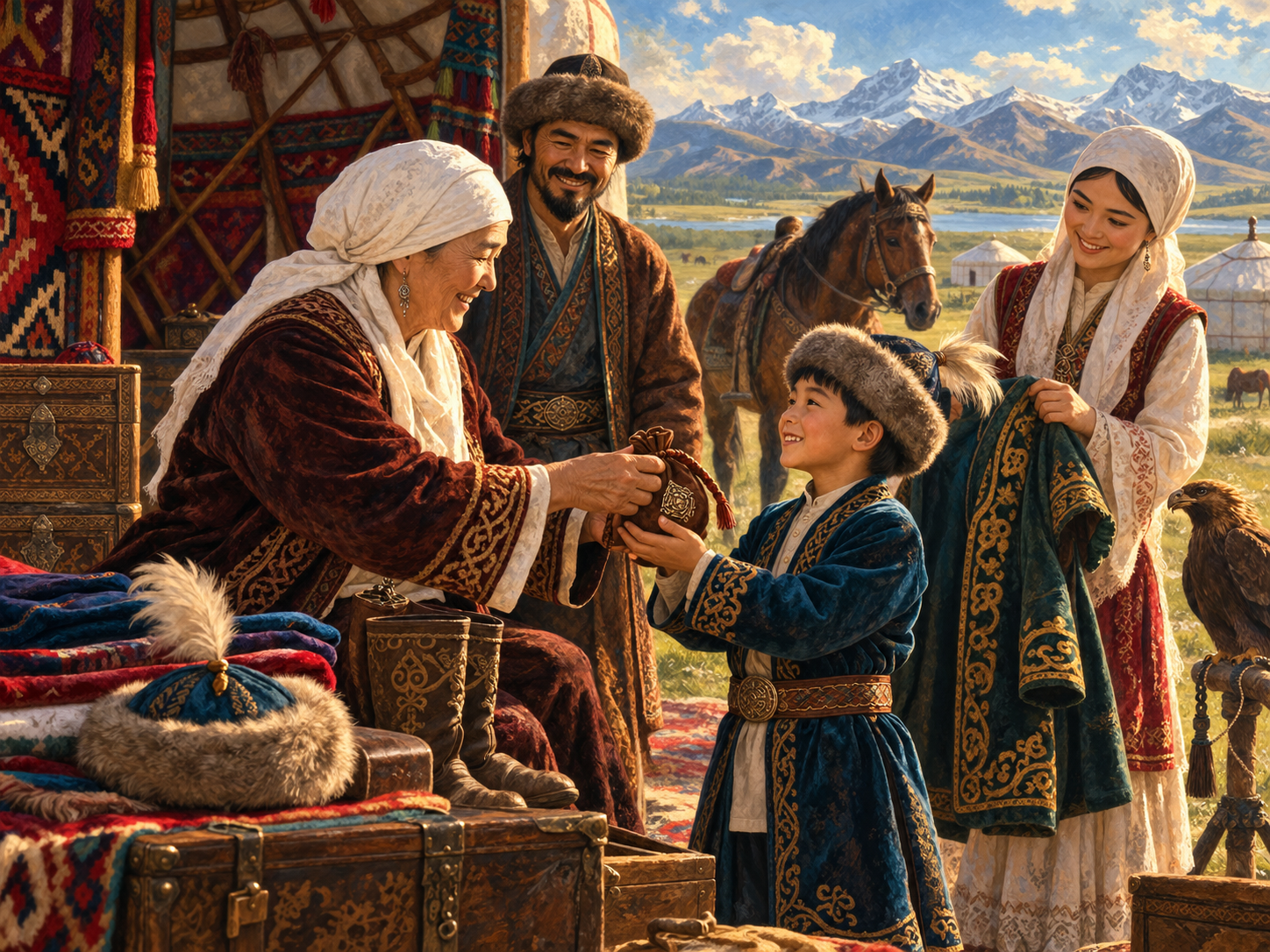
“Baigazy” – A Gift to Celebrate Something New
In a traditional Kazakh family, a child wearing new clothes or receiving a new possession is a special occasion for joy. At such moments, elders would give the child a gift known as “baigazy” to make them happy.
Read more →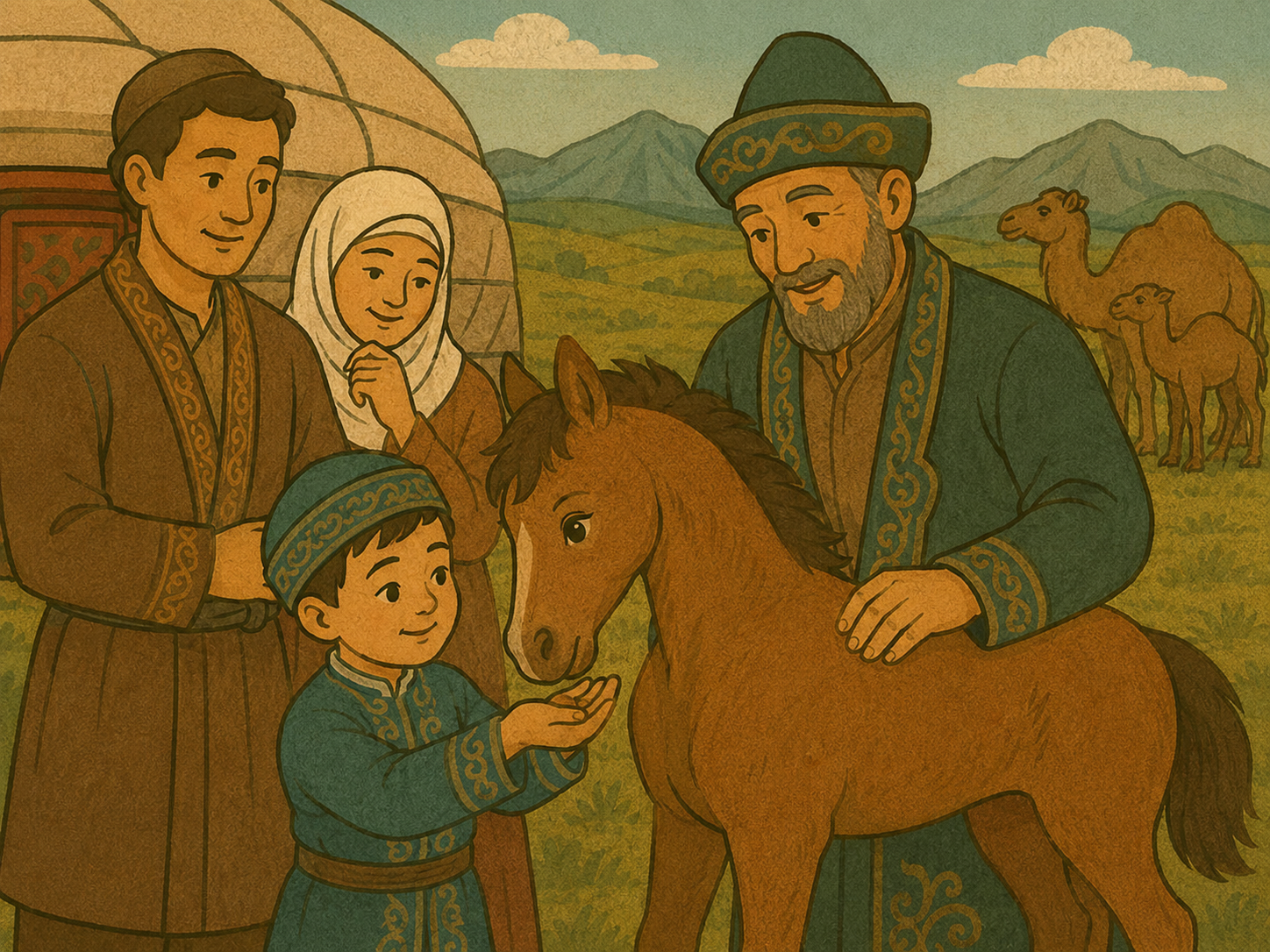
"Basire" is a child's first personal livestock
"Basire" is an ancient Kazakh tradition according to which a child was given a personal animal. Most often, this was a foal or a baby camel, born around the same time as the baby. It was called "bәsіre tai" or simply "bәsіre" and was considered the beginning of the child's future prosperity.
Read more →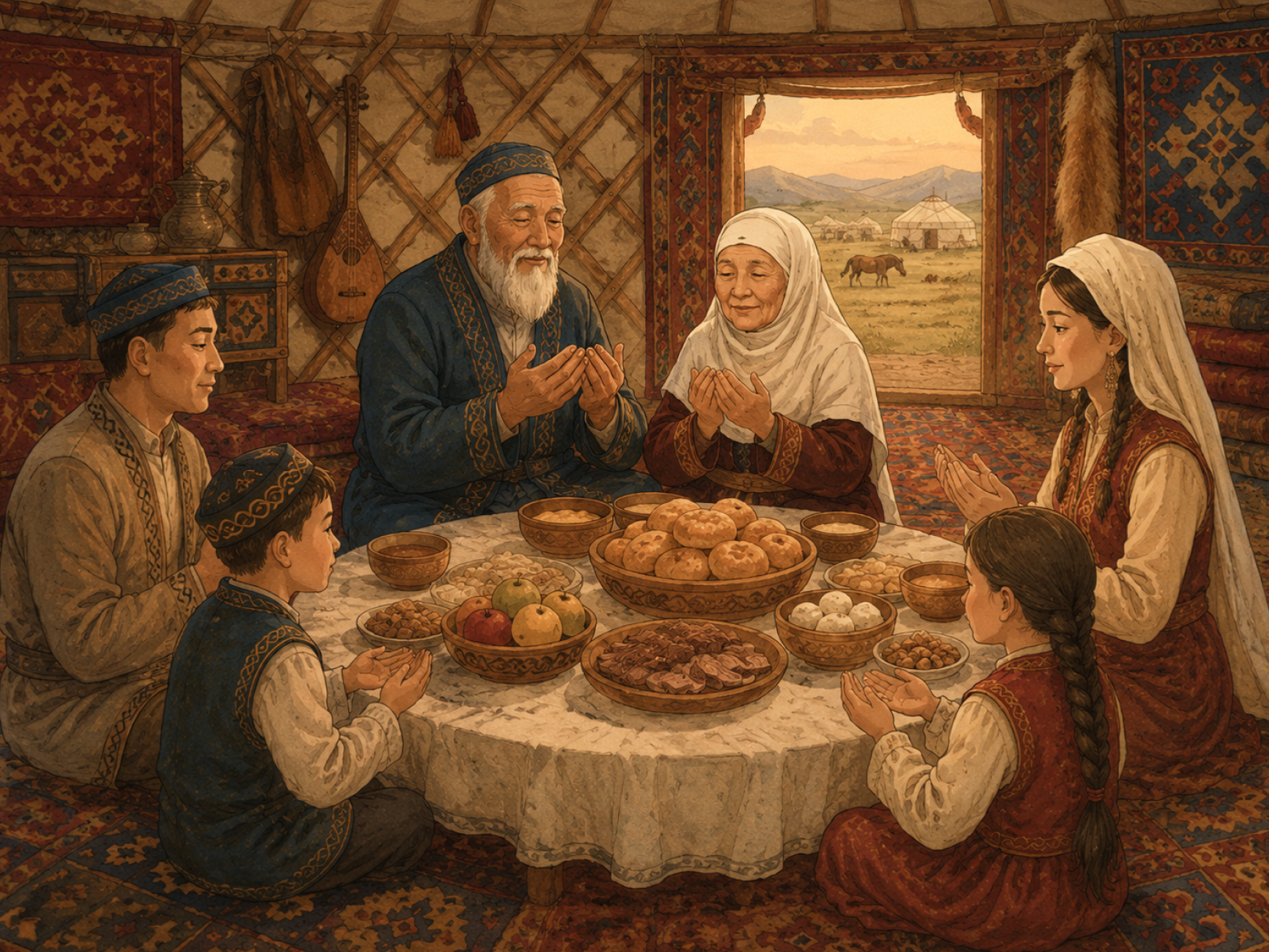
"Bata beru" - blessing of elders
"Bata beru" is one of the important Kazakh traditions associated with blessings and good wishes from elders. Bata is recited at various times in life, but it is especially common to hear it at the dastarkhan.
Traditionally, after the meal, the host or one of the younger generation addresses the oldest and most respected person with the words, ""Bata beru"" (Bata beru), meaning ""give me a blessing."" This is considered a sign of respect for the elder and a request for them to share their good wishes."
Read more →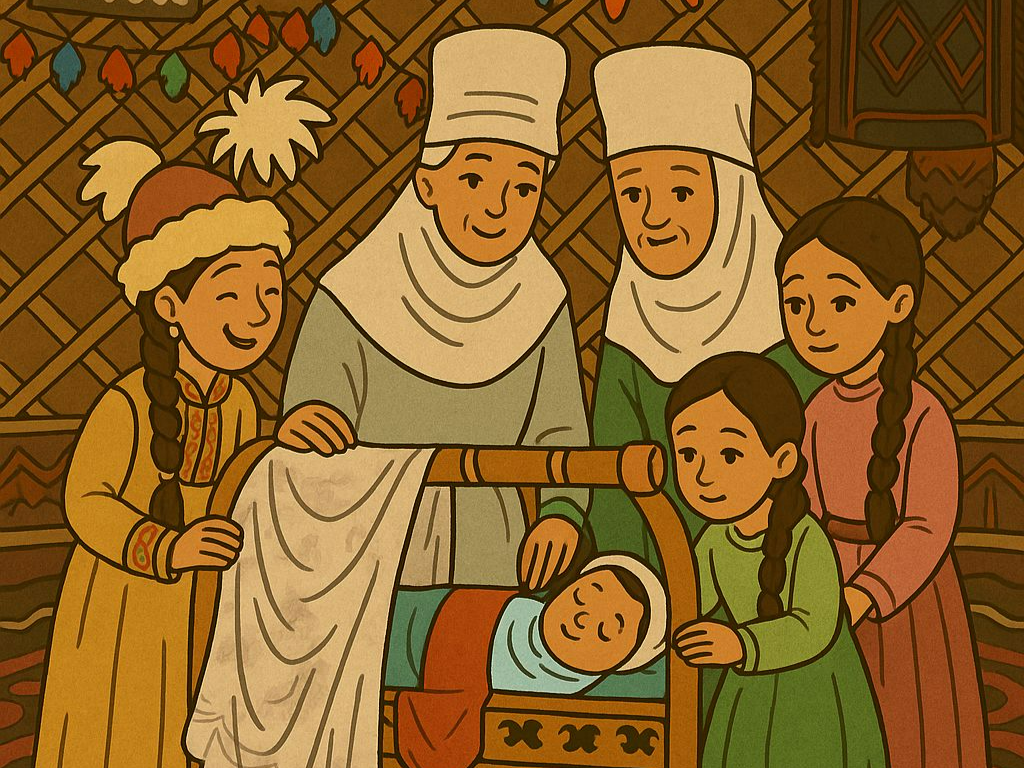
"Besikke salu" - the ritual of placing a baby in a cradle
"Besikke salu" is an ancient Kazakh ritual associated with the birth of a child. It is performed at the moment when the baby is first placed in the "besik" - a traditional Kazakh rocking cradle. People say that the "besik" is the baby's golden nest, and therefore this ritual occupies a special place among family celebrations.
Read more →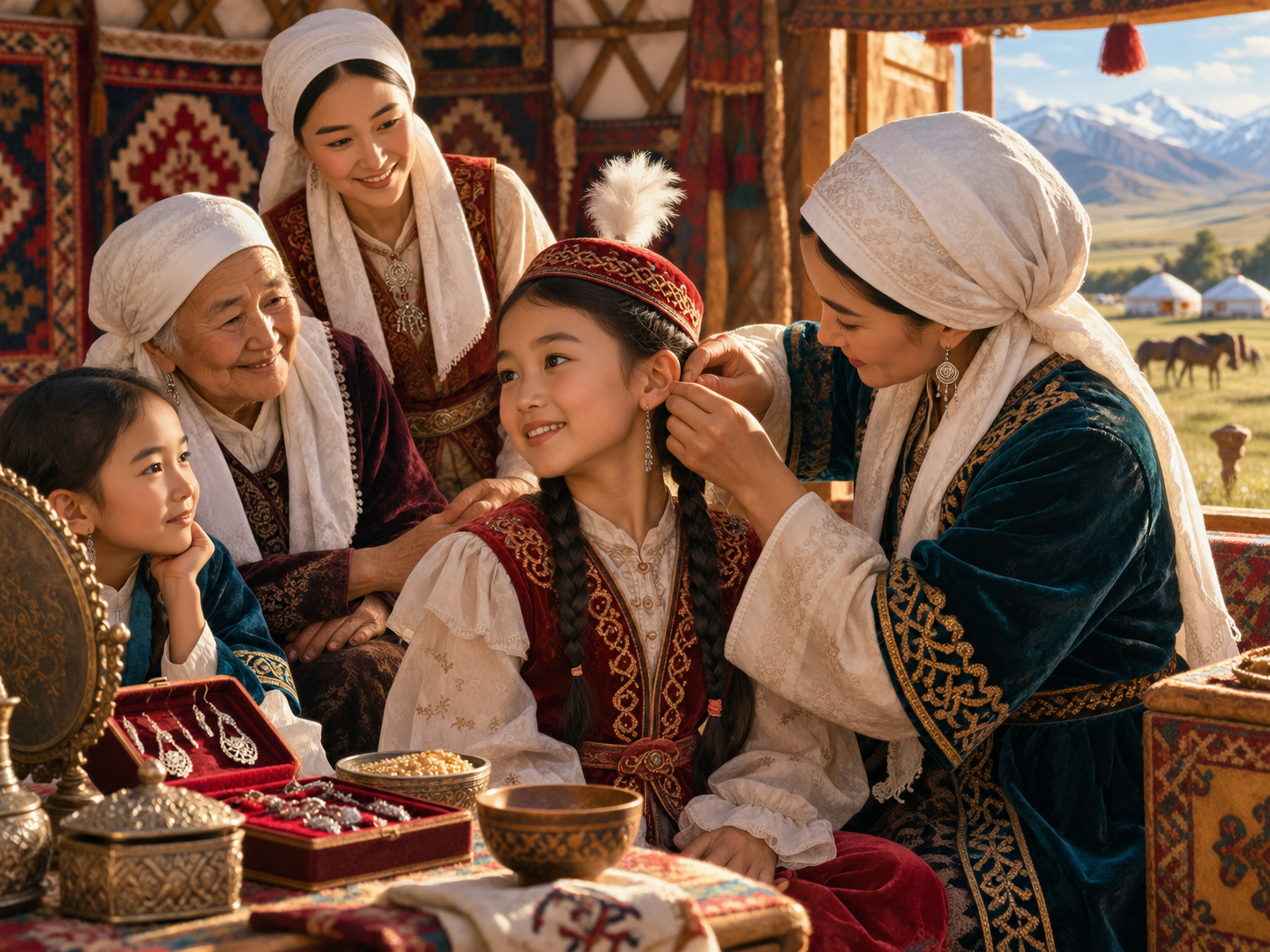
Ear piercing for a girl – a coming-of-age tradition
In Kazakh tradition, piercing a girl's ears was more than just a mundane procedure. This moment was perceived as one of the first symbolic stages of her development. Ears were typically pierced in childhood, and the family prepared for the event in advance. The girl was dressed in a beautiful dress, wearing a festive skullcap, and the procedure was transformed into a small family event.
Read more →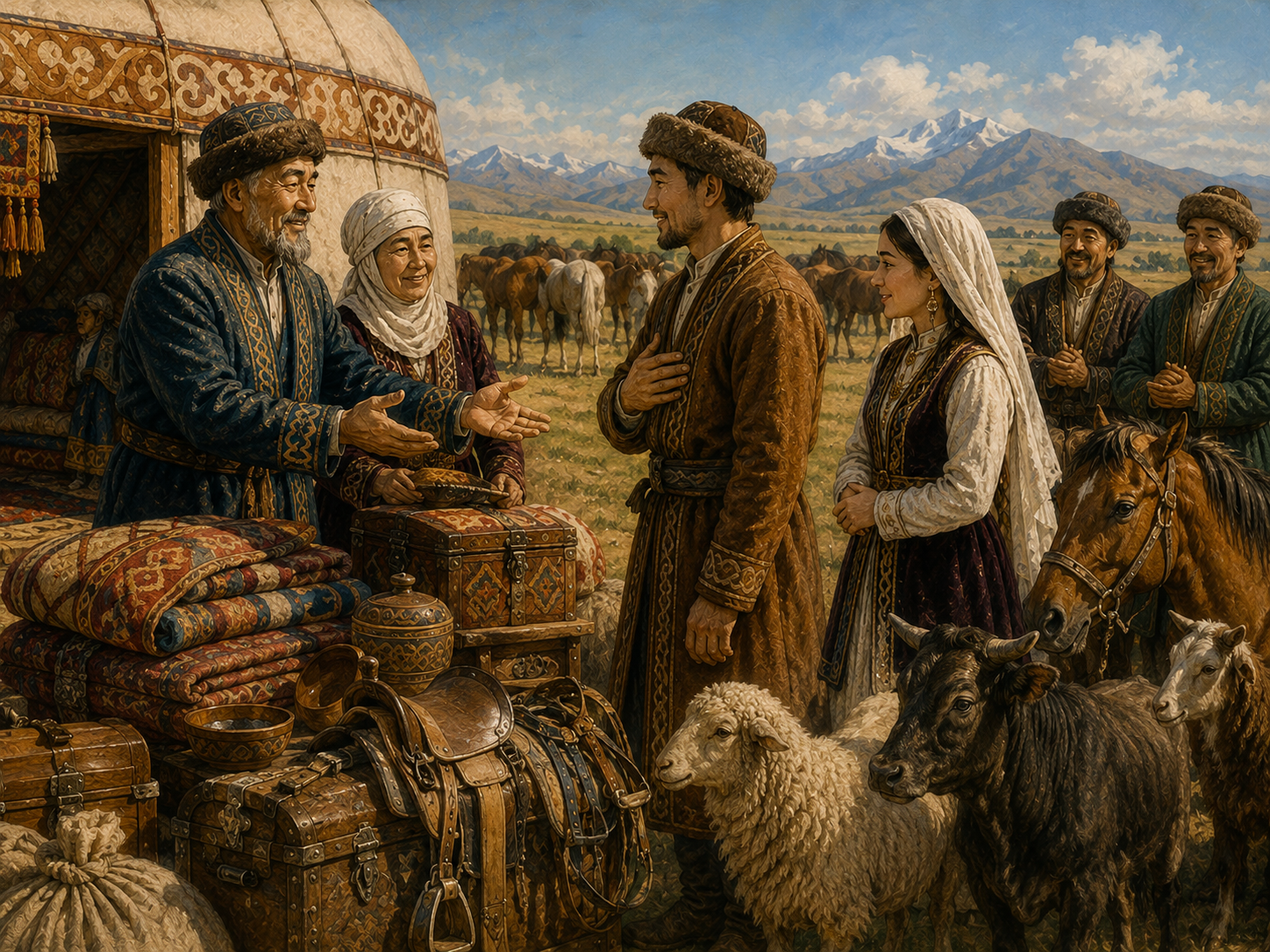
"Enshi" – property for starting an independent life
"""Enshi"" is a traditional Kazakh custom associated with the separation of an adult son from his parents and the establishment of his own household. When a young man married and was ready to live independently, his father would allocate him a portion of the family property—livestock, household goods, and everything necessary for setting up a new home. Receiving ""enshi"" meant more than just financial support. From this moment on, the young man became an independent owner, responsible for the well-being of his family. He was expected to manage the household, care for his wife and children, make decisions, and gradually increase the property he inherited from his parents.
"
Read more →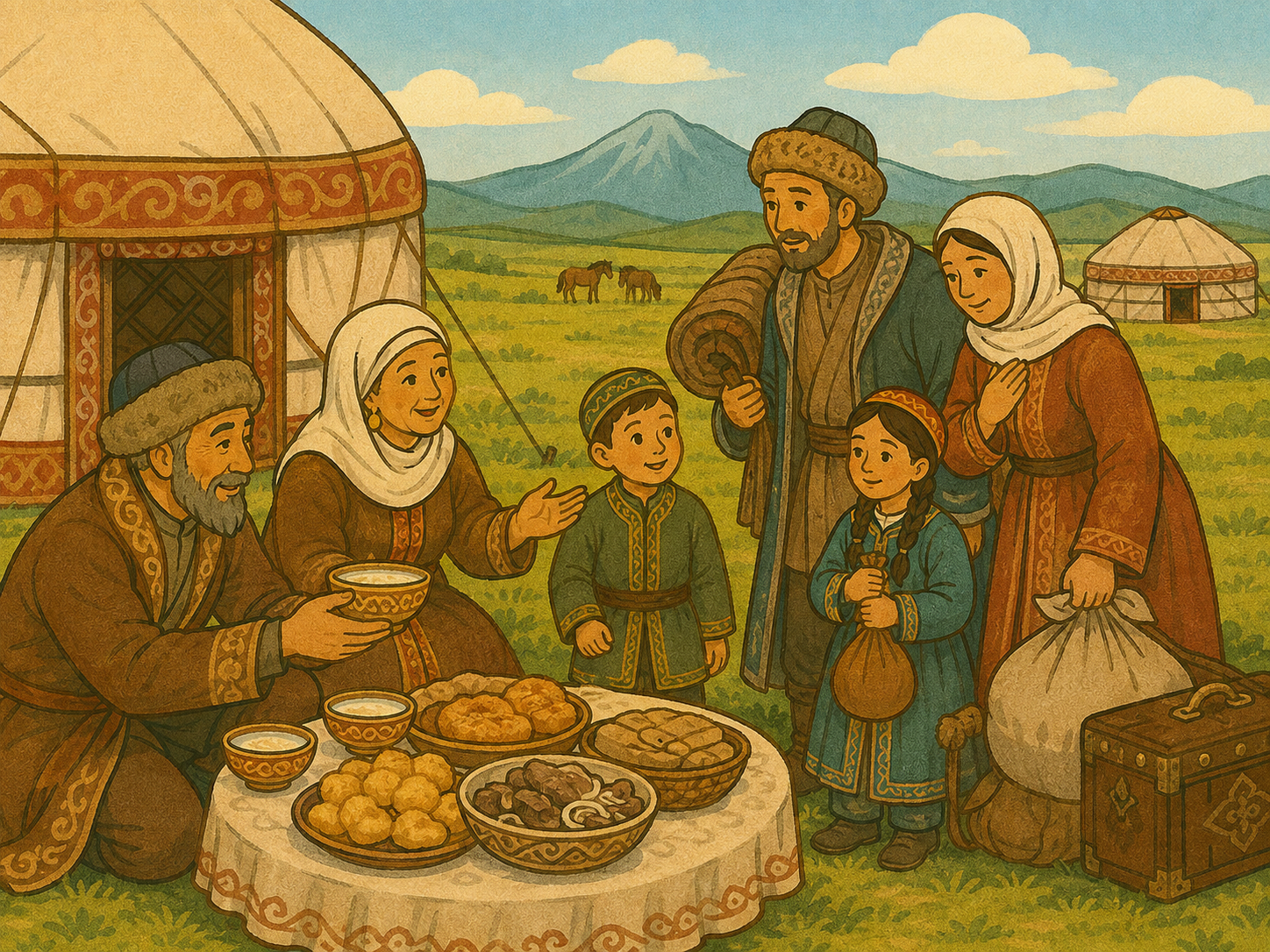
"Erulik" – a treat for new neighbors
"Yerulik" is an ancient Kazakh tradition associated with a family's move to a new place. When new settlers arrived in a village, neighbors would invite them over, set the table, and hold a small celebration. This was a way to welcome the new residents, help them settle in quickly, and let them know they were now part of the local community.
Read more →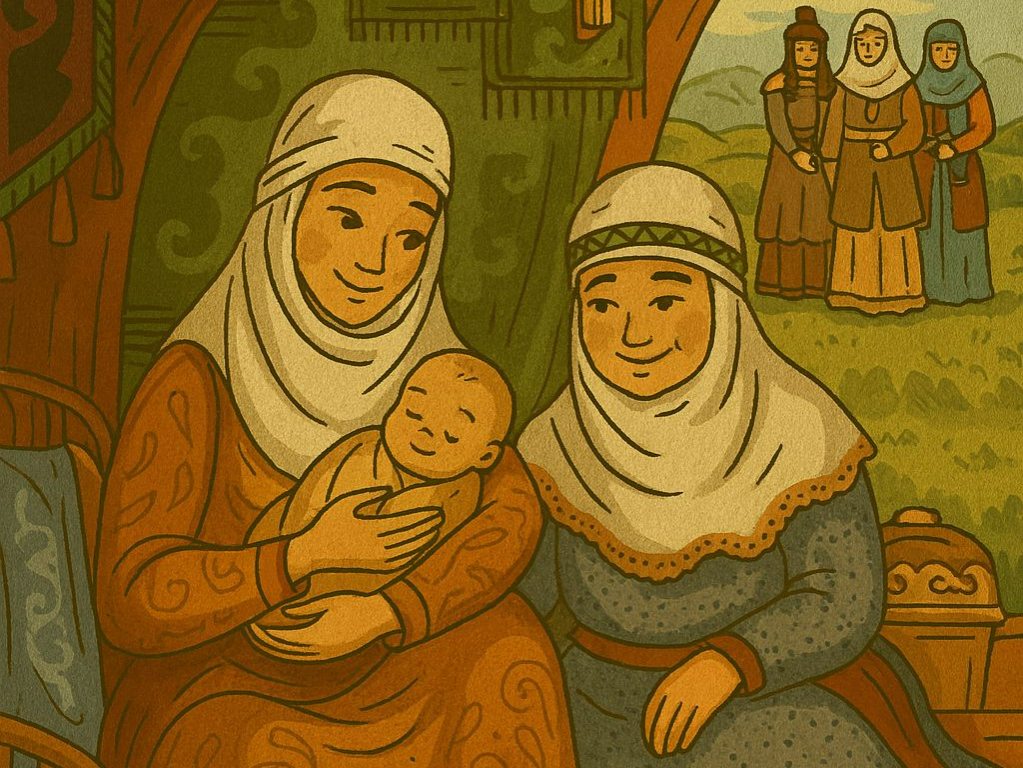
Kyrkynan shygaru. 40 days for a newborn
The ritual of “kyrkynan shygaru”, which is carried out when a baby reaches 40 days of age, is considered sacred and one of the most important in Kazakh culture.
Read more →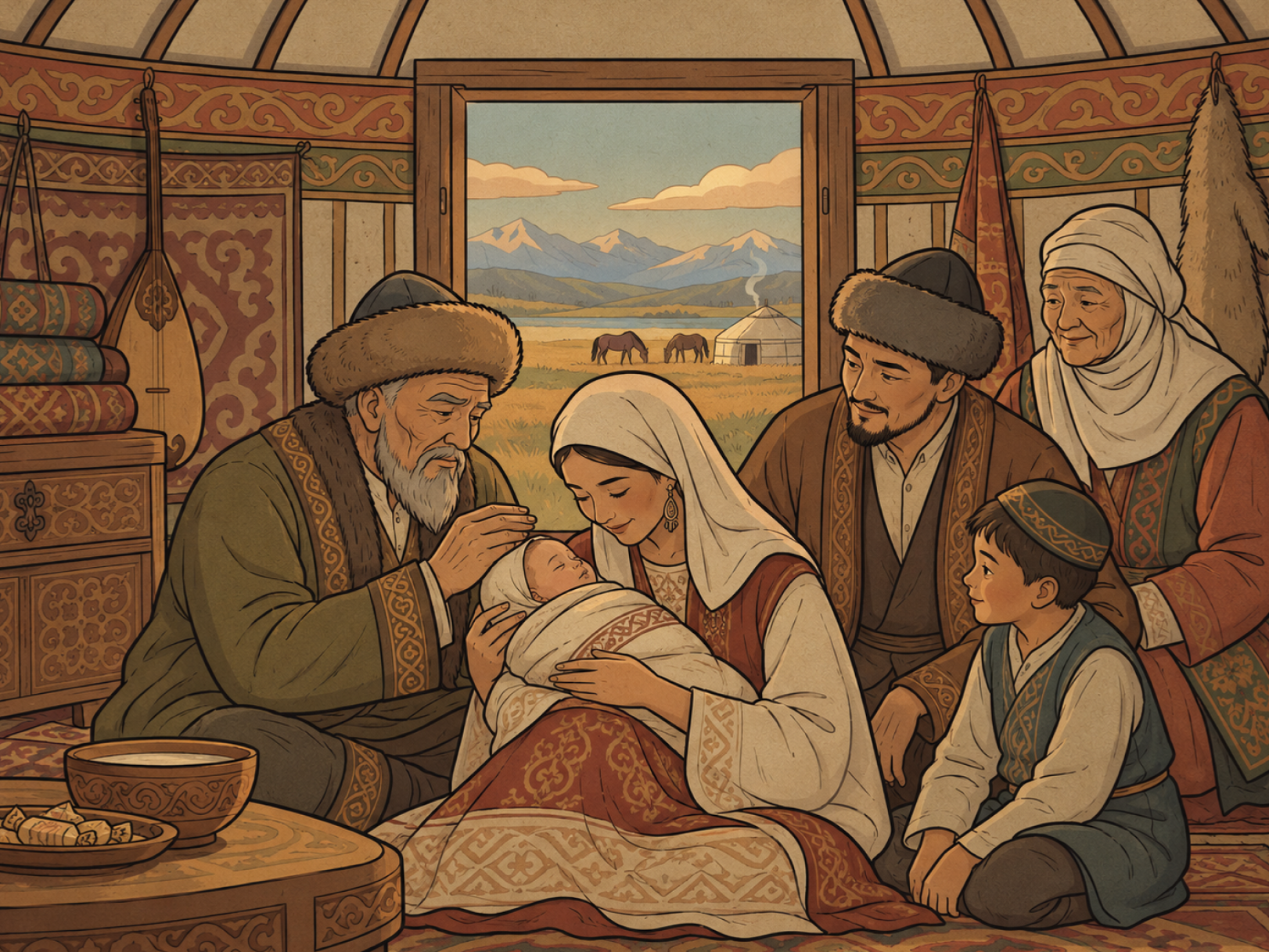
Naming a child – a parent’s first hope
For the Kazakh people, choosing a name for a child has always meant far more than simply fulfilling a tradition. A name was seen as the first blessing and wish bestowed upon a newborn, which is why great thought and care were given to choosing it.
Read more →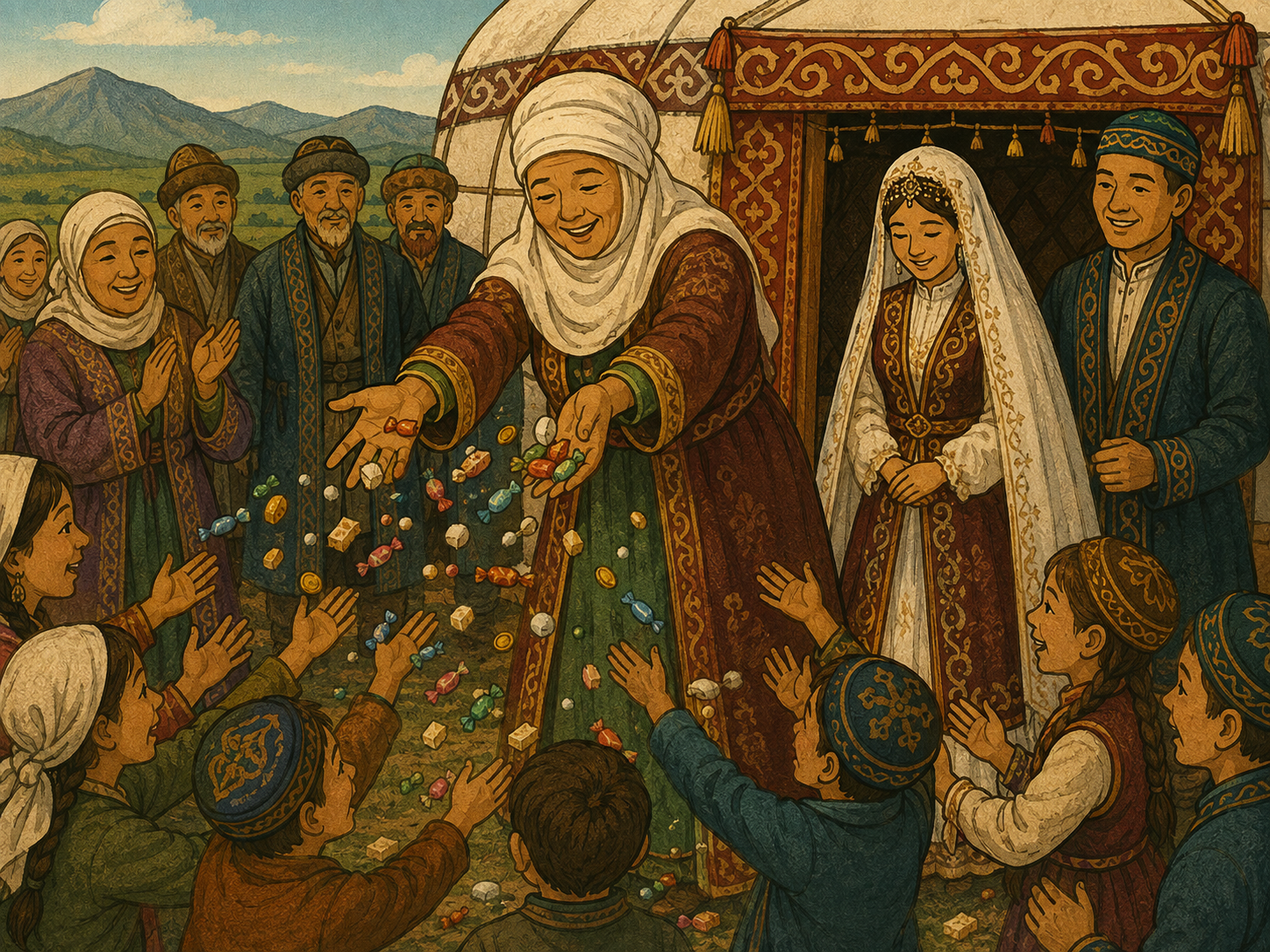
"Shashu" – a tradition of sharing joy
Shashu holds a special place among Kazakh customs. It's a tradition of sharing good news with family, friends, and others. Its meaning is well captured by the proverb: "Shared joy is greater." Shashu is celebrated to mark happy events and important changes in a family's life. When a child is born, a bride comes to the home, a newlywed couple starts a new family, or another joyful event occurs, older women and respected relatives scatter sweets and treats and offer good wishes.
Read more →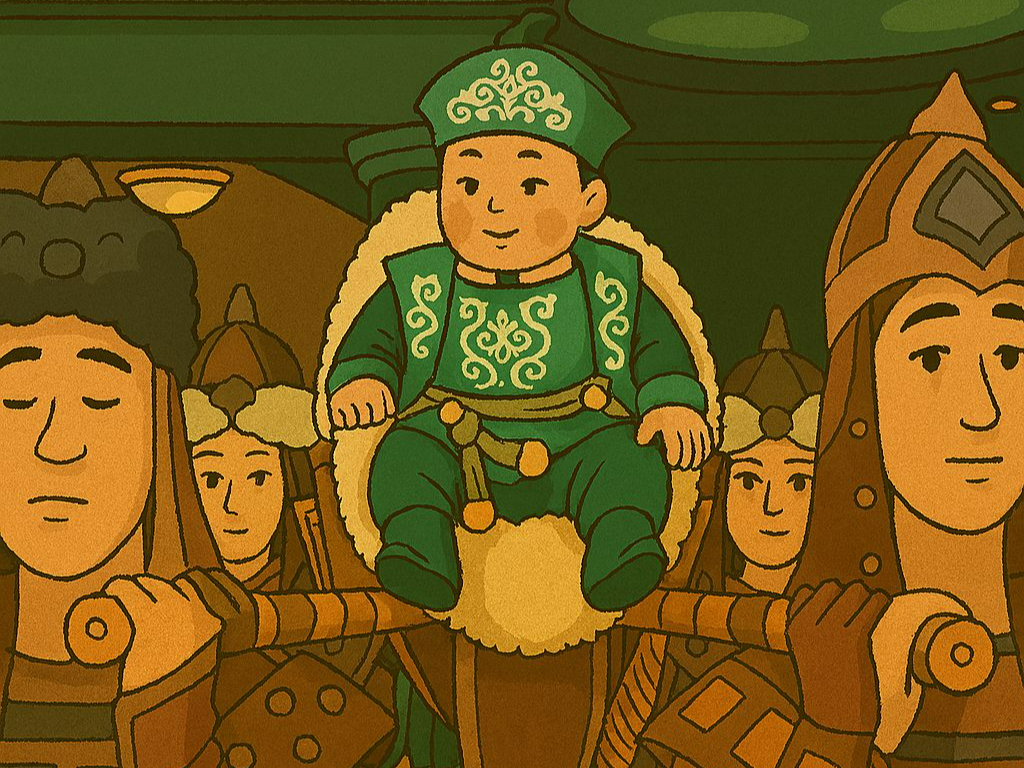
Sundet Toy
Sundet Toy is one of the most significant rites in the life of every Kazakh boy, symbolizing his entry into the Muslim world and the transition to a new stage of growing up.
Read more →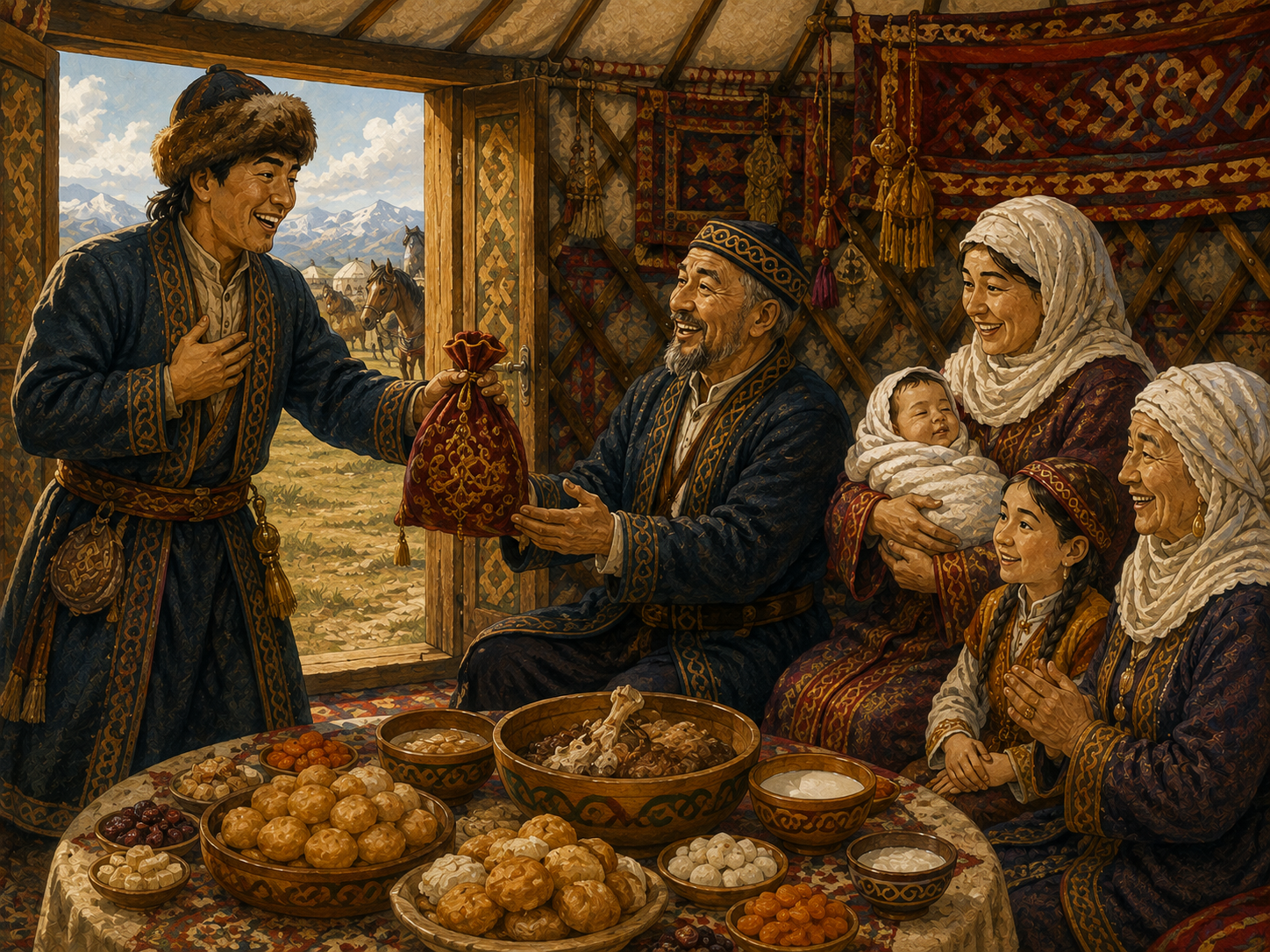
"Suyinshi" - a gift for good news
"Süyönshü" is an ancient Kazakh tradition associated with the announcement of good news. The first person to bring the good news might say, "Süyönshü!" before it was announced. Upon hearing this, the hosts knew something good had happened and prepared to reward the messenger with a gift. The occasions for a "süyönshü" could be varied. This was the announcement of the birth of a child, the arrival of a long-awaited relative, the arrival of a bride in the family, the receipt of a high title, or other significant events. The birth of a baby was considered especially important. The first person to bring it to relatives was entitled to a reward.
Read more →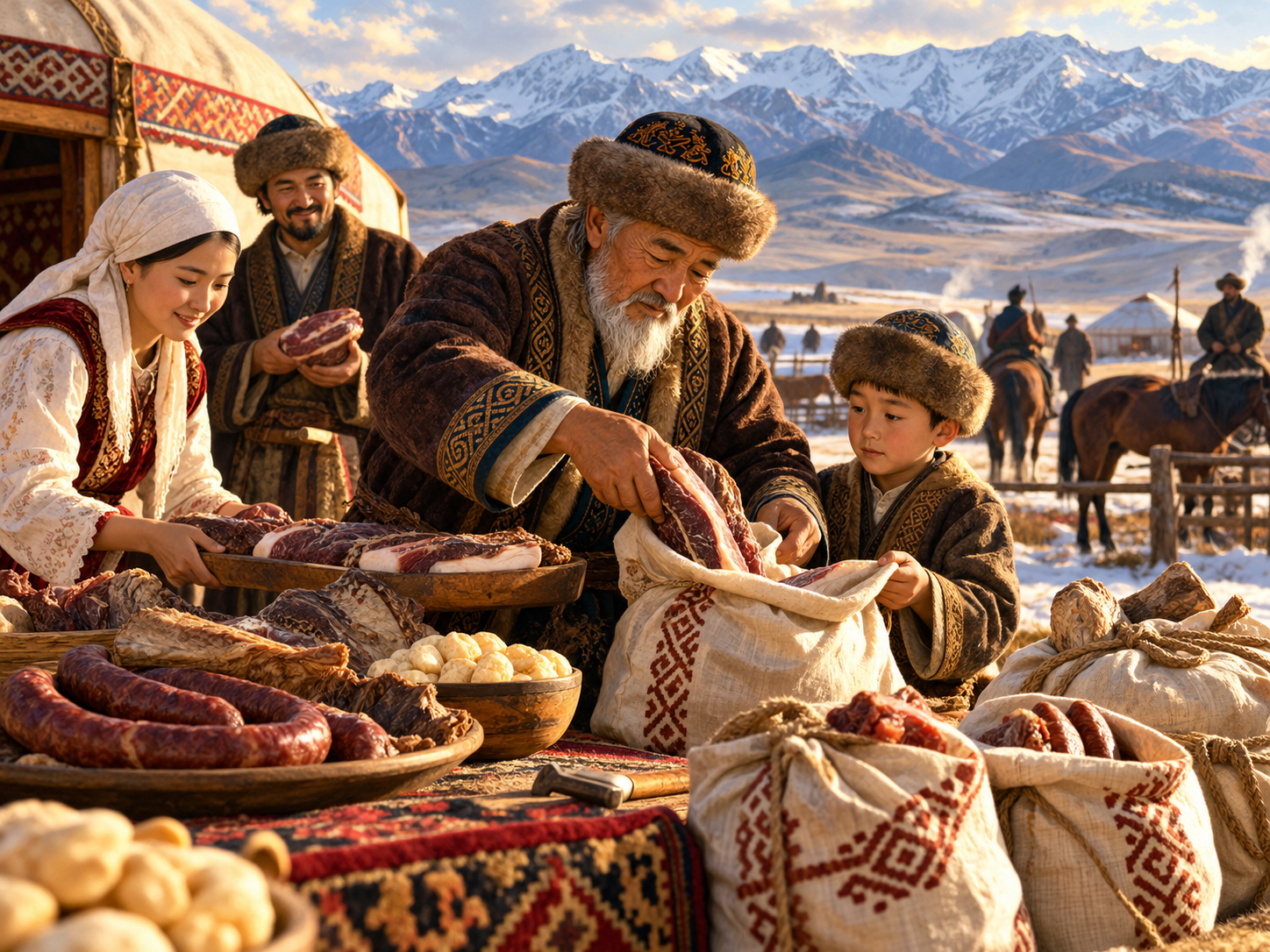
"Sybaga" is a special share for close and honored guests
In Kazakh tradition, it was customary to set aside a portion of the festive meal in advance for someone who, for whatever reason, was unable to attend the dastarkhan. This portion was called "sybaga" and was considered a sign of special respect for a relative or honored guest.
Read more →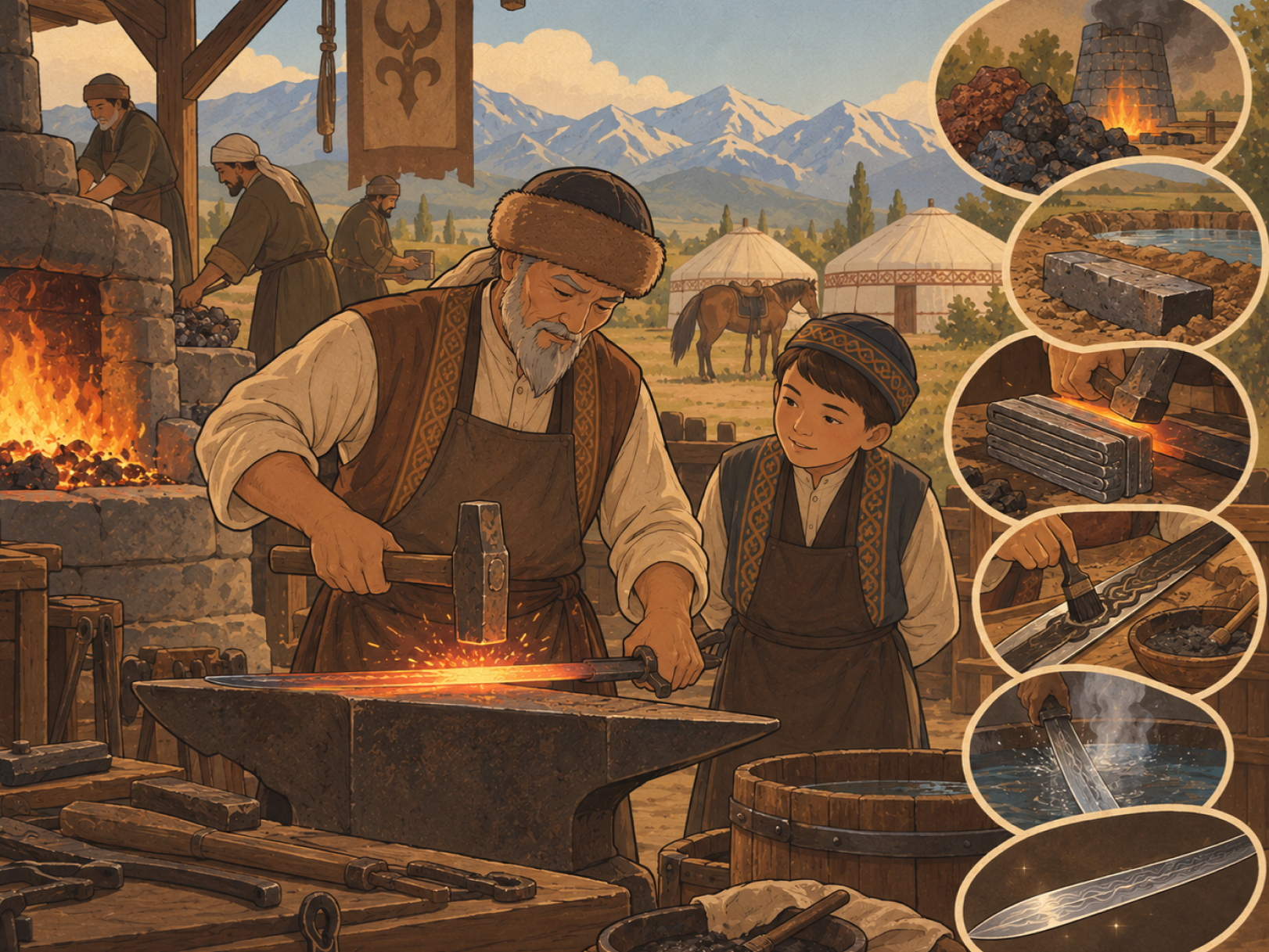
The technology of making a Kazakh sabre
The production of a sabre by Kazakh blacksmiths was a complex and lengthy process. According to the writer Talasbek Asemkulov, a craftsman had not only to smelt high-quality metal but also to achieve a special combination of hardness and flexibility in the blade.
Read more →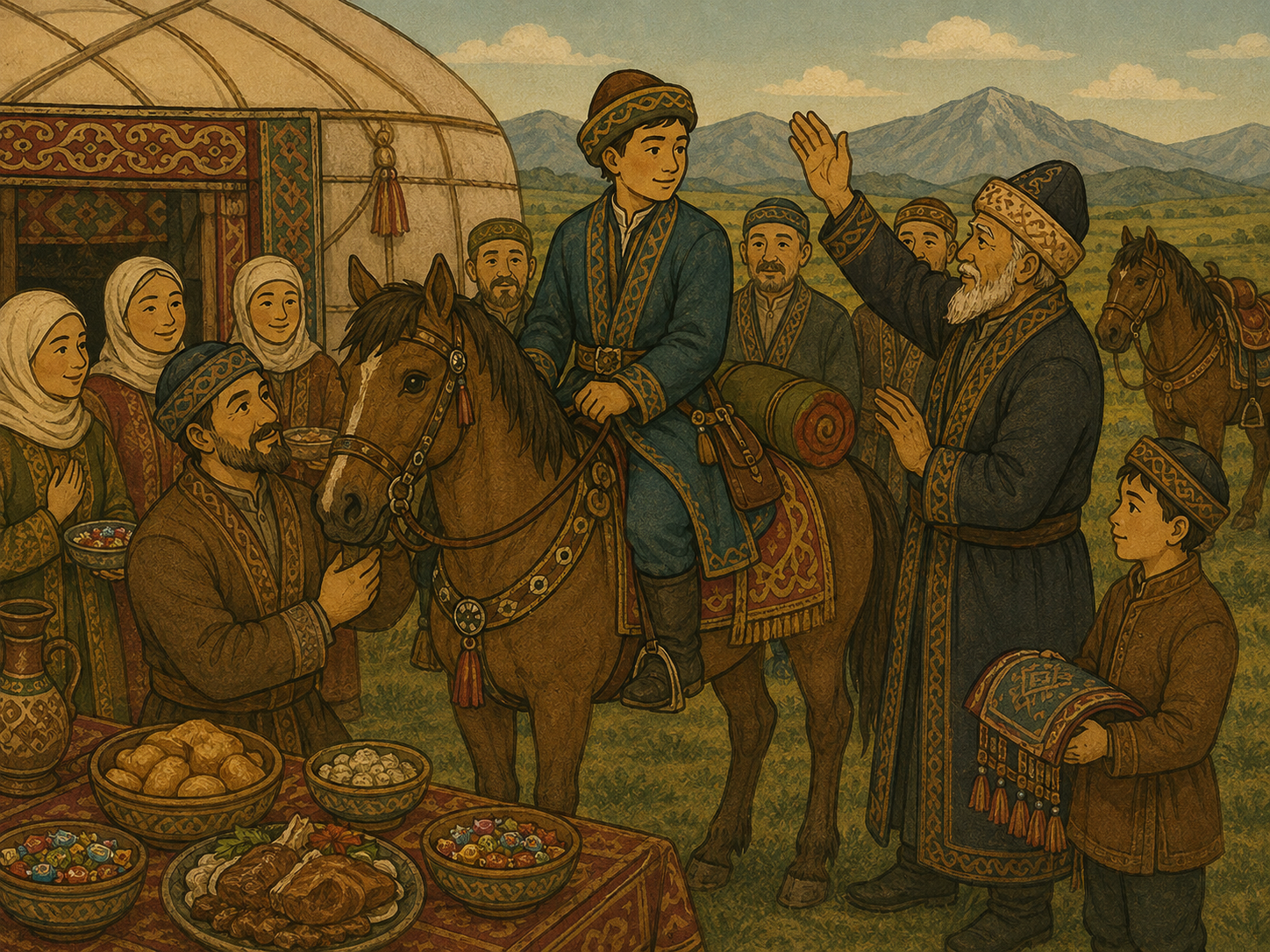
"Tokymkagar" – farewell to the first independent journey
"Tokymkagar" is an ancient Kazakh custom commemorating a young man's first independent trip outside his home. On this occasion, the family would throw a festive feast and invite relatives and neighbors to see the young man off, offer him a blessing, and wish him a safe return.
Read more →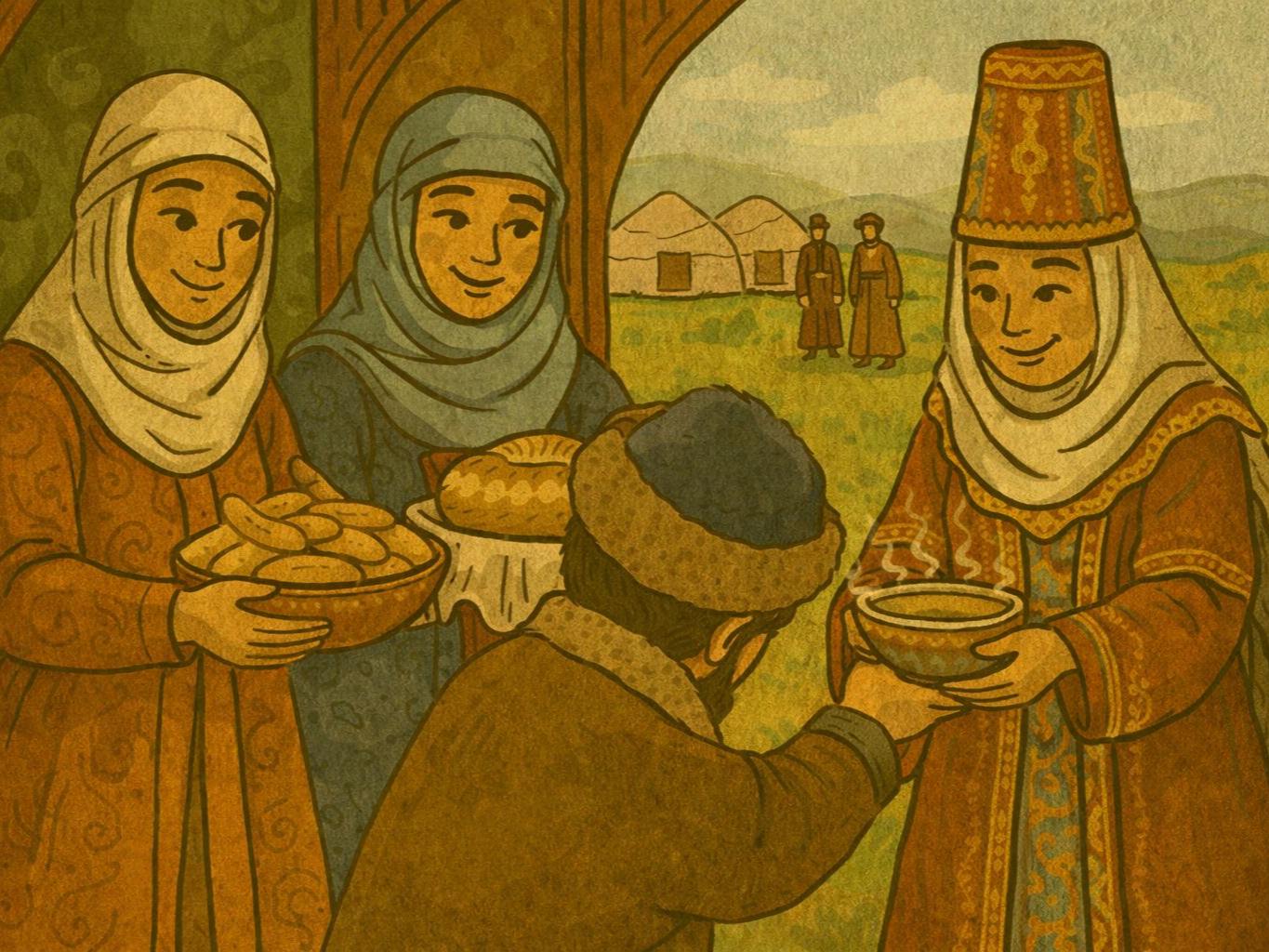
Traditions of hospitality
One of the most beautiful and profound traditions of the Kazakh people, reflecting the essence of the national character, is hospitality. For Kazakhs, welcoming a guest is not simply a gesture of politeness, but a sacred duty, the fulfillment of which demonstrates the host's honor and generosity. Guests have always occupied a special place in a Kazakh home—they were greeted with an open heart, seated in a place of honor, and treated to the finest dishes, surrounded by warmth, care, and respect.
Read more →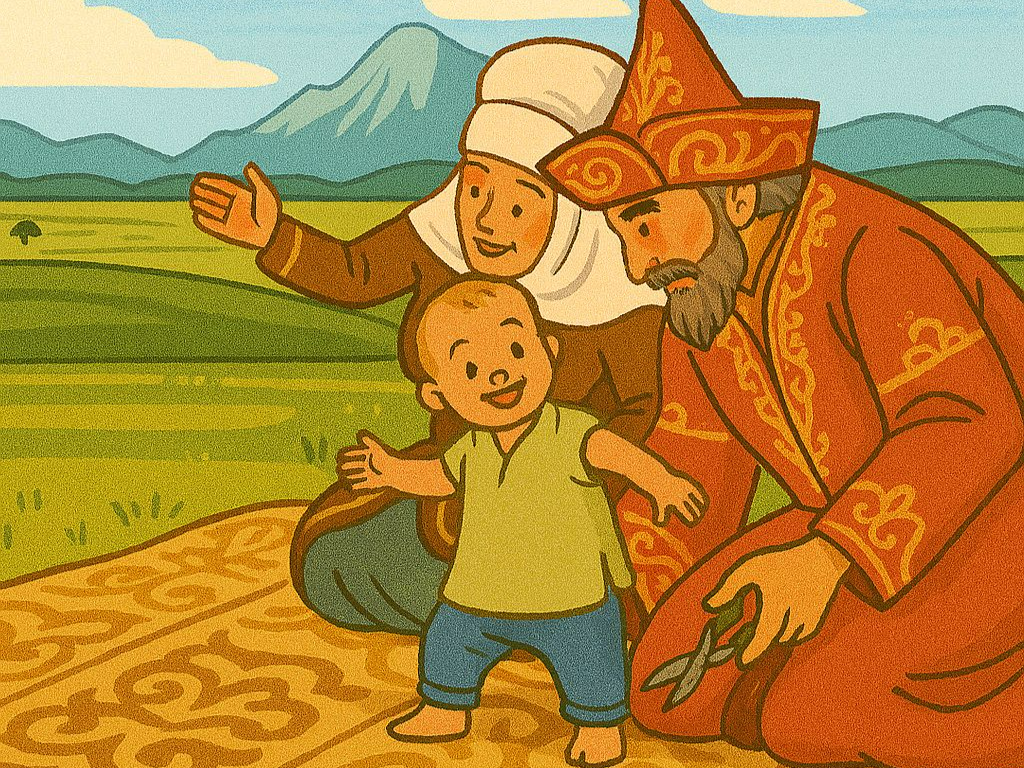
Tusau kesu/Tusaukeser - the rite of the first step
Tusau kesu (translated from Kazakh - cutting the bonds) is an ancient Kazakh custom dedicated to the first steps of a child. It is believed that after this ritual, the baby will begin to walk confidently, will feel a strong support under his feet, and will also be protected from failures and illnesses.
Read more →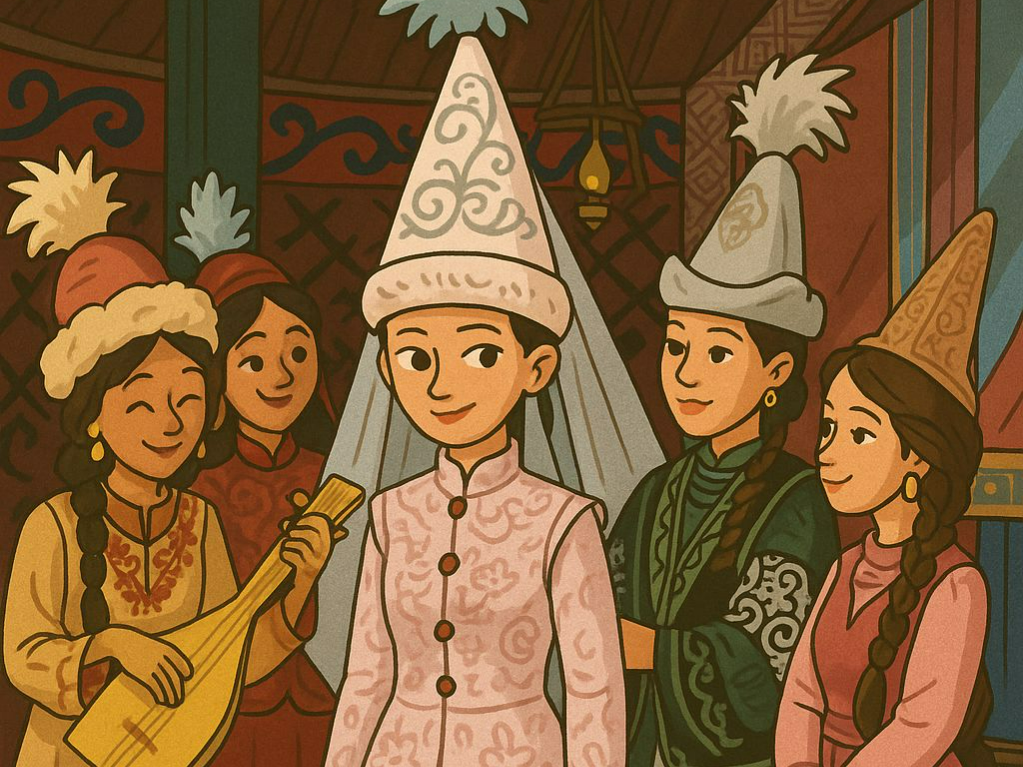
Wedding traditions of Kazakhs
Wedding traditions in Kazakhstan are a whole system of rituals, starting with matchmaking and continuing even after the first wedding night. These traditions include many unwritten rules and customs and have always been considered one of the most important events in the life of every Kazakh.
Read more →