"Enshi" – property for starting an independent life
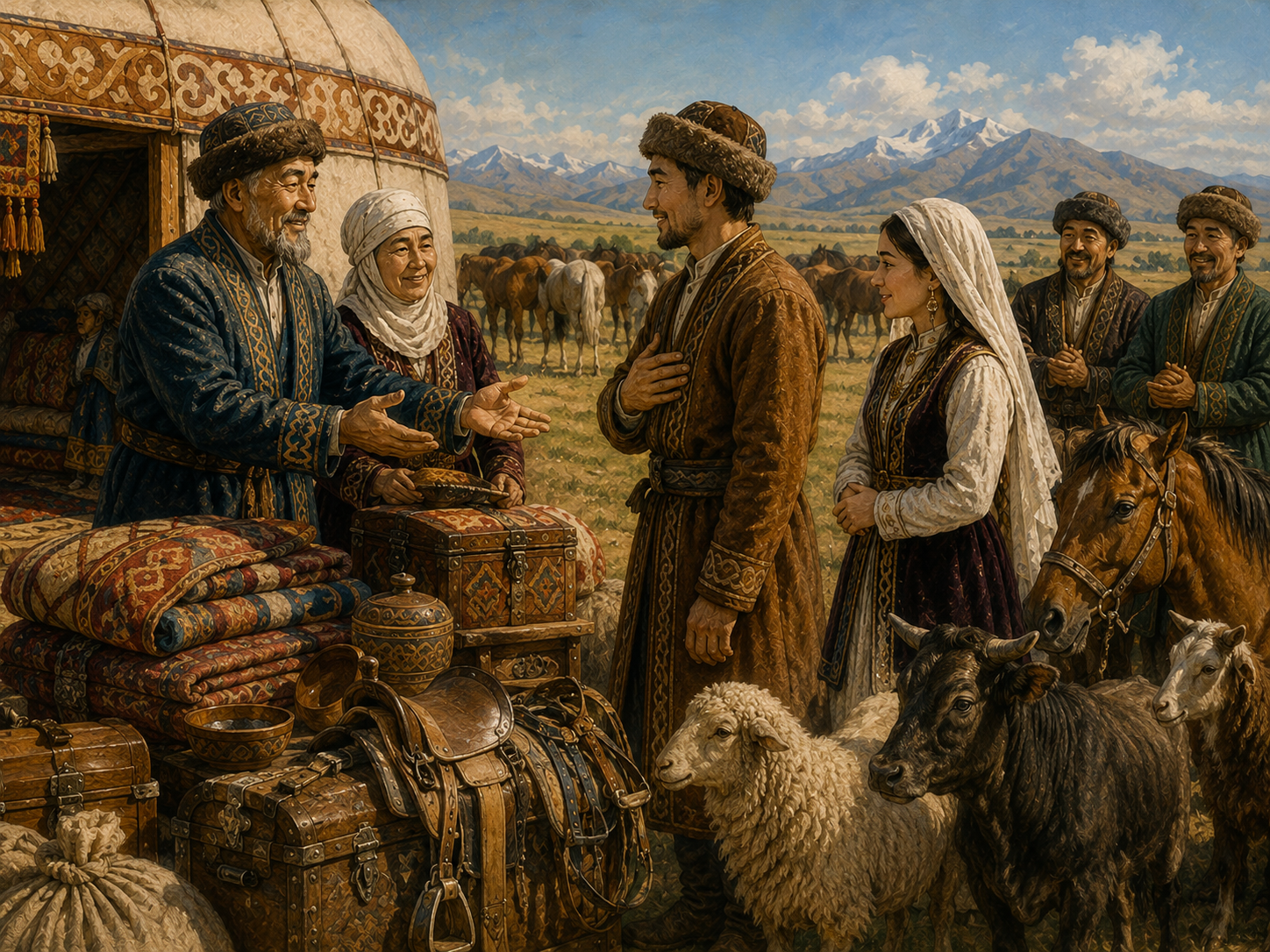
"Enshi" is a traditional Kazakh custom associated with the separation of an adult son from his parents' family and the establishment of his own household. When a young man married and was ready to live independently, his father would allocate him a portion of the family property—livestock, household goods, and everything necessary for setting up a new home.
Receiving enshi meant more than just financial support. From that moment on, the young man became an independent householder, responsible for the well-being of his family. He was expected to manage the household, care for his wife and children, make decisions, and gradually increase the property inherited from his parents.
The size of the enshi depended on the family's wealth. In wealthier households, a son might receive a significant amount of livestock and other property. In more modest families, the gift was smaller, but the principle was still respected: parents helped their children take their first step toward independent living.
However, receiving enshi did not mean severing ties with the extended family. Children who separated continued to support their parents, participate in family affairs, and help relatives. In this way, a new household was created, but the connection between generations was maintained.
The youngest son, the "kenzhe bala," traditionally held a special position. The older sons gradually received their share and separated, while the youngest son often remained in the family home. The concept of "qara shaңyraq"—the main family hearth—was associated with him. The youngest son was responsible for caring for his parents in their old age and maintaining the family home.
This tradition also had an important educational value. Parents not only passed on property to their sons but also demonstrated their trust in them to independently manage the family and the household. Along with material assets, responsibility and family responsibilities were passed on to the younger generation.
Today, "Enshi" in its original form is much less common, but its principle remains. Parents, whenever possible, help their children acquire housing, furniture, a car, or other things necessary for independent living.
Therefore, modern enshi can be seen as a continuation of the old tradition: parents help a young family start their own life while simultaneously maintaining close ties between generations.