Goats Korpesh - Bayan Sulu
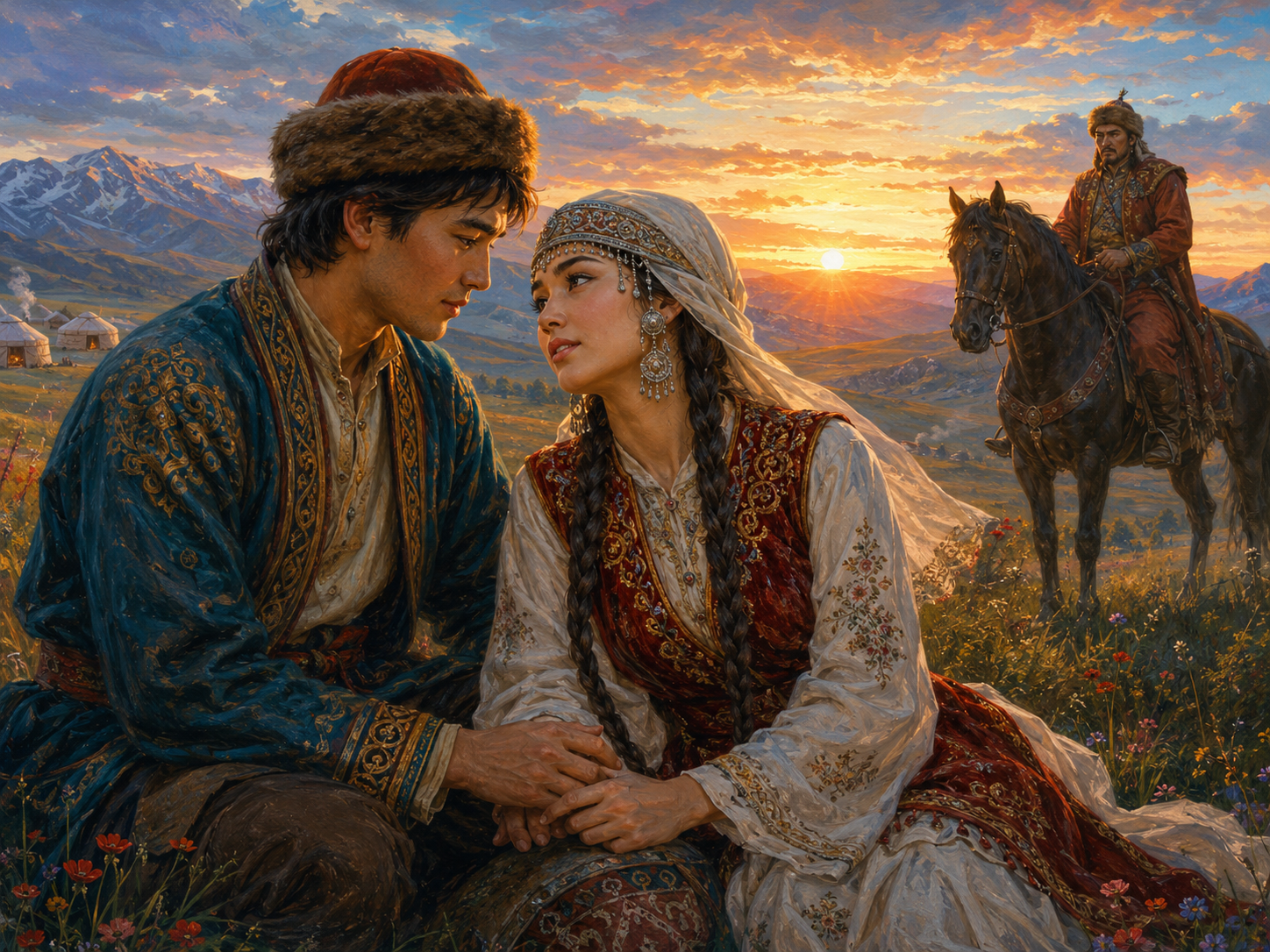
Once upon a time, there lived two friends, Sarybai and Karabai. They once made a pact: if one had a son and the other a daughter, the children would marry when they grew up.
Soon, Sarybai had a son, Kozy, and Karabai's family welcomed Bayan.
However, Sarybai was never destined to see his son grow up. He died young, and years later, Karabai decided he was no longer obligated to fulfill the promise he had made to his old friend.
By that time, Kozy had grown into a brave and worthy horseman, and Bayan was renowned for her beauty, intelligence, and strong character.
Learning of their fathers' long-standing agreement, the young people wanted to meet. But Karabai opposed their union. He left their former nomadic camps and took his family far away, hoping to marry his daughter off to another man.
Kozy set out after them.
After a long journey, he met Bayan, and the young people fell in love. But the powerful Kodar appeared on their path. Karabay wanted to make him his son-in-law.
Bayan refused. She made it clear that her heart belonged to Kozy.
Then Kodar decided to eliminate his rival. Using treachery, he killed Kozy.
For Bayan, the death of her beloved was a heavy blow. But she decided to take revenge.
She told Kodar that she would agree to become his wife if he fulfilled her condition and drew water from the deep well. Kodar began to descend, holding on to Bayan's long braids.
When he reached the precipice, Bayan cut her hair. Kodar fell to his death.
But revenge could not bring Kozy back. In the most famous tragic version of the tale, Bayan soon dies next to her beloved.
The story of Kozy Korpesh and Bayan Sulu has been passed down from generation to generation and has survived in many versions. The details vary, but the main theme remains unchanged: love, keeping one's word, and a person's right to choose their own destiny. Therefore, centuries later, the names Kozy and Bayan remain in Kazakh culture as symbols of devoted love.