Zhetigen
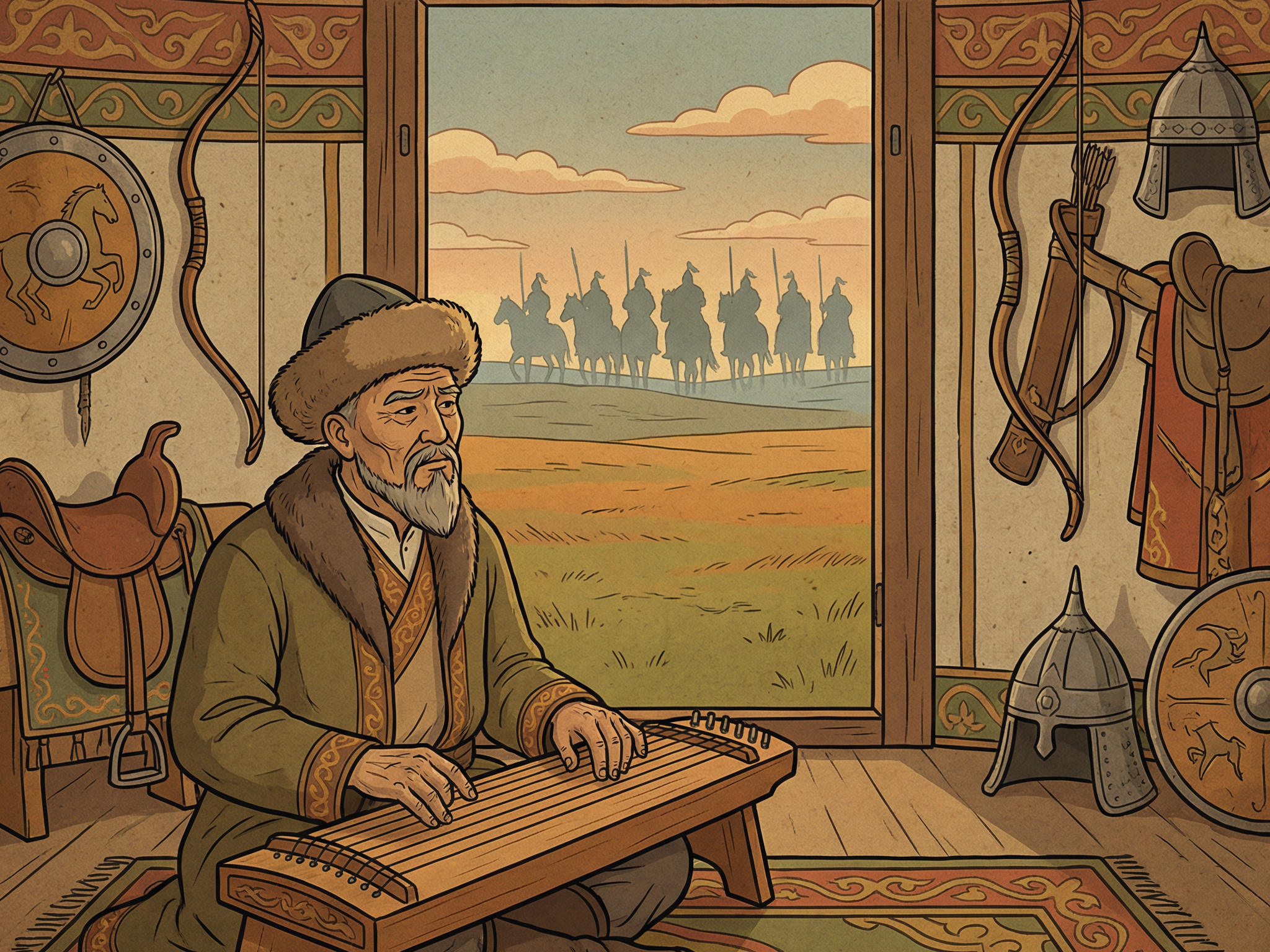
Once upon a time, there lived an old man who had seen much in his life, and he had seven sons. All seven were mighty horsemen, a pillar of strength for the people and a protector of their native land. These were apparently troubled times, full of hostility and raids.
One day, out of breath from haste, a messenger arrived with the news that an enemy army had already appeared at the border. The old man's seven sons donned their cold, shining armor and set out to meet the enemy.
The enemy, too, proved strong and well-armed. A bloody battle erupted between the two sides. The seven brothers, gathering their people and marching in defense of their native land, fought shoulder to shoulder against the enemy, displaying unprecedented valor in battle. They succeeded in stopping the enemy. But in that battle, all seven died a heroic death.
The sad news reached their old father. His grief, having lost seven sons at once, knew no bounds. Nothing brought him solace; his soul was consumed by anguish. Days passed, months passed, but the image and character of each of his sons revived in the elder's memory again and again, and this pain haunted him. Finally, when his patience was exhausted and his heart could no longer bear the suffering, he one day made a musical instrument and, in memory of his seven sons, strung seven strings on it.
Remembering the character and habits of each son, the elder created seven kuis. He cherished these seven melodies as if they were his own children, finding solace in them for the rest of his days.
Thus, according to legend, the zhetigen instrument was born. And seven kyuis, composed by the elder in memory of his sons, spread across the steppe under the names “Karagym”, “Kanat sonar”, “Ot soner”, “Baqyt koshti”, “Kun tyldy”, “Kusa”, “Shamyrkan”.