"Ashamaiga mingizu" – the first initiation of a child into the horsemen
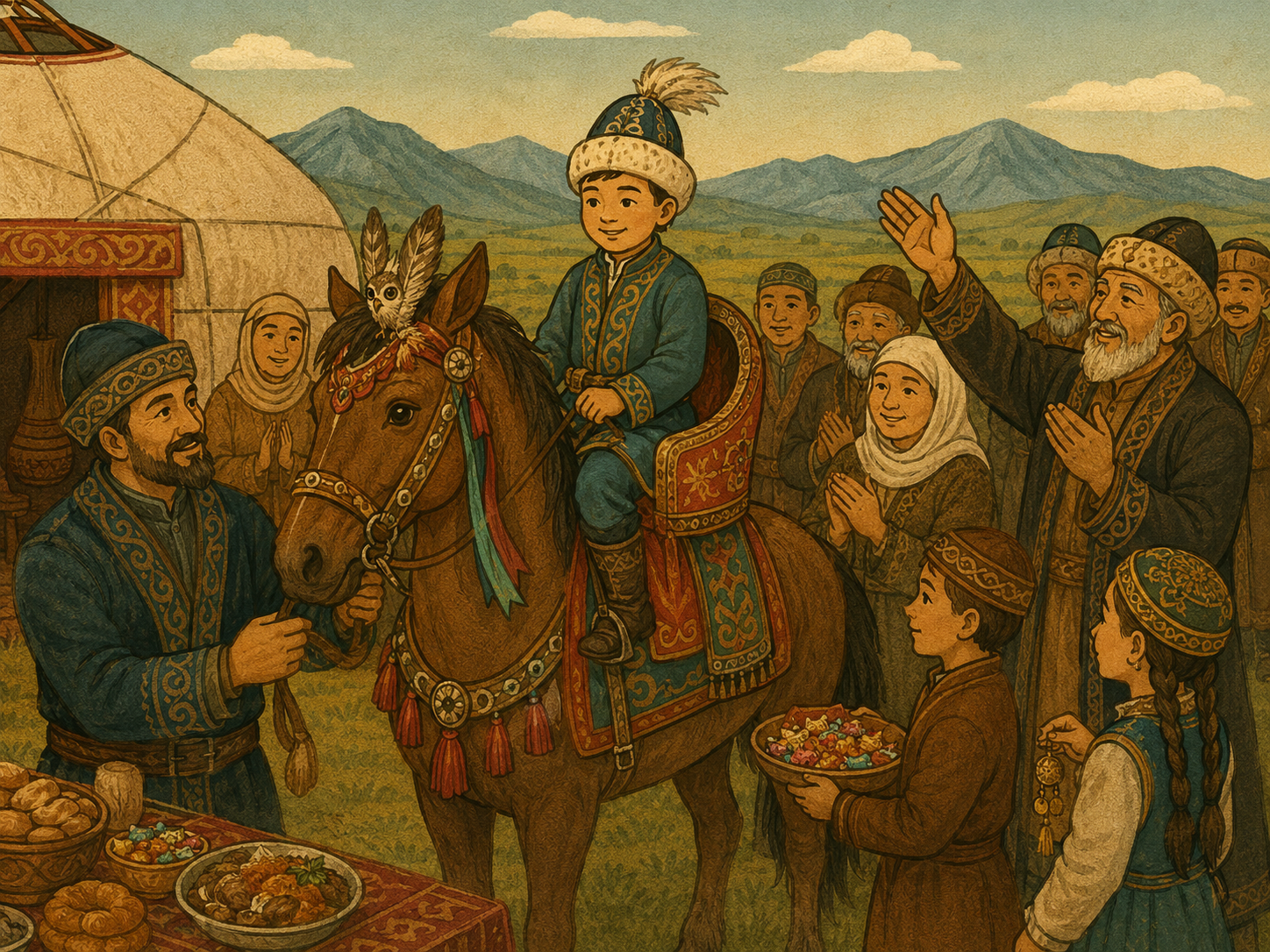
"Ashamaiga mingizu" is an ancient Kazakh rite during which a child is placed on a horse for the first time. This day symbolized the end of early childhood and the beginning of a new stage in life, one marked by independence, responsibility, and an immersion in the traditional culture of the steppe.
The horse held a special place in the lives of the Kazakh people. It was not only a means of transportation, but also a faithful companion, a helper on the farm, and a symbol of freedom, strength, and well-being. Therefore, mastering saddle skills was considered one of the most important, and children were taught from an early age.
The rite was usually performed when a child reached six or seven years of age and could already understand how to control a horse. This tradition was especially relevant to boys: by placing their son on a horse, parents acknowledged that he was growing older and gradually preparing for adulthood.
A calm, well-trained foal or young horse was chosen for the child in advance. Often, this was an animal specifically designated for the child as his personal riding horse. It was adorned with ornate harnesses, ribbons, tassels, and owl feathers (uki), which were believed to have protective properties in folk culture.
An "ashamai"—a special children's saddle—was installed on the horse. It differed from an adult saddle in its smaller size and safer design. The high front and back helped the child maintain balance and prevent falling out while riding. Instead of regular stirrups, soft felt supports or small pouches for the child's feet could be used. The ashamai itself was covered in felt and decorated with fabric, embroidery, and ornaments.
The task of placing the child on the horse was entrusted to an experienced and respected person who was confident in the saddle and renowned for his skill. It was believed that his qualities could serve as a role model for the young rider. He helped the child mount correctly, explained how to hold the reins, and control the horse. Before the journey began, the elders would offer good wishes and give the child a bata. They wished the child to grow up brave, resilient, honest, and worthy, to confidently overcome life's difficulties, and always find the right path.
Then the child was given the reins and whip. At first, an adult would lead the horse by the bridle, helping the young rider get used to the movement. Later, he was allowed to ride independently through the village. Relatives and neighbors greeted the child with joyful shouts, showered him with sweets, and performed the "shashu" ritual. Jewelry, coins, beads, and feathers were attached to the baby's clothing and horse harness.
To celebrate the child's first independent ride, the parents would set up a festive dastarkhan, sometimes called "ashamai toi." Relatives brought gifts and "korimdik" (meal), congratulating them on the important event. The horseman's accessories—the whip, belt, headdress, or elements of the horse's harness—were particularly significant.
"Ashamaiga mingizu" had not only a celebratory but also an educational significance. It taught children independence, discipline, caring for their animals, and responsibility for their actions. Having received their own horse, they had to learn to feed it, water it, clean it, and handle it with care.
Today, this ritual is performed much less frequently, but interest in it is gradually reviving. It is performed at ethnographic festivals, family celebrations, and events dedicated to national traditions. The modern format may differ from the original, but the main meaning remains: the child experiences themselves as an independent horseman for the first time, receives the blessing of their elders, and takes another important step toward adulthood.