"Kamshy kaytaru" – how the Kamcha communicated the answer to the matchmakers
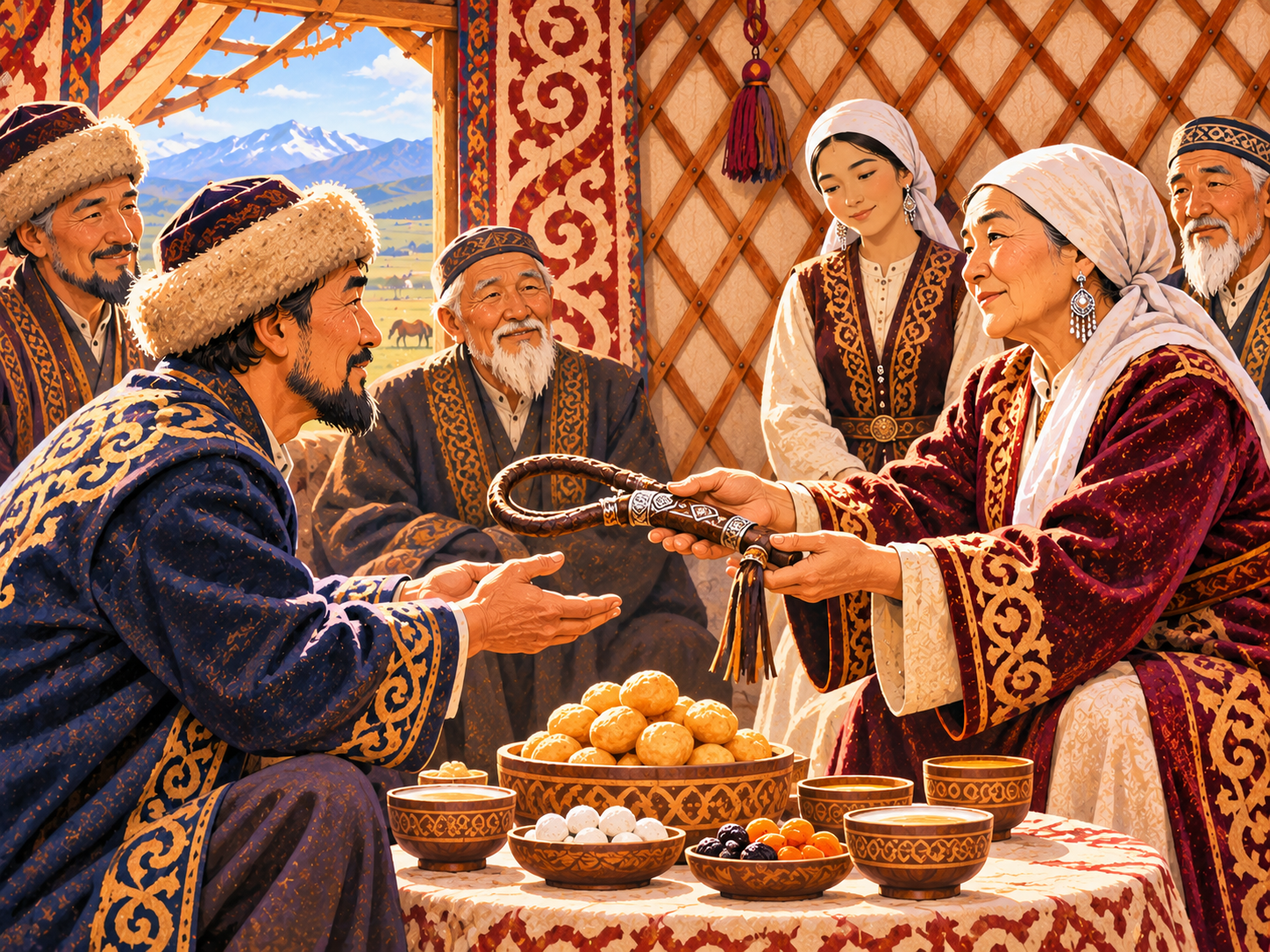
In traditional Kazakh culture, a riding whip could serve not only as a practical object but also as a symbolic means of communication.
During matchmaking, the father of a young man could visit the girl's family together with respected relatives and elders. After the meal, he might leave his whip hanging on the kerege, the wooden lattice wall of the yurt. This was a discreet way of expressing the family's interest in marriage.
The girl's family then considered the proposal. If they did not wish to continue the matchmaking, or if the girl was already promised elsewhere, the whip was returned to its owner.
This gave the custom its name, kamshy kaytaru – “returning the whip.”
The gesture also helped both families avoid an open confrontation. A refusal was accepted without hostility, allowing mutual respect to be preserved.
The custom is rarely practiced today, but it remains an interesting example of how important family matters could once be communicated through symbols rather than direct statements.