"As Beru" is a memorial rite in memory of the departed.
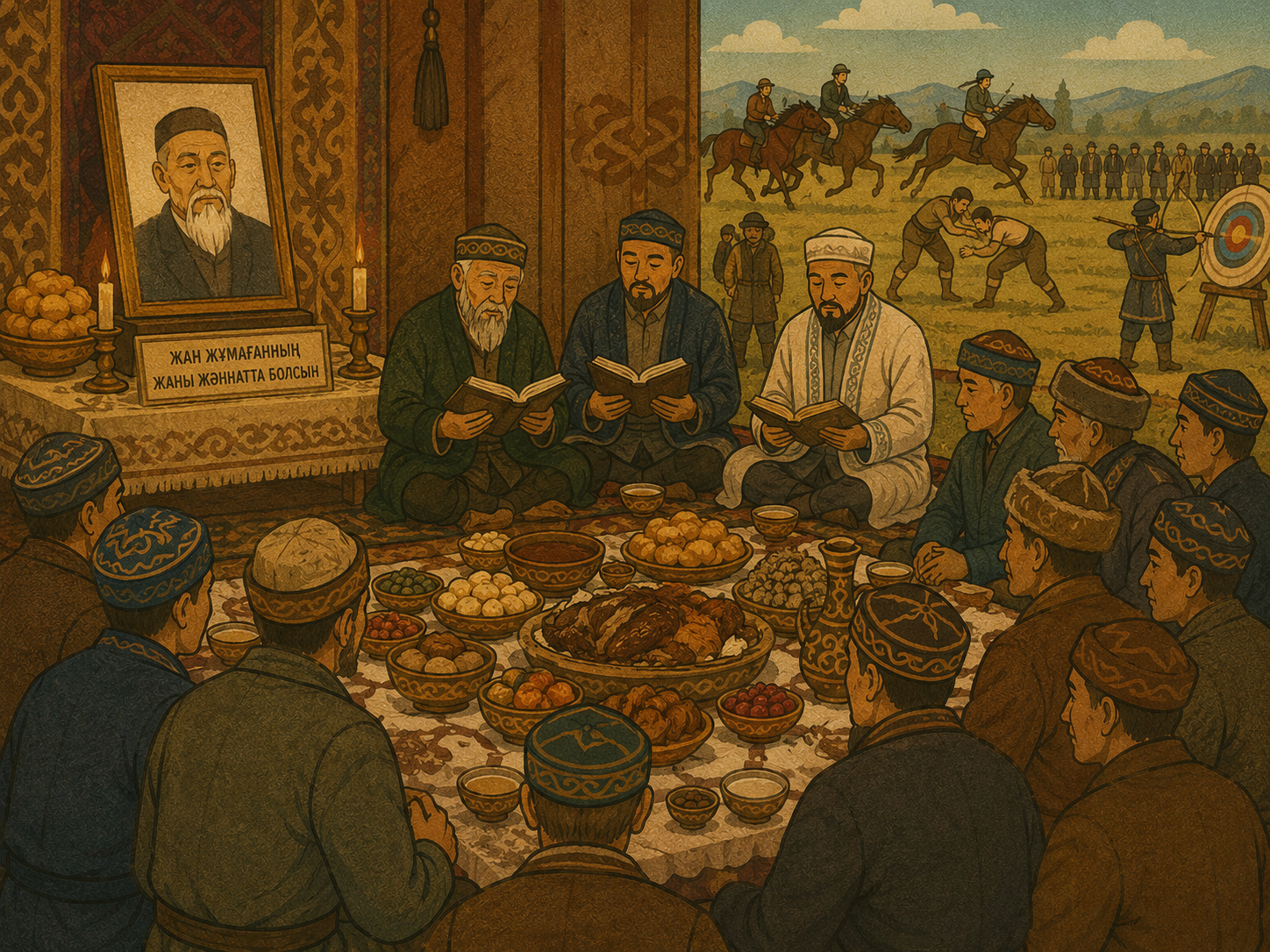
"As beru" is one of the most significant traditions of the Kazakh people, associated with the commemoration of the deceased, expressing respect for their memory, and bringing together relatives, friends, and fellow countrymen. Traditionally, a particularly large as was held a year after the death of a famous and respected person. This ceremony was called an anniversary – "zhyldyq as."
In traditional Kazakh society, an as could last several days and attract a large number of guests from various places. During the memorial gathering, the Quran was read, the batah was recited, and the merits of the deceased were remembered. Aksakals, influential and respected people, attended the as.
Often, the memorial event was accompanied by national competitions and folk entertainment. Horse racing (bayge), baluan wrestling, aitys, target shooting (zhamby atu), and other competitions were held. Therefore, the as was not only a memorial rite but also a major social event, uniting people and strengthening ties between clans and villages.
The scale of the traditional as is detailed in Mukhtar Auezov's epic novel "Abai's Path." The work describes a memorial as for God, organized by Abai. Numerous guests gather for the celebration, refreshments are prepared for them, and a bäyge (a horse race), wrestling, and equestrian competitions are held. Auezov carefully conveys the atmosphere of the large gathering: elegantly saddled horses, young horsemen serving dishes to the guests, and participants preparing for races and other competitions. This episode demonstrates how significant a social event the as could be.
Today, the "As beru" tradition remains, but its form has changed. Most often, on the anniversary of a death, relatives gather in a mosque, home, or special room, read the Quran, offer a prayer in memory of the deceased, and set the dastarkhan (table). Multi-day gatherings and large-scale competitions are held much less frequently.
In modern society, the As can be dedicated not only to the memory of a relative, but also to prominent historical figures. Such events are held to preserve their legacy and pass on their memory to future generations.
Thus, "As Beru" continues to maintain its core meaning—to honor the memory of the departed, unite people, and remind them of the connection between generations.