Kyz Aityru – When Two Families Prepare for Marriage
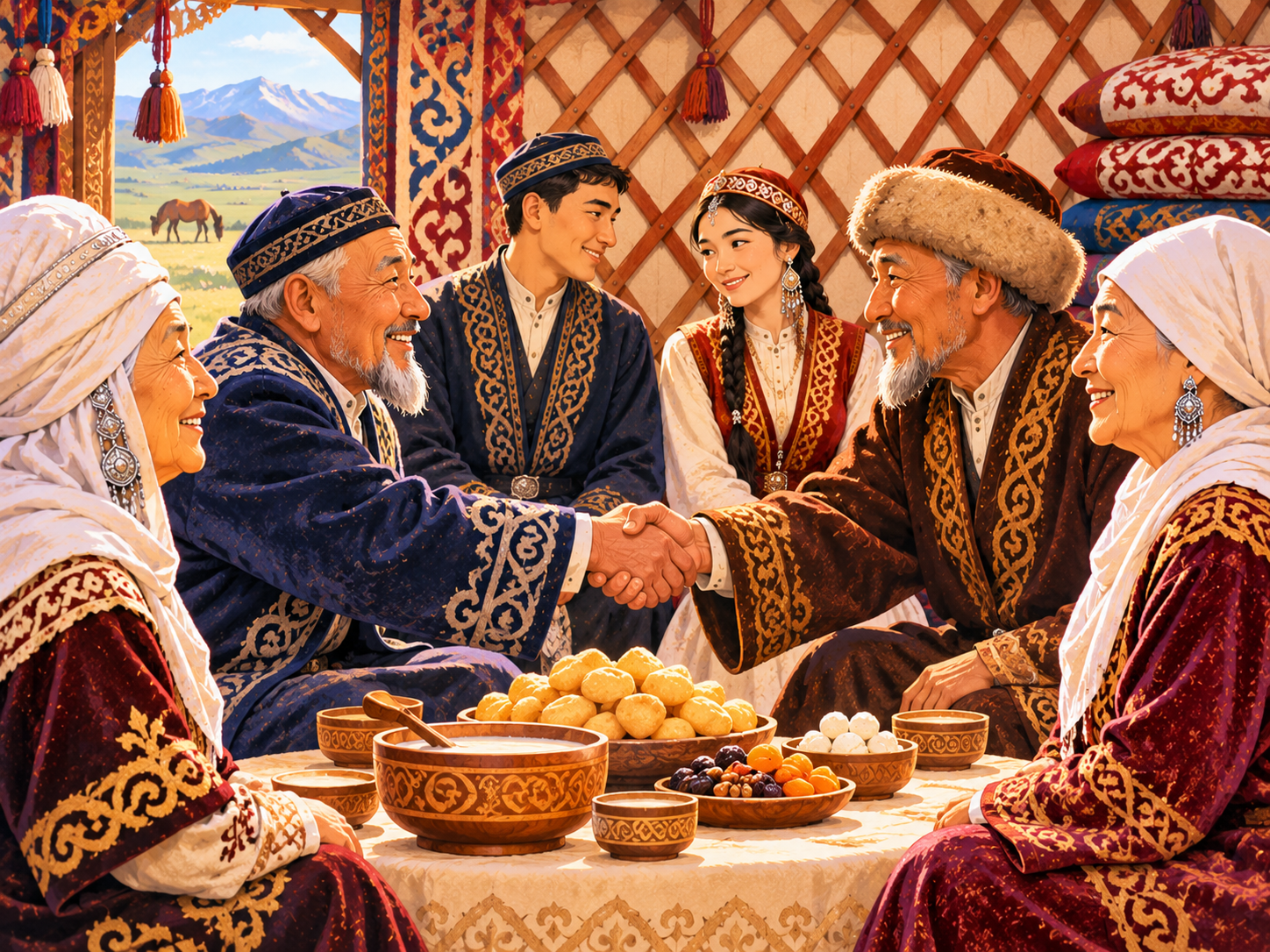
In traditional Kazakh society, marriage was viewed not only as the union of two young people but also as the beginning of a relationship between two families. Parents therefore paid close attention to the reputation, background and values of a family with whom they might become related.
This custom was known as kyz aityru and had several forms. Close family friends could agree on a future union even before their children were born – a practice called bel kuda. An agreement involving very young children was known as besik kuda, or “matchmaking from the cradle.” When two families exchanged marriage ties, they became karsy kuda, while renewed marriage ties between families already related by marriage were called suyek zhangyrtu.
Genealogy also played an important role. Kazakh tradition discouraged marriage between descendants of a common ancestor within seven generations.
Today these early forms of matchmaking are primarily part of cultural history. Marriage is a personal decision of the couple. Under Kazakhstan's current law, marriage requires the free and full consent of both parties, and the general marriage age is 18.
In a modern context, kyz aityru can therefore be understood as a respectful meeting and rapprochement between two families after the couple themselves have decided to marry.