"Erulik" – a treat for new neighbors
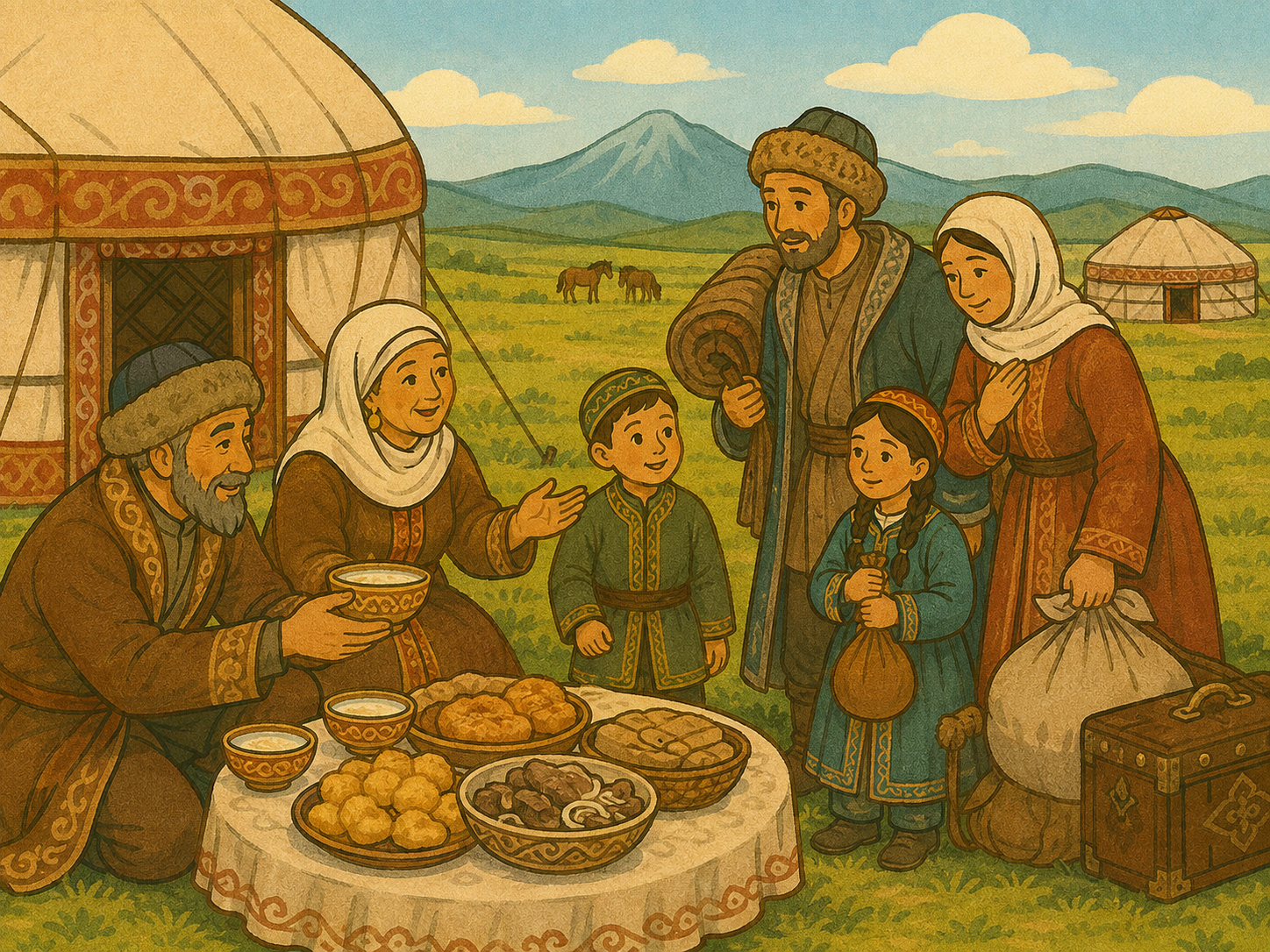
"Yerulik" is an ancient Kazakh tradition associated with a family's move to a new place. When new settlers arrived in a village, neighbors would invite them over, set the table, and hold a small celebration. This was a way to welcome the new residents, help them settle in, and let them know they were now part of the local community.
Moving has always been a difficult event. It was especially challenging in a nomadic lifestyle, when a family had to transport their belongings, set up a yurt, set up a farm, and care for livestock. After a long journey, new settlers often lacked the strength and ability to immediately prepare a meal. In such a situation, neighbors were the first to come to the rescue.
They would invite the arriving family to the dastarkhan and treat them to hot food, meat, and other dishes. If necessary, they would provide firewood, drinking water, and everything else needed for the initial settlement. "Erulik" wasn't just a festive reception, but an act of mutual support that ensured the new settlers didn't feel lonely in an unfamiliar place.
It was usually the longtime residents of the village who took the initiative. They took turns inviting the new neighbors into their homes, introducing them to other residents, and sharing the local customs and traditions. Over the dastarkhan, people got to know each other better, asking about their families, clans, previous residences, and the reasons for their move.
This was the first introduction the new settlers made to their neighbors. The invited family also tried to show respect for the hosts, observed the rules of etiquette at the dastarkhan, and introduced themselves. The subsequent relationships between neighbors depended greatly on how this meeting went.
The good wishes of elders were especially important. They wished the new settlers well-being, prosperity, peace in the home, and a long life in their new home. Elders could recite the bata, a blessing addressed to all family members. It was considered important that their new home become a place of joy, harmony, and hospitality.
"Erulik" not only helped them get to know each other but also established mutual obligations. The new family understood that there were people nearby who were ready to support them in difficult times. At the same time, the new settlers accepted the obligation to respect their neighbors, participate in the life of the village, and in the future, to help others.
This tradition was of great importance in the steppe, where a person's well-being often depended on the help of others. By working together, residents overcame economic difficulties, adverse weather, and other challenges. Therefore, good neighborliness was perceived not simply as politeness, but as a necessary condition for a peaceful and safe life.
The name of the ritual gradually came to refer both to the meal prepared for the new neighbors and to the meeting organized in their honor. In official Kazakh cultural documents, "Yerulik" is also defined as a holiday for new settlers and a time to get to know their neighbors.
Over time, the Kazakh way of life has changed, but the tradition has not disappeared. Today, "Yerulik" can be celebrated after a family moves into a new house, apartment, village, or city neighborhood. Neighbors invite the new settlers for tea or dinner, get to know them, exchange contact information, and share stories about life in the house or neighborhood.
Modern "Yerulik" no longer requires a grand celebration or a sumptuous table. Its main focus is on paying attention to people who find themselves in unfamiliar surroundings. Even a small treat and warm conversation help a family feel welcome and, later, fully-fledged members of the new community.
The meaning of the tradition is well conveyed by the unspoken greeting to a new neighbor: "You are not a stranger to us." This is why "Yerulik" remains a shining example of Kazakh hospitality, mutual assistance, and respectful relationships. He reminds us that true neighborliness begins not with a shared fence or entrance, but with getting to know each other, openness, and a willingness to support each other.