"Tokymkagar" – farewell to the first independent journey
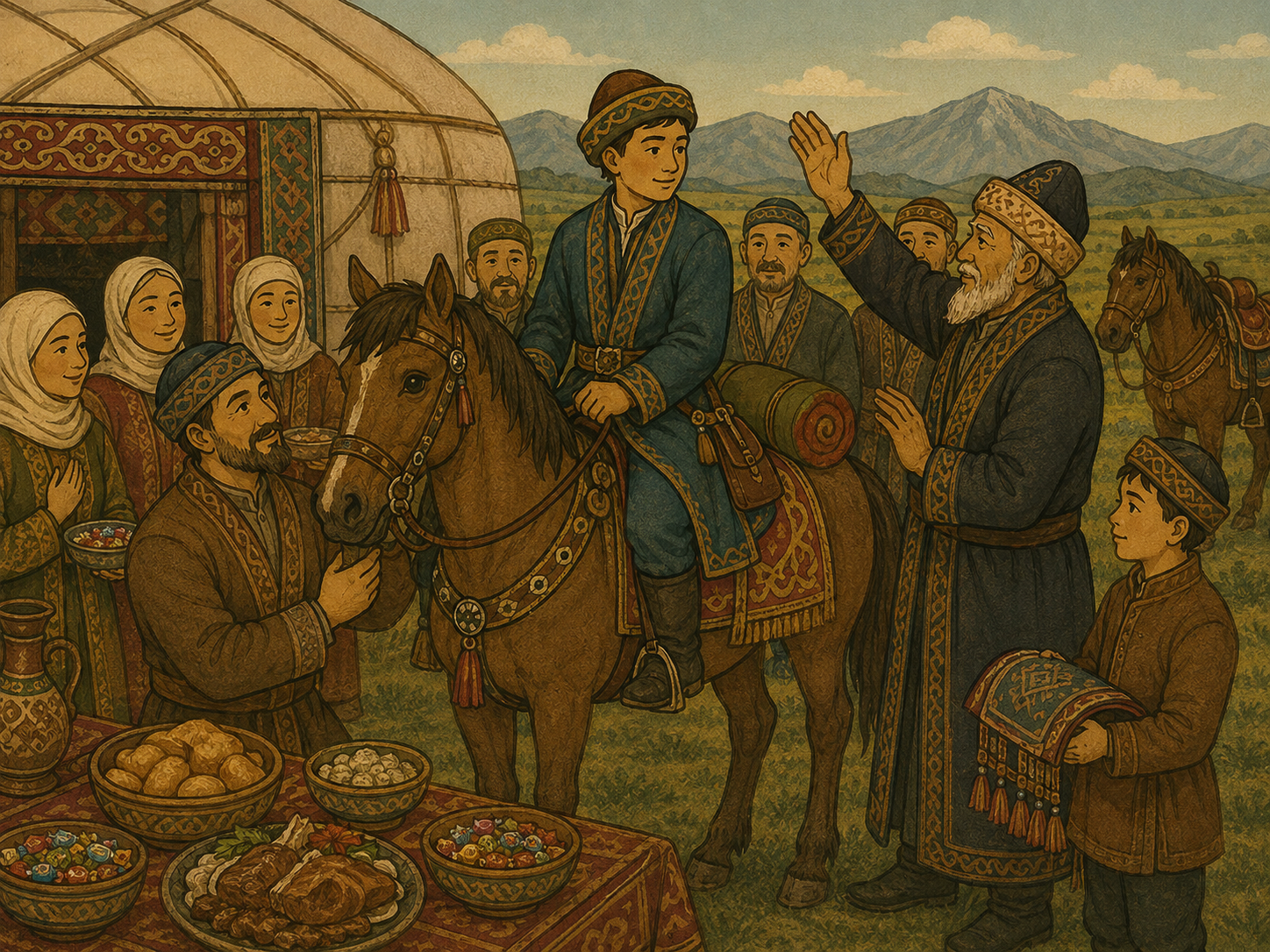
"Tokymkagar" is an ancient Kazakh custom commemorating a young man's first independent journey outside his home. On this occasion, the family would throw a festive feast, invite relatives and neighbors to see the young man off, offer him a blessing, and wish him a safe return.
The name of the tradition derives from the words "tokym" – a saddle cloth placed under the saddle – and "kagar" – to shake or beat out. It is associated with the rider's preparations: before a long journey, the horse would be groomed, the saddle checked, and everything necessary for the journey prepared.
"Tokymkagar" was performed when the teenager had already mastered the saddle and was ready to independently carry out errands assigned by his elders. The occasion could be a visit to relatives, participation in a competition, herding cattle, or escorting a caravan. The main point was that the young man was setting out on a journey for the first time as an independent person.
Preparations for the journey were made in advance. The parents gathered clothing, food, and essentials for the journey. They paid special attention to the horse: they cleaned it, checked the harness, girth, reins, and saddle. Proper equipment was essential for the rider's safety.
Before departure, a respected aksakal (elder) recited a bat. They wished the young man an easy journey, good health, reliable companions, and the successful completion of the assigned task. He was instructed to respect his elders, help people, be careful, and remember the honor of his family.
After the farewell, a dastarkhan (table) was set. Over refreshments, the elders shared memories of their travels and taught them the rules of conduct on the road. Thus, the holiday became not only a celebration but also a unique lesson in growing up.
In a nomadic life, independent travel required many skills. A young man had to navigate the terrain, care for a horse, plan for water and food supplies, find lodging, and behave appropriately when meeting strangers. "Toqimqaqar" expressed parents' trust in their child and reminded them that independence comes with responsibility. Upon returning from their first trip, a young man was perceived differently—as someone who had gained new life experiences.
Today, the meaning of the tradition is preserved in farewells to students, competitions, military service, or their first long trip. The main idea remains the same: to support the young man before taking an important independent step and to bless him for a safe journey.