"Bata beru" - blessing of elders
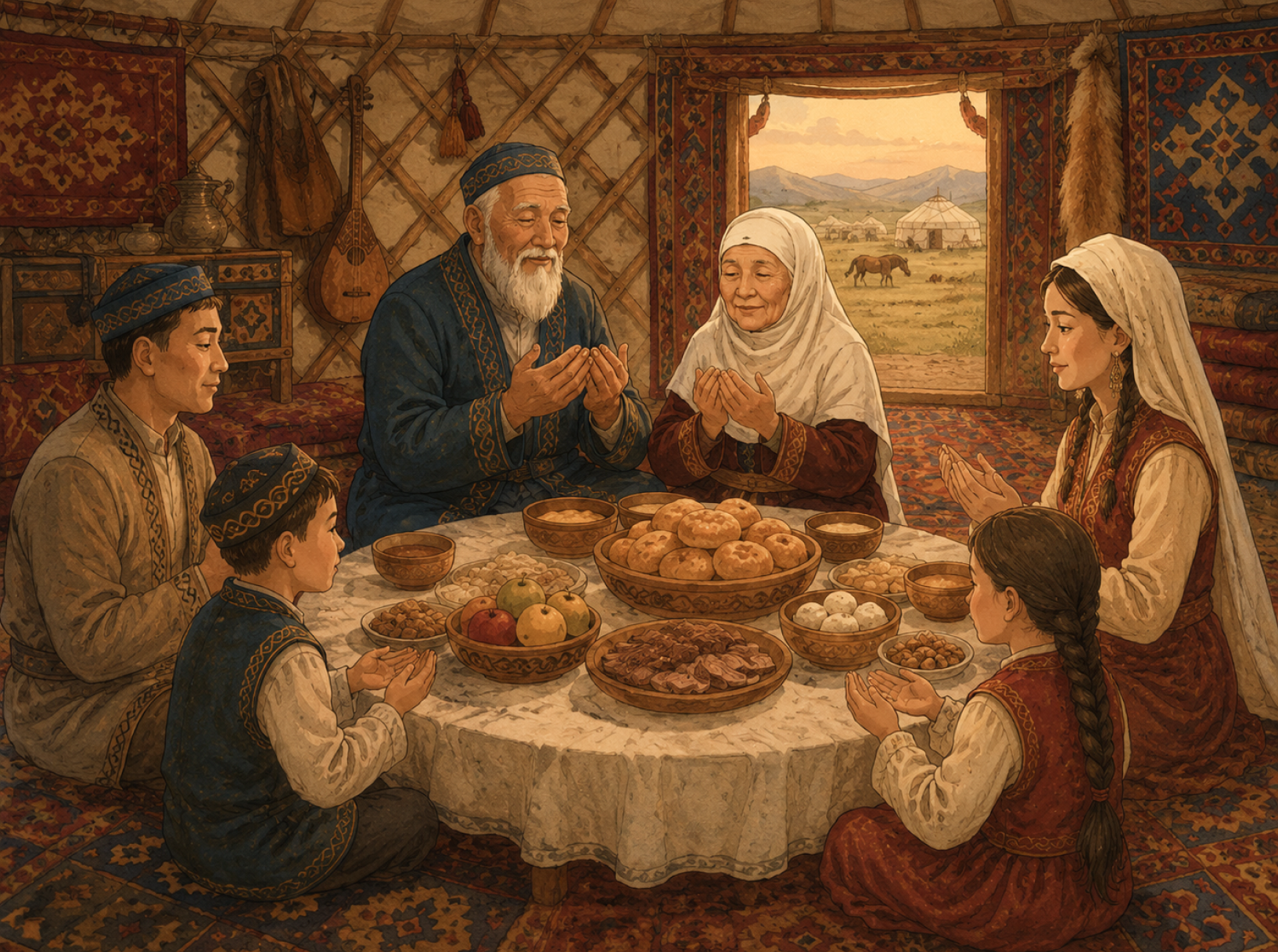
"Bata beru" is one of the important Kazakh traditions associated with blessings and good wishes for elders. Bata is recited at various times in life, but it is especially common to hear it at the dastarkhan (table).
Traditionally, after the meal, the host or one of the younger generations addresses the oldest and most respected person with the words, "Bata beriңіz" (meaning "Give me a blessing"). This is considered a sign of respect for the elder and a request for a blessing.
The elder, seated in the place of honor (tөr), opens his palms and offers wishes. The others present also place their palms in front of them and listen silently. Typically, the wishes are for prosperity and well-being for the host, happiness for the home, abundance for the dastarkhan, and health and long life for the children. When the bata ends, everyone says "Aumin" together and rubs their palms over their faces, joining in the wishes. At large tois and ceremonial events, the person who pronounced the bata might be presented with a shapan as a sign of special respect.
Traditionally, in the presence of men, the bata was more often pronounced by an older man. However, this did not mean that women were forbidden from giving a blessing. In the female circle, older grandmothers and mothers also offered good wishes and parting words.
The bata was associated not only with feasts. Blessings were sought before important events: long journeys, weddings, the birth of a child, or the beginning of a serious undertaking. A young man might specifically request a bata from a respected aksakal before a journey. He would be wished: "Zholyn ashik bolsyn!" – "May your path be clear!"
The right to pronounce the bata was usually granted to people who were especially respected: elders, aksakals, famous poets and writers, as well as honored or occasional guests – "kudayy koonaq." The "Bata Beru" tradition continues today. Blessings from elders are offered at weddings, family celebrations, national holidays, and at the traditional home dastarkhan. For Kazakh families, bata remains a vital part of everyday culture and a way for the older generation to convey good wishes, life experiences, and respect for family traditions.