A piece of bread
Once upon a time, a rich man and a poor man lived next door to each other. They disliked each other so much that they avoided even meeting.
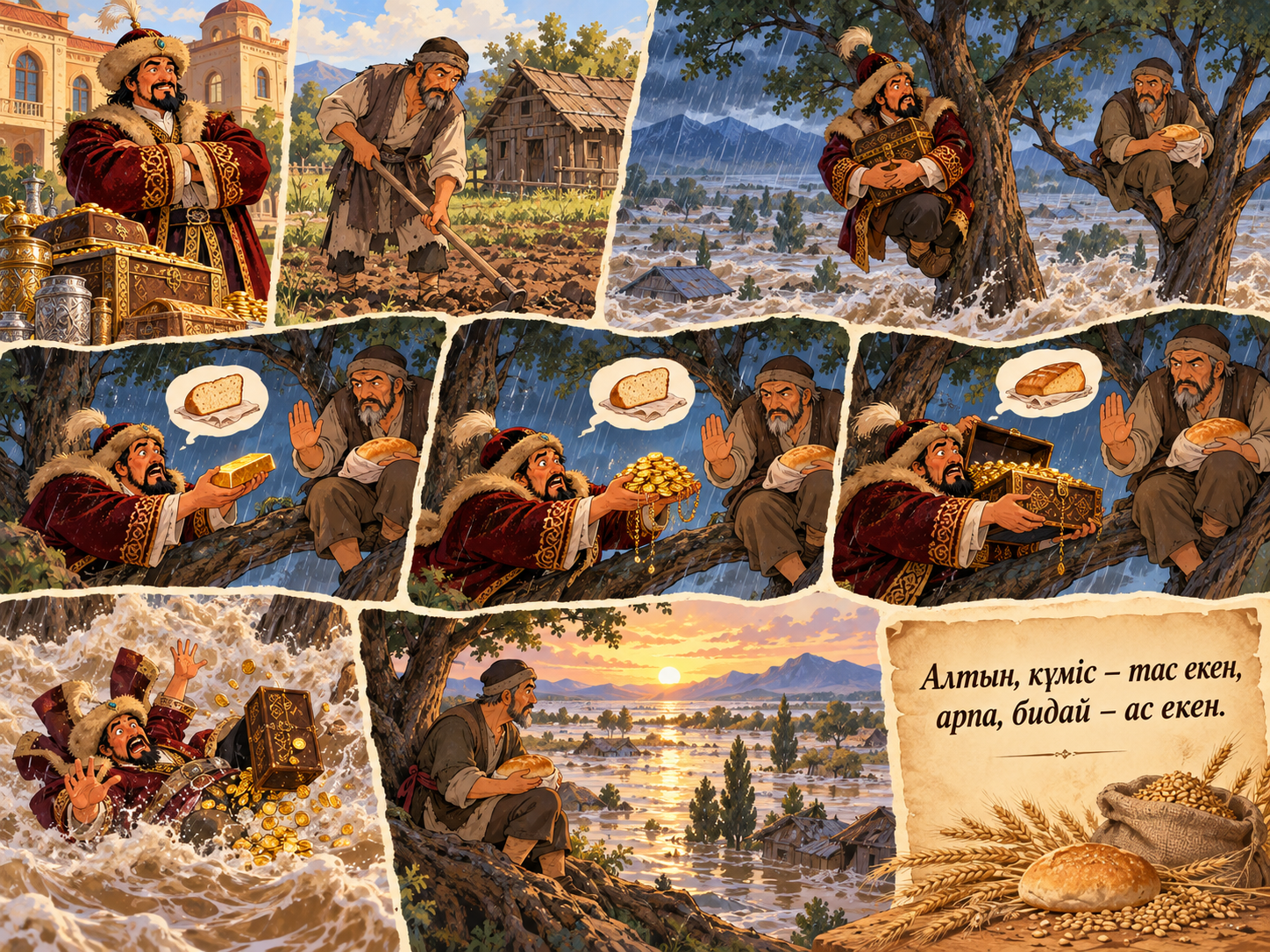
The rich man had a large, beautiful house, filled to the brim with gold and silver.
The poor man lived quite differently. His dwelling was made of wood, and the roof was covered with branches. Not to mention gold or silver—even bread—was a labor of love for him. He sowed the field himself, watered and tended the crops, and when the time came, he harvested the harvest. This is how he fed himself.
One spring, a terrible flood occurred.
The water rose so high that people had to take refuge in the trees. The rich man grabbed his gold and climbed higher with it. The poor man tucked a baked flatbread into his bosom and also climbed a tree.
The flood lasted fifteen days.
The rich man had no provisions—only gold. Soon, hunger began to torment him. One day he turned to the poor man:
"Hey, neighbor! Take this piece of gold from me, and in exchange, give me at least a slice of bread."
But the poor man replied:
"No. Keep your gold. I won't give you any bread."
The next day arrived. The hunger grew even worse.
The rich man asked again:
"Give me some bread. I'll give you half of all my gold."
But the poor man again refused:
"No, I won't."
Time passed, and the water didn't subside. The rich man grew weaker. The hunger became unbearable.
Finally, he couldn't take it anymore:
"Take all the gold I have! Every last coin! Just give me one piece of bread."
But this time, too, the poor man refused.
The rich man finally lost his strength. He became dizzy, lost his grip on the branch, and fell into the raging water.
And the very next day, the flood ceased. The water receded, and the poor man safely descended from the tree.
They say it was after this story that the popular expression emerged:
"Gold and silver are just stones, while barley and wheat are real food."
In other words, gold and silver are just stones, while barley and wheat are real food.