"Asar" is a tradition of collective mutual assistance
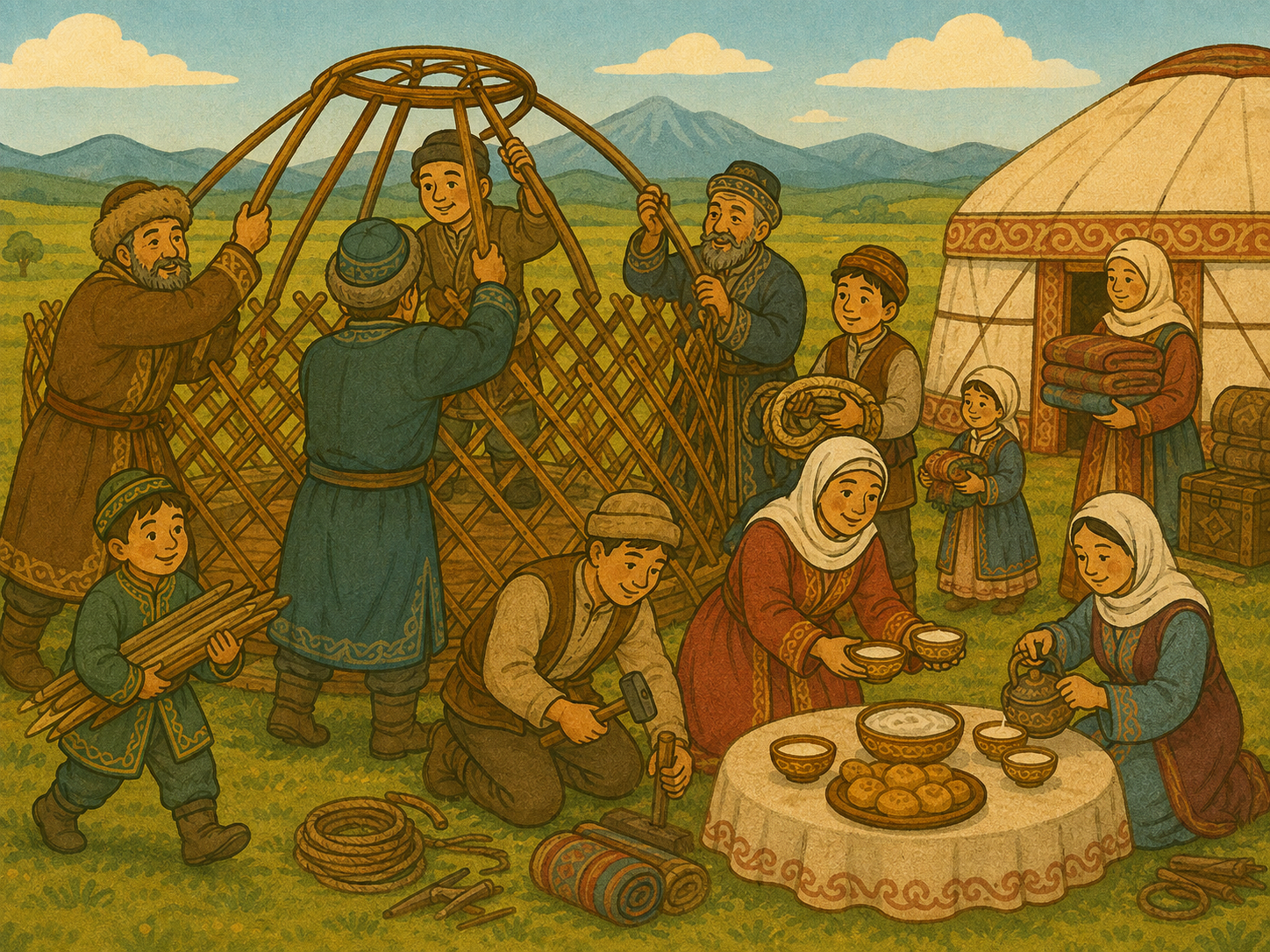
"Asar" is an ancient Kazakh tradition based on voluntary and unpaid assistance to an individual or family struggling to cope with a major undertaking on their own. Village residents, relatives, and neighbors would gather to jointly complete the necessary work.
The occasion for an asar could be the construction or renovation of a house, the installation of a yurt, haymaking, sheep shearing, harvesting, well cleaning, or the restoration of the household after a disaster. Participants were not paid: each person contributed as much as their strength and ability allowed.
People of all ages participated in asar. Men typically performed the heavy labor, women prepared meals and managed household chores, and young people assisted their elders. Thanks to a clear division of responsibilities, the work, which could take several weeks for one family, was completed significantly more quickly.
The owners of the house would notify relatives and neighbors in advance when help was needed. On the appointed day, the participants would arrive with their tools and immediately get to work. After completing the work, the family would set the dastarkhan (table), expressing gratitude to everyone gathered. However, the meal was not considered payment – the main reward was respect, unity, and the assurance that everyone would be helped if needed.
Asar became especially important when a family found itself in a difficult life situation: losing its home, its breadwinner, or unable to complete difficult work on its own. Refusing to leave anyone alone to face adversity was a moral rule in traditional society.
This custom strengthened relationships between neighbors, instilled responsibility for the well-being of others, and demonstrated that even serious difficulties could be overcome through shared efforts. Asar reflected the principle of reciprocity: those who received assistance today would later join in supporting others.
The tradition continues today. In villages and cities, people work together to build and repair homes for needy families, help those affected by emergencies, collect essential items, and hold charity events. In Kazakhstan, there are also community projects using the name and basic principles of asar. Asar reminds us that mutual assistance is not a one-time service, but an important social value that unites people and strengthens trust between them.