"Basire" is a child's first personal livestock
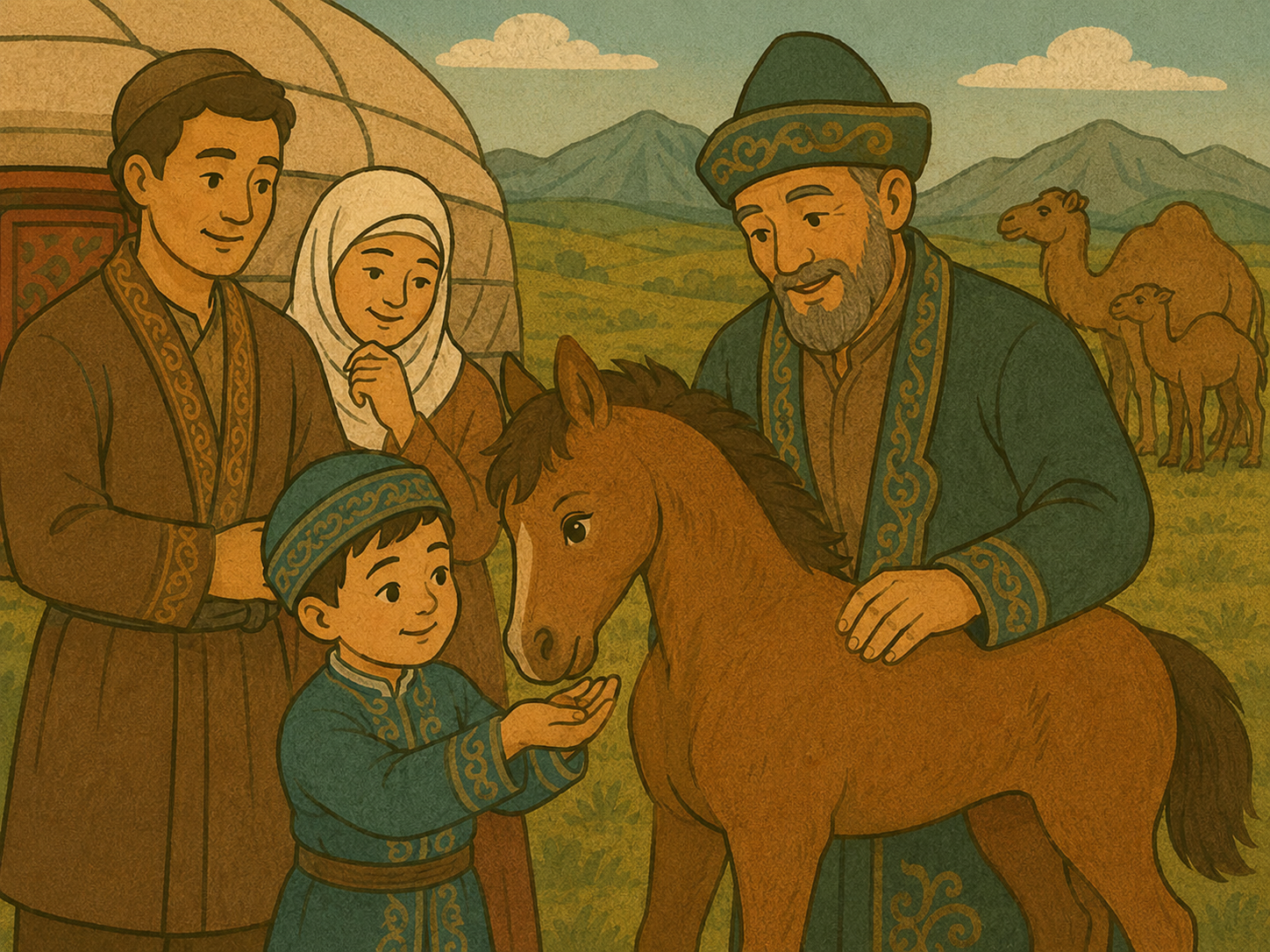
Typically, the animal was chosen by the grandfather, father, or other older relative. In some families, the animal was assigned immediately after the child's birth, while in others, it was given when the child began to understand their surroundings, went to school, or underwent the "Sündet toi" (literally, "Sündet toi") ritual. Such a gift emphasized the child's maturation and gradual acquisition of their own responsibilities.
The animal was not sold or used for heavy work. The animal grew up with the child, and adults monitored its well-being and taught the future owner how to care for it properly. If a foal was chosen as the animal, it was gradually trained to ride, so that it would later become the child's personal horse.
This tradition had great educational value. The child learned to feed and water the animal, monitor its health, and handle it with care. In this way, the elders taught the child work, responsibility, and caring for a living creature. A horse was perceived not only as a gift but also as the child's first personal property. The child understood that the animal belonged to them, but with ownership came the responsibility to care for it. This experience was believed to help prepare children for independent life and farming.
Horses held particular significance. For nomadic people, they were a means of transportation, a helper in labor, and a symbol of freedom. Therefore, relatives tried to choose a healthy and strong foal, hoping that the child would grow up strong, hardworking, and prosperous.
Today, the "Basere" tradition is less common, especially in cities. However, in rural areas, some families continue to give their child a foal, a calf, or another animal. A modern equivalent of this tradition can be considered any significant gift that becomes a child's first property and teaches them thrift and responsibility.