Ballet between eras: three evenings at the Astana Opera in Sochi
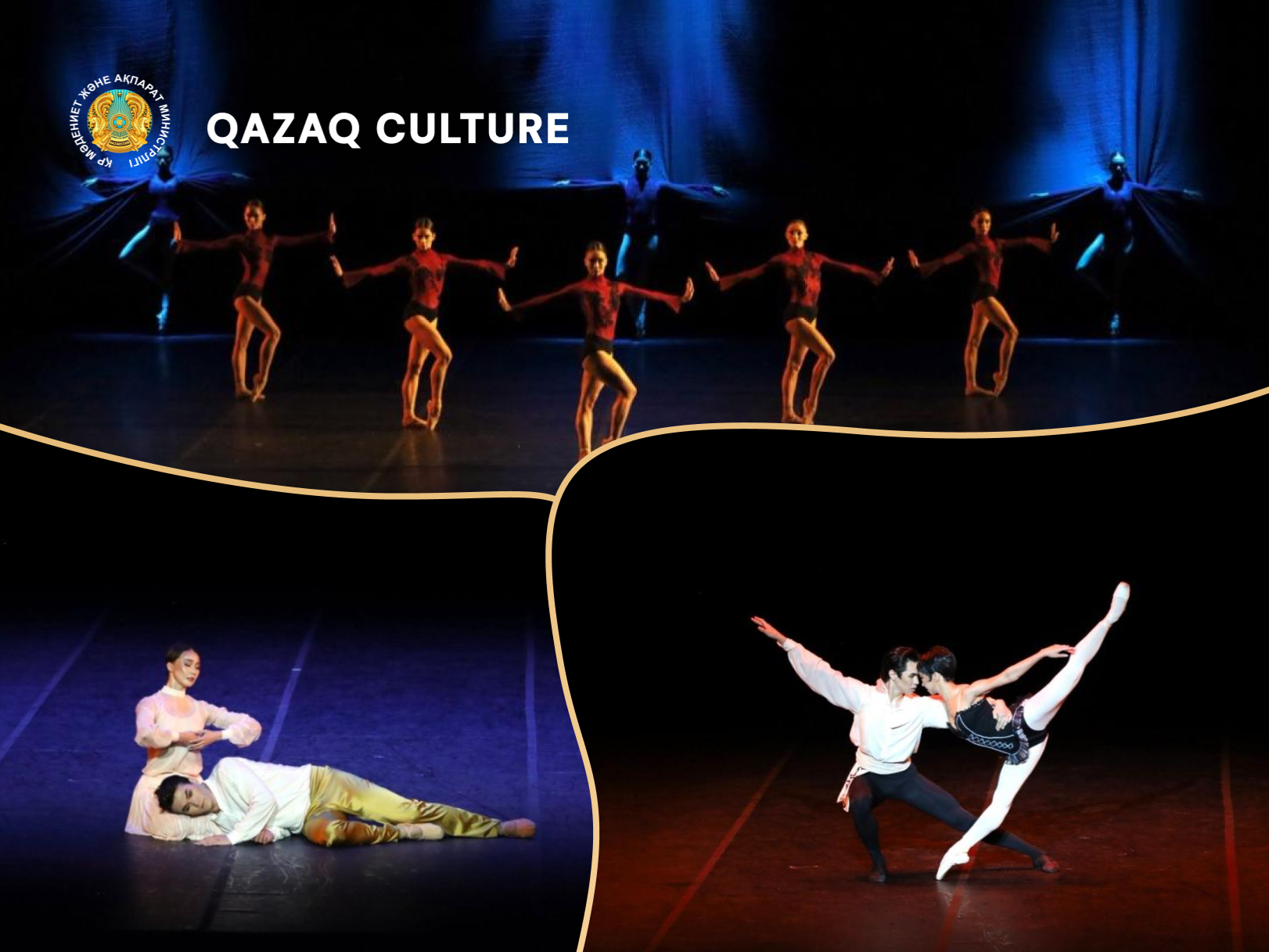
First, a nearly animated doll appeared on stage. Then the sand began to slowly count down human time. And in the finale, dombra, kobyz, and ancient steppe rhythms resounded.
Over the course of several festival evenings, Astana Opera presented three completely different worlds in Sochi. In Coppélia, the company spoke the language of French choreography; in the gala ballet, it combined academic classics with contemporary dance; and in the Nomad Ballet program, it drew on national memory.
It was this shift in perspective that became the main theme of the tour at the Sirius-Rosa Khutor International Arts Festival. The Kazakhstani troupe did not attempt to present itself as a single production or a single recognizable style. On the contrary, it seemed to consistently reveal different sides of its character to the audience.
A doll that almost became human
The Sochi audience's first encounter with Astana Opera artists was Léo Delibes' Coppélia, choreographed by Roland Petit. This ballet has a light, almost ethereal quality. It features jealousy, deception, and an old master's strange dream of bringing a mechanical doll to life, but all of this is transformed not into a dark story, but into an elegant theatrical performance.
From the very first minutes, the music, conducted by Ruslan Baimurzin, set the right tone for the performance. The orchestra seemed to smile along with the characters, supporting their antics, accelerating the action, and at the right moments leaving room for subtle pantomime.
In Roland Petit's production, dance constantly coexists with acting. Here, it's not enough to perform a variation or flawlessly execute a complex combination. The characters must communicate through movement, argue, deceive each other, be surprised, and laugh.
Aigerim Beketayeva and Shugyla Adepkhan presented two different Swanildas. Beketayeva's performance was temperamental, stubborn, and impetuous. Adepkhan added a subtle irony to the character, as if her Swanilda understood the rules of the game better than anyone else from the very beginning.
The Franz brothers also proved to be different. Arman Urazov portrayed him as impetuous and mischievous, while Erkin Rakhmatullaev portrayed him as more lyrical and thoughtful.
But the most complex character in the production was Coppélius. Olzhas Tarlanov and Rustem Seitbekov didn't turn the inventor into a typical comic old man. Behind his eccentricities, one could sense his loneliness and almost childish belief in the impossible. Therefore, the story's ending evoked not only smiles but also sympathy.
Marina Podkorytova, head of the choreography department at the Sirius Children's Art School of the Federal Territory, admitted that the production captivated the audience from the very first chords.
"The music, costumes, set design, and lighting transported us to the era of Hoffmann. Despite the comedy, the production retained its Gothic depth." At the same time, it was easily understood by both children and adults. The pantomime helped to reveal the characters, and the performers brilliantly conveyed Roland Petit's choreography," she noted.
This "Coppélia" truly combined two seemingly opposing sensations. The performance remained light and witty, but behind the comedy emerged the story of a man who created the perfect puppet and, for a moment, believed that art could replace real emotion.
From Virtuosity to a Conversation about Time
After the theatrical performance of "Coppélia," the touring program dramatically changed pace. The gala ballet was structured as a movement from familiar classics to contemporary choreography, in which the importance was no longer given to plot and character, but to the human condition.
The first part became a kind of gallery of famous ballet images. The trio from "Le Corsaire," performed by Aigerim Beketayeva, Erkin Bazarbayev, and Dias Kurmangazy, was filled with passion, complex lifts, and a cascade of spins. Here, dance existed, above all, as a triumph of technique and freedom of the body.
In the adagio from "Spartacus," Shugyla Adepkhan and Serik Nakyspekov traded this brilliant virtuosity for inner tension. Aram Khachaturian's music expanded into a vast dramatic canvas, and the dancers' movements transformed the love story into a premonition of imminent loss.
Rinat Gaysin's "Call of the Steppe" stood apart in the classical section. Aigerim Beketayeva and Zhaksylyk Saukymbekov didn't literally illustrate national motifs. In their dance, they emerged at the level of intonation—in the breadth of gesture, inner composure, and sense of space. For many viewers, this piece was their first introduction to contemporary Kazakhstani choreography, which doesn't reject academic traditions but instead seeks its own unique expression.
Denis Kiris, editor-in-chief of the online cultural portal "Revizor.ru," named "Call of the Steppe" one of the most memorable pieces in the program.
"It exudes a vibrant, emotional culture and national flavor. It's deeply rooted in the artists' DNA, and that's why it's performed with such depth. Every nation has its own artistic language, but the connection to one's own roots is always felt more strongly," he shared.
In the second half, the familiar world of the gala concert disappeared. A giant hourglass appeared on stage, and time itself became the main character.
Raimondo Rebecca's ballet "How Long Is Now?" didn't tell a linear story. It invited us to observe how a person changes while time remains indifferent to their desires.
Arman Urazov performed the role of Time without any external dramatization. His hero was neither evil nor merciful. He simply continued moving, oblivious to human attempts to stop him.
Youth, performed by Nazira Zaetova and Doskhan Zaidin, burst onto the stage swiftly, barely considering the consequences. The youth of Aigerim Beketayeva and Olzhas Tarlanov was filled with momentum and confidence, as if endless possibilities lay ahead. And Maturity, performed by Adelina Tulepova and Zhaksylyk Saukymbekov, brought a different quality of movement to the performance – calmer, more precise, and more meaningful.
The sand continued to fall as almost an entire human life unfolded before the audience.
When the steppe appeared on stage
After Roland Petit, Petipa, Grigorovich, and contemporary European choreography, the theater approached the main statement of the tour – the Nomad Ballet program.
The final evening at the Rosa Hall was difficult to perceive as a typical gala concert. Musicians from the ethno-folklore group HasSak stood alongside the performers, and the live sound didn't just accompany the dance, but became part of it.
The dombra, kobyz, and percussion instruments not only set the rhythm, but also seemed to shape the space from which heroes, historical images, and memories emerged.
Choreographer Sultanbek Gumar constructed the program as a series of independent short stories. They were united by the themes of memory, native land, and national identity.
"Toy Bastar" opened the evening with a festive and grandiose flourish. The performers seemed to invite the audience to enter the space of Kazakh culture not as bystanders, but as participants in a shared action.
But very soon, the festive energy gave way to anxiety.
In "Aralym," the image of the Aral Sea emerged without literal stage illustration. Its destiny was conveyed through the movements of bodies, pauses, and disturbing dissonances in HasSak's music. The dance became an almost silent lament for the water receding, leaving behind a void.
The duet between Sofia Adilkhanova and Islam Kaipbay from the ballet "Four Truths – One Eternity" was built on a fragile balance between intimacy and inevitable separation.
"Kily Zaman" sounded entirely different. In Doskhan Zaidin's solo performance, history ceased to be a sequence of events and transformed into a physical sensation of catastrophe. Sharp, angular movements conveyed the confusion of a man caught in a historical turning point.
One of the most powerful scenes of the evening was "Mangurt," to the music of Aktota Raimkulova. Ademi Zhanabil and Zhanserik Akhmetov embodied the theme of memory loss without complex sets or direct explanations. Their movements were precise and almost graphic. Each gesture resembled an attempt to hold on to something that is gradually being erased: a name, a family, the past, oneself. After this dramatic climax, the final "RUH" felt more than just a spectacular conclusion. Aidan Kalzhan, the ballet dancers, and the musicians of HasSak combined movement and sound to create an image of unstoppable energy.
The steppe in this program wasn't just a beautiful backdrop. It became a character—preserving memory, grieving loss, and continuing to speak to modern people.
"The musicians and artists were in sync."
Galina Kirmel, a young musicologist from St. Petersburg, admitted that the evening's main discovery for her was the combination of classical music with contemporary and traditional music.
"It was incredibly interesting to observe how canonical classical forms are refracted through the language of the 21st century. The dialogue between the ballet and the folk instrument ensemble was particularly impressive. The musicians and artists were in sync, together creating an almost ritualistic action. Traditional music found new life in their performance," she said. Her colleague Varvara Razumova noted the youth and inner energy of the Kazakh troupe.
"Through movement, the artists convey history and national character. The company reveals itself especially vividly in contemporary productions. The choreography blends seamlessly with national music, and the ensemble's presence on stage creates a holistic picture, the birth of which the audience simultaneously sees and hears," she shared.
A Voice of Their Own
The festival demonstrated that the troupe's versatility lies not only in its ability to perform classical and contemporary choreography equally well.
Far more important is something else: the artists do not lose their identity while moving from one style to another.
In Coppélia, they embraced the graceful and ironic theater of Roland Petit. In the gala ballet, they demonstrated their academic training and ability to work with philosophical choreography. And in Nomad Ballet, they found their most recognizable intonation – one born from national music, historical memory, and a contemporary perspective on tradition.
Over the course of a few evenings, Astana Opera went from the mechanical puppet of Coppélia to the living element of the Great Steppe. And in the end, it became clear: the most interesting part begins precisely where the classical school ceases to be merely a legacy and becomes the foundation for a unique artistic language.