Preserving the national cultural code was discussed at a seminar in Astana
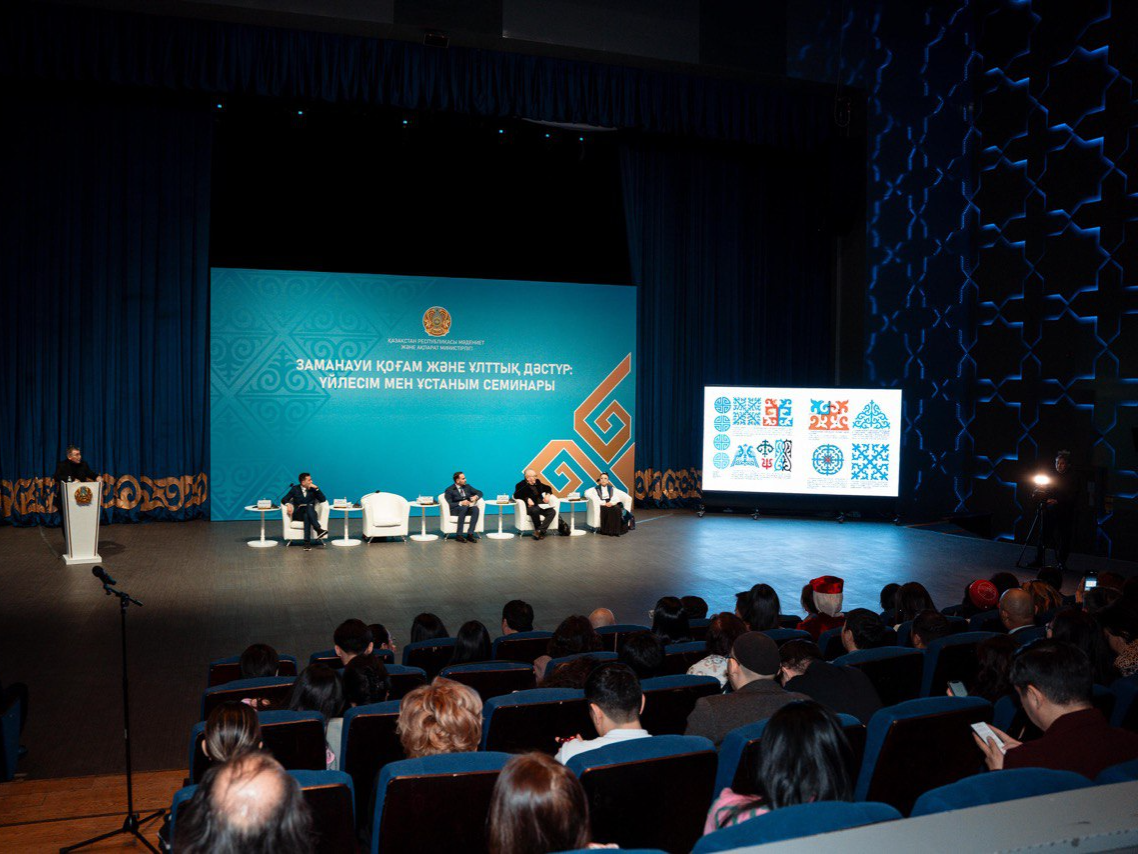
In the capital, at the initiative of the Ministry of Culture and Information of the Republic of Kazakhstan, a republican seminar "Modern Society and National Tradition: Harmony and Principles" was held, dedicated to the preservation of the national cultural code in the context of digitalization and the development of creative industries.
With a welcoming speech on behalf of the Deputy Prime Minister - Minister of Culture and Information of the Republic of Kazakhstan Aida Balayeva, the Vice-Minister of Culture and Information Yevgeny Kochetov spoke.
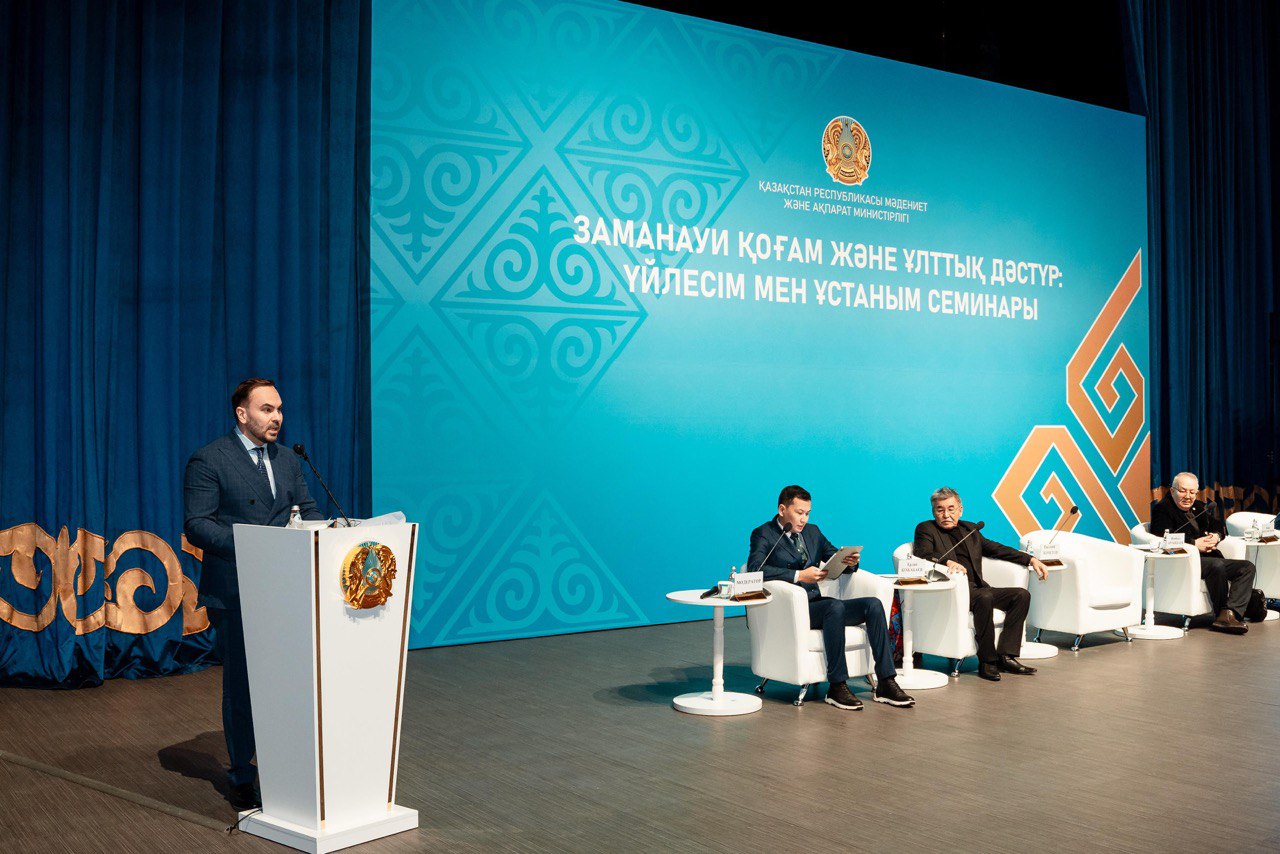
"The Head of State at the recent National Kurultai emphasized that art and culture are a strategic guideline of the state, especially noting the importance of ideological and spiritual values. New technologies, the digital environment and artificial intelligence increasingly determine the vector of development of states, economies and societies. In these conditions, it is especially important not to lose our own cultural code and preserve national identity," the Deputy Prime Minister noted in his address.
The speakers included Doctor of Historical Sciences Zhambyl Artykbayev, artist, designer and author of the book "Kazakh Ornaments" Yerlan Kozhabayev, designer Farida Merkhamitkyzy.
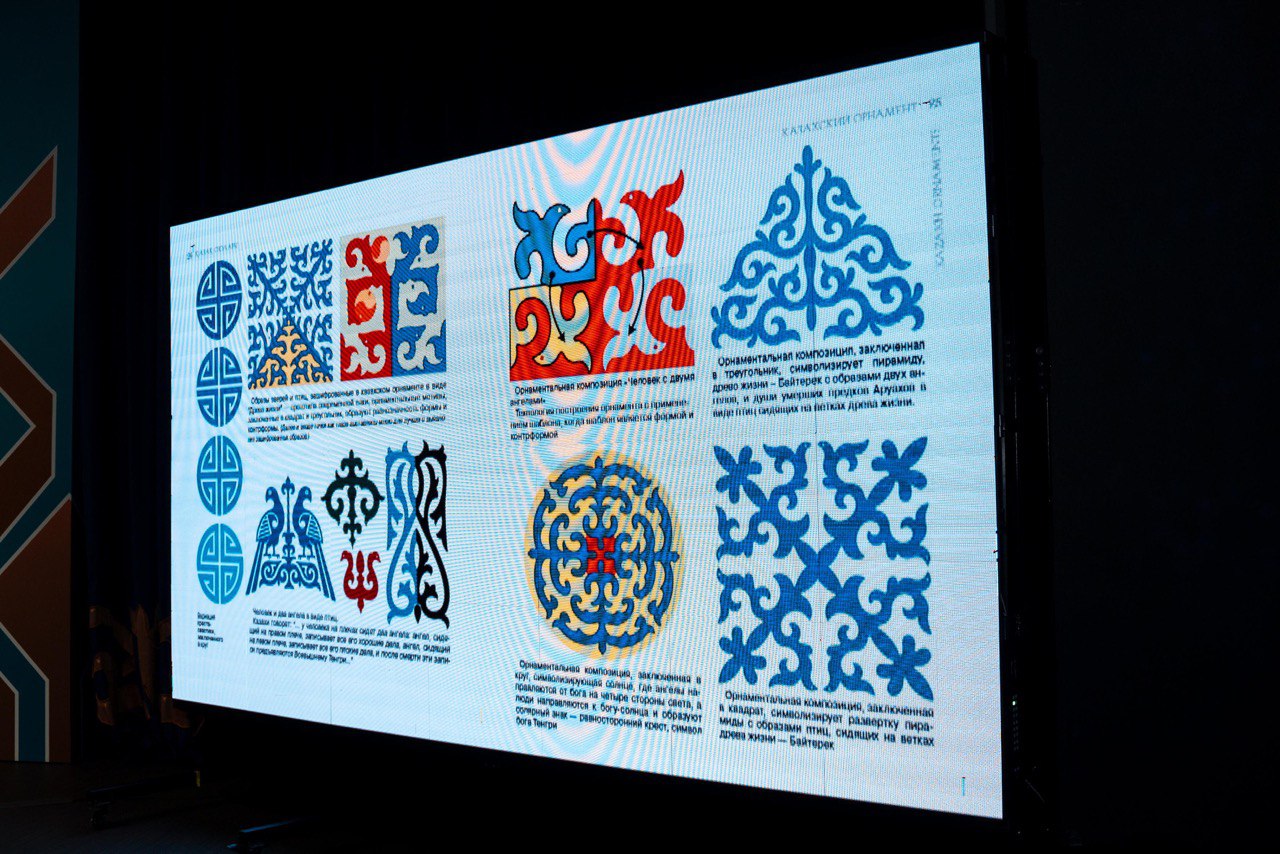
Experts drew attention to the increasing cases of substitution and distortion of traditions: the use of national ornaments outside their historical and functional context, the mixing of male and female motifs in clothing. They also discussed cases where elements that do not belong to Kazakh culture are presented as part of the national heritage.
In addition, examples of so-called "new traditions" actively spread in social networks, but not having historical roots in Kazakh culture were discussed. It was noted that such practices undermine the value foundations of society and distort the meaning of genuine rituals. A separate block of the discussion was devoted to the commercialization of traditional ceremonies.
The seminar was attended by scientists, ethnographers, cultural scientists, representatives of creative industries, public and state figures, representatives of public organizations, youth and volunteer associations, media and media experts.