How the new season begins: 'Abai' as a point of return
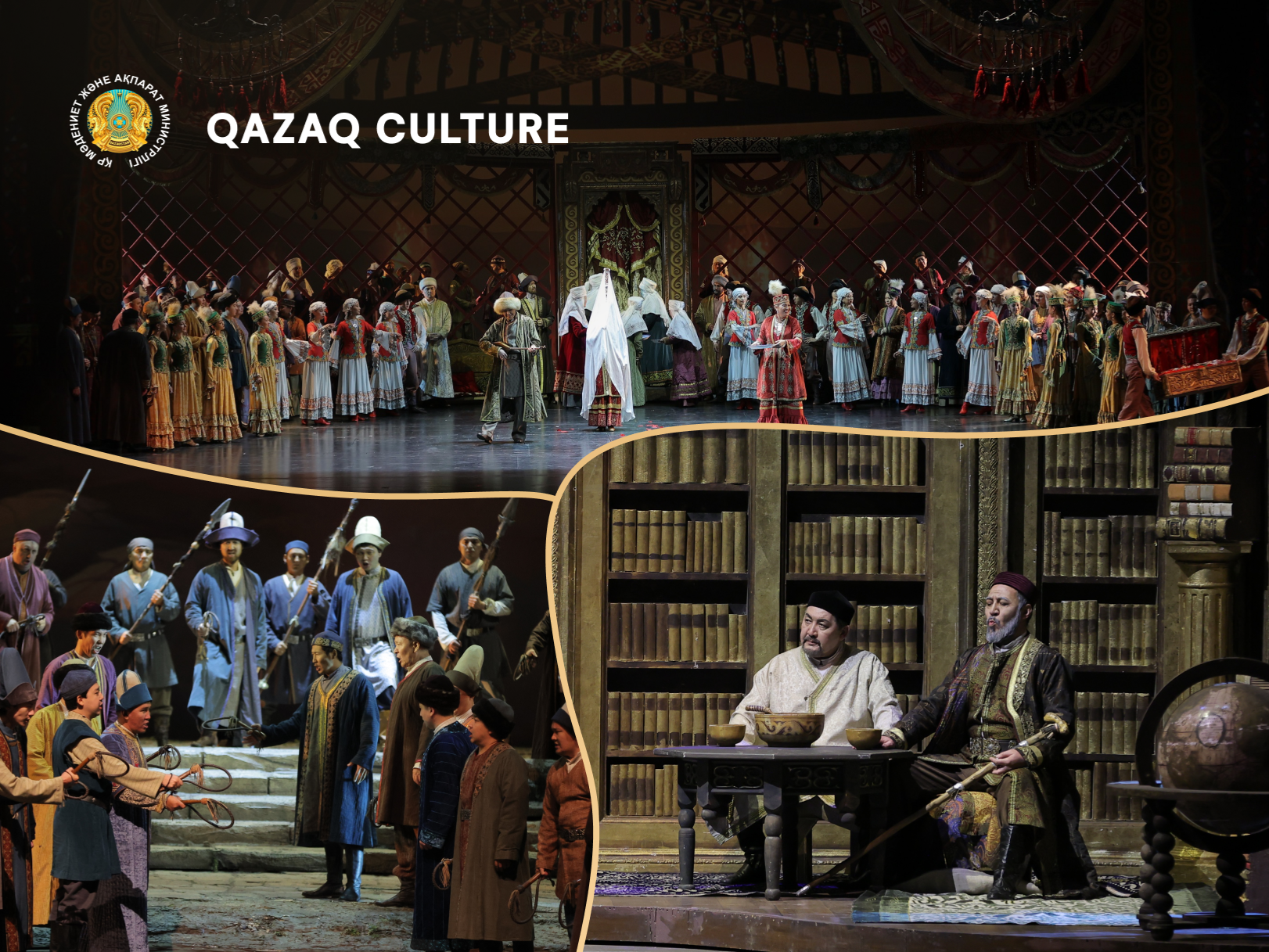
There are productions that live by the laws of the repertoire: they appear, disappear, and return a few years later. And then there are works that the theater turns to as if it were its own memory. For Astana Opera, Akhmet Zhubanov and Latif Hamidi's opera "Abai" has long been just such a point.
The theater is opening its new season not with a premiere or an attempt to surprise with an unexpected title, but with a return to a work that has already become part of the national opera tradition. This gesture has a special logic: before moving on, the stage seems to re-examine itself with the origins of its cultural foundation.
Moreover, this return to the opera coincides with the 120th anniversary of Akhmet Zhubanov and Latif Hamidi. But the anniversary here is more of an opportunity to hear familiar music again, this time from today.
At the conductor's stand is Alan Buribayev, Akhmet Zhubanov's great-grandson. For him, this score exists simultaneously in two dimensions – as a major work of Kazakh music and as part of his own family history.
In his revision, Buribayev strives to restore the score to its original clarity and remove any later layers. This approach is especially important for works that have been performed for decades. The longer a production lives, the more habits, interpretations, and staging decisions it becomes surrounded by. Sometimes, to achieve a new sound, it's necessary not to add anything new, but, on the contrary, to return to the original concept.
In this sense, "Abai" in the new season sounds not like a museum classic, but like a living work that continues to change along with the performers.
Two different Abais will appear on stage. One is already familiar to audiences, performed by Zhanat Shybykbayev; the other will appear for the first time – this role is being prepared by Talgat Galeyev. New names will also appear in other roles: Artur Gabdiev will debut as Aidar, and Bibigul Zhanuzak as Azhar. Such debuts are especially important for a large repertory theater. A production can remain on the repertoire for decades, but each new voice changes its internal temperature. One actor makes the character more restrained, another more dramatic, a third reveals a previously unnoticed intonation.
Therefore, repetition in theater is never truly repetition.
The production of "Abai," created over ten years ago, has already become an example of the meeting of several artistic traditions. Its creation brought together Kazakh and European masters—Yesmukhan Obayev, Yerzhan Dautov, Giancarlo del Monaco, Ezio Frigerio, and Franca Squarciapino.
This combination also defined the performance's visual language. The national musical foundation here does not exist in isolation, but rather enters into dialogue with the European school of scenography. Thanks to this, Abai's story acquires a scale understandable not only to local but also to international theater audiences. And yet, the most important aspect of this production remains neither the sets nor the costumes.
At the center is the figure of Abai, a man caught between tradition and the need for change. This is precisely why the opera remains relevant, along with the era it depicts. Its conflict is connected to much broader issues—choice, responsibility, the clash of old and new, and the cost of inner freedom.
Perhaps this is why the theater is returning to it at the opening of the new season.
Other stories await the stage. New ballets and children's productions will be added to the repertoire, there will be tours, international projects, and meetings with foreign theaters. But all this will be the next step.
The first step was taken with "Abai." And there is a certain symbolism in this. The theater begins the season with a work that reminds us that moving forward does not necessarily mean breaking with the past. Sometimes, on the contrary, to find a new path, you must first return to what once shaped your own language.