After the first note
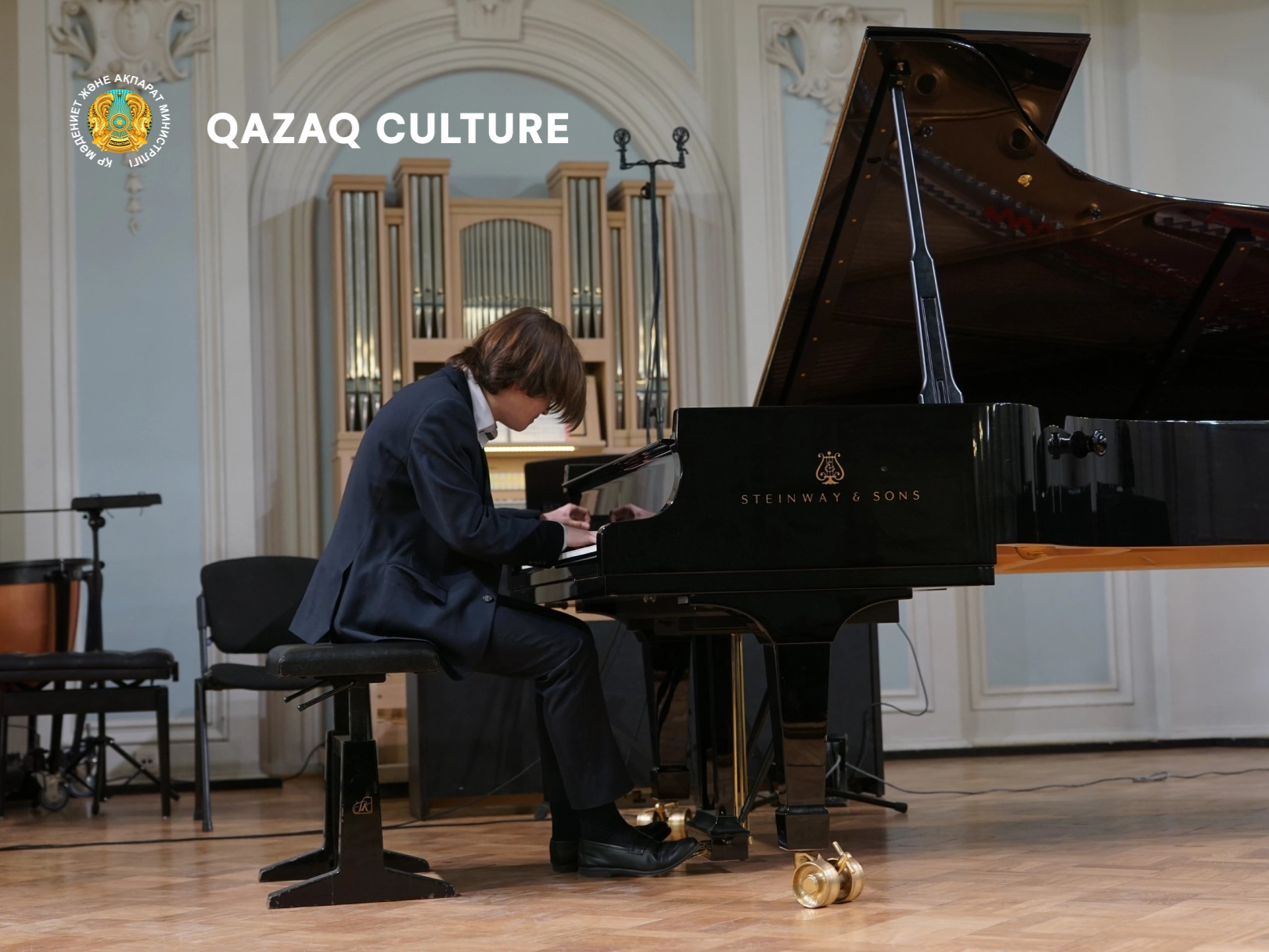
The first solo performance on a new stage always begins before a musician even touches the keys. It begins in the silence before the entrance, with a brief glance at the audience, an attempt to sense a space that hasn't yet become familiar. For the young Kazakhstani pianist Timofey Utegenov, such an encounter was the "Energy of the Keys" concert at the Kulyash Baiseitova Chamber Hall of the Astana Opera.
This evening was important for him not only as his debut on one of the country's main stages. In the audience were teachers, family, friends, and listeners, before whom it's especially difficult to hide behind impeccable technique. The home audience knows not only the current performer – it seems to witness his entire journey: his first lessons, years of study, competitions, doubts, and gradual maturation.
"The audience doesn't know me yet, and I didn't know their character," Timofey said before the performance.
The concert became their first conversation. The young pianist presented himself not through a tale of awards and educational institutions, but through the music of Mozart, Bach, Busoni, and Chopin – composers who each demand a unique inner attunement from the performer.
Mozart's Sonata No. 10 in C major opened the program with a clear and almost weightless sound. However, the transparency of this music is deceptive. It is impossible to hide imprecision behind the piano's power or external emotionality. Each phrase must emerge naturally, as if the pianist were not overcoming technical difficulties but freely communicating with the listener.
Mozart demanded restraint from the performer. Johann Sebastian Bach's Chaconne, transcribed by Ferruccio Busoni, represents a completely different scale of thought.
Originally composed for violin, the piano version transforms the work into a monumental canvas of sound. A single instrument must accommodate several independent voices, preserve their movement, and construct a form reminiscent of a large architectural structure. Here, the pianist is required to demonstrate not just the power of sound, but the ability to see the piece as a whole—to sense the point each intonation leads to.
After the severity of Bach, Chopin's music revealed a different side of Timofey Utegenov's performing character.
The four mazurkas sounded like short inner monologues. Behind the dance rhythm, they conceal memories, anxiety, a luminous sadness, and a sense of a distant homeland. Such miniatures rarely impress with superficial brilliance. They demand a sense of proportion and the ability to stop just before sincerity turns into excessive sentimentality.
The main challenge of the evening was Chopin's Third Sonata in B minor. The pianist himself called it the most challenging piece on the program. This is not only due to the virtuoso passages. The sonata's four movements form a grand dramatic story that must be sustained from beginning to end without losing its inner tension or lyrical details.
This music demands a maturity that cannot be measured by age or the number of competition victories. A pianist must simultaneously control the form and allow the piece to flow freely, maintaining technical precision and not turning the performance into a show-off.
That's why the solo concert became for Timofey Utegenov not a review of his achievements, but a test of the extent to which his mastery is capable of transforming into an independent artistic statement.
His musical journey began under the guidance of Anna Vasilyeva. This was followed by studies at the Specialized Boarding School for Gifted Children at the Kulyash Baiseitova Kazakh National University of Arts in the class of Professor Altai Kusainov. Today, Timofey continues his education at the Frederic Chopin Moscow State College of Music Performance under Alexey Kholodov and is a recipient of a scholarship from the Vladimir Spivakov International Foundation.
He has won international competitions and performed with academic symphony orchestras. However, in his hometown, professional experience feels different. Here, a musician is viewed not only as a laureate or a promising performer. For some, he remains a student; for others, a friend or a son whose first steps were taken alongside them.
"Performing in my homeland is the most important responsibility. This is where I grew up, where I took my first steps in art. I wanted to be worthy of this stage and live up to the audience's expectations," the pianist admitted.
His concert opened the latest cycle of "Musical Vacations"—a project that gives young Kazakhstani performers the opportunity to return to their national audiences and demonstrate how their art has changed over the years of study.
The project's name itself sounds carefree, but a professional musician's vacation is rarely associated with rest. It involves daily practice, working on their repertoire, and preparing for their next performance. While a piece may seem like a few minutes to the listener, a performer can live with it for months—returning to one phrase, searching for the right nuance, changing fingering, and starting over again.
For Timofey Utegenov, the performance also became a form of gratitude.
"Our teachers, school, and parents invested so much effort in us." “That’s why this concert is an opportunity for me to show why we study and work,” the musician noted.
That evening, the man sitting at the piano was no longer a boy taking his first steps in art, but also not yet an artist for whom the big stage had become a familiar space. Perhaps it was this transitional state that made the concert particularly significant.
The audience witnessed not a finished portrait, but a moment of formation—that rare time when technique gradually transforms into a voice of its own, and a young performer begins to understand what exactly he wants to say with familiar music.
The first note had already sounded. Now begins the story of what follows.