From Village to Hollywood: A Dream-Led Path
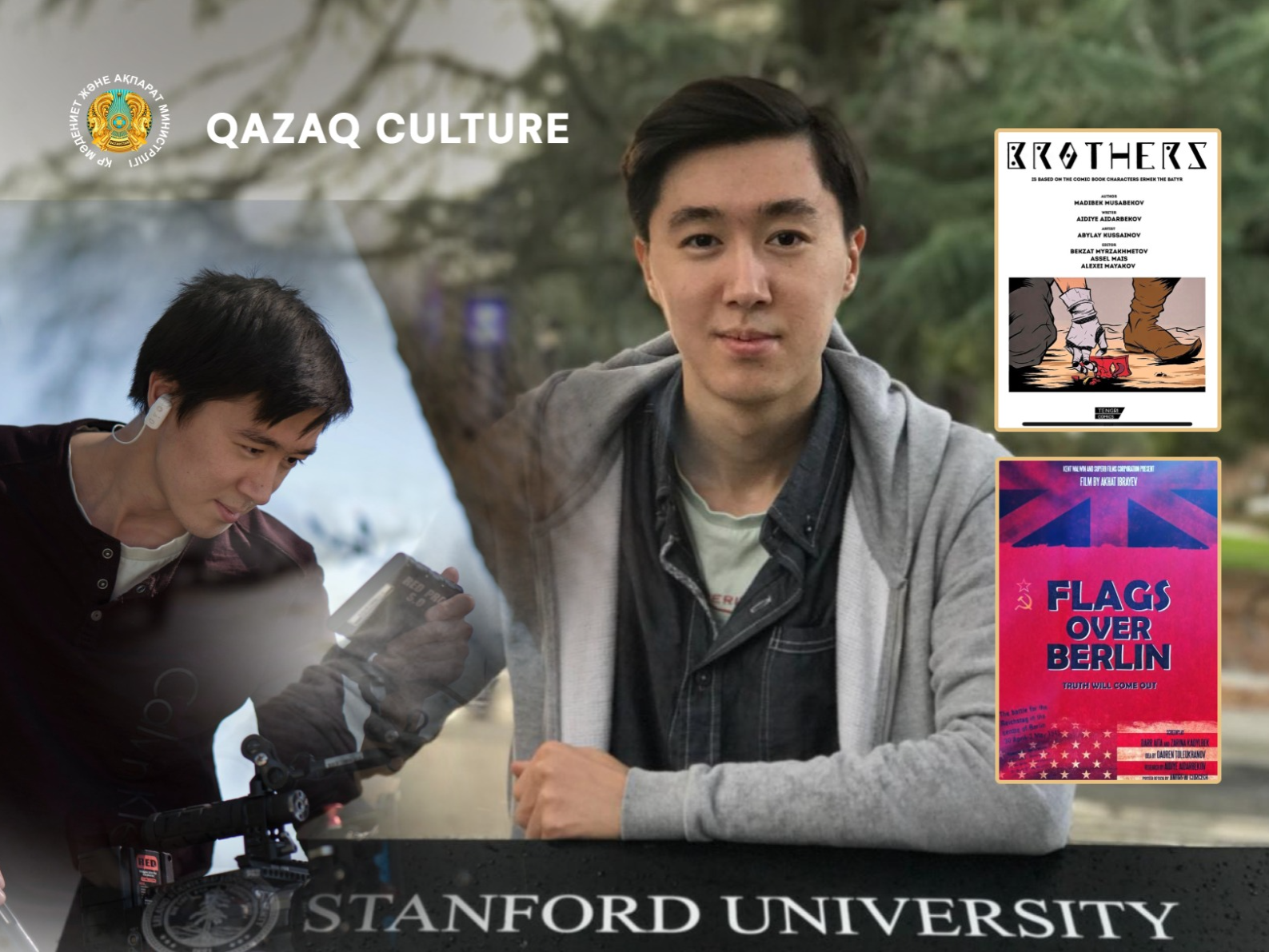
IT code and lines from Hollywood screenplays, the strict logic of algorithms and the magic of the movie frame — at first glance, a huge gap seems to separate these worlds. But for the hero of our interview, they have become links in one remarkable chain.
Director, screenwriter, graduate of the New York Film Academy, and winner of the “100 New Faces of Kazakhstan” project, Aidie Aidarbekov has proved that if you truly believe in your calling, you can rewrite the script of your own destiny. His journey shows that there are no barriers to achieving a big dream when it is pursued by a person with an open heart, unwavering determination, and a strong sense of responsibility.
— Where are you from? Where did you receive your education?
— I was born in the village of Zhaksу in Akmola Region. My parents are teachers. I am grateful to them for encouraging me from an early age to become a well-rounded person: I played the dombra, attended a brass instruments class, and took part in sports.
Studying under the Bolashak program had a major influence on my personal development. Before applying, many people told me that getting into the program was extremely difficult, but I succeeded! I come from a rural village, and studying in America was a big dream of mine. At my parents’ insistence, I chose a practical profession and became a programmer.
I then worked for major companies.
— Programming and filmmaking are rather different professions. How did you come to filmmaking?
— While studying to become a programmer, and later after graduating, I gradually realized that my true dream was cinema. I think this was also connected to the fact that my parents are creative people, and throughout their lives creativity has been their profession, not simply a hobby.
It came as a great surprise to my parents when I told them I wanted to change my career path. I told them at the time, “I’ve fulfilled your plan, and now I want to fulfill mine.”
I enrolled in the directing program at the New York Film Academy in Los Angeles, where I studied for two years. During the admissions process, I explained to the committee that my programming skills would be useful because they are applicable to video editing, the use of graphic elements, and so on. Once I arrived at the academy, I quickly felt that I was in the right place. I enjoyed the planning process, the actual filming, and working as part of a team. At the academy, I gained excellent practical experience in directing and screenwriting, as well as developing acting skills.
— After graduating from the New York Film Academy, did you decide to work in Kazakhstan? What projects have you worked on in your home country?
— Yes. I brought the knowledge I had gained back to Kazakhstan. I worked as a director, screenwriter, and producer, participated in the creation of media projects, was involved in the early development of Freedom Production International, created video content for the Balapan channel, filmed the web series 919. The Path to Independence, and also worked on promoting Kazakh comics on international platforms.
Today, I not only make films but also write screenplays and teach future professionals. I have been teaching at two universities for about five years. My students are getting into film schools abroad and starting careers in the industry.
Among my projects is the feature film Flags Over Berlin, about Rakhimzhan Koshkarbayev, as well as various science-fiction and fantasy screenplays. Some of them are still waiting for their time, because big ideas require big budgets.
— What prospects do you see for the development of Kazakhstani cinema?
— Domestic cinema is developing very actively. For example, whereas there used to be only five to seven films released a year, today we see three to five films appearing on cinema schedules every month.
The prospects for the development of our cinema are significant. We are seeing new talented actors and directors emerge. In Kazakhstan, in addition to comedies, dramas, and melodramas, we can actively develop science-fiction and historical films. These genres often require much larger budgets.
— What do you think is needed to achieve your dreams and succeed in your field?
— What matters is what you personally want. You need to move toward your dream gradually, taking small steps. The journey toward a dream is made up of small steps — reading books, a memorable lesson, or learning a new skill.
I dreamed of studying at a university in America, and I worked toward that goal. It is important to study and learn about the field in which you see yourself in the future. You need to take personal responsibility, work hard, and not be afraid of making mistakes — and everything will work out.