After the Gala Concerts: What the Year of Culture of Kazakhstan and China left behind
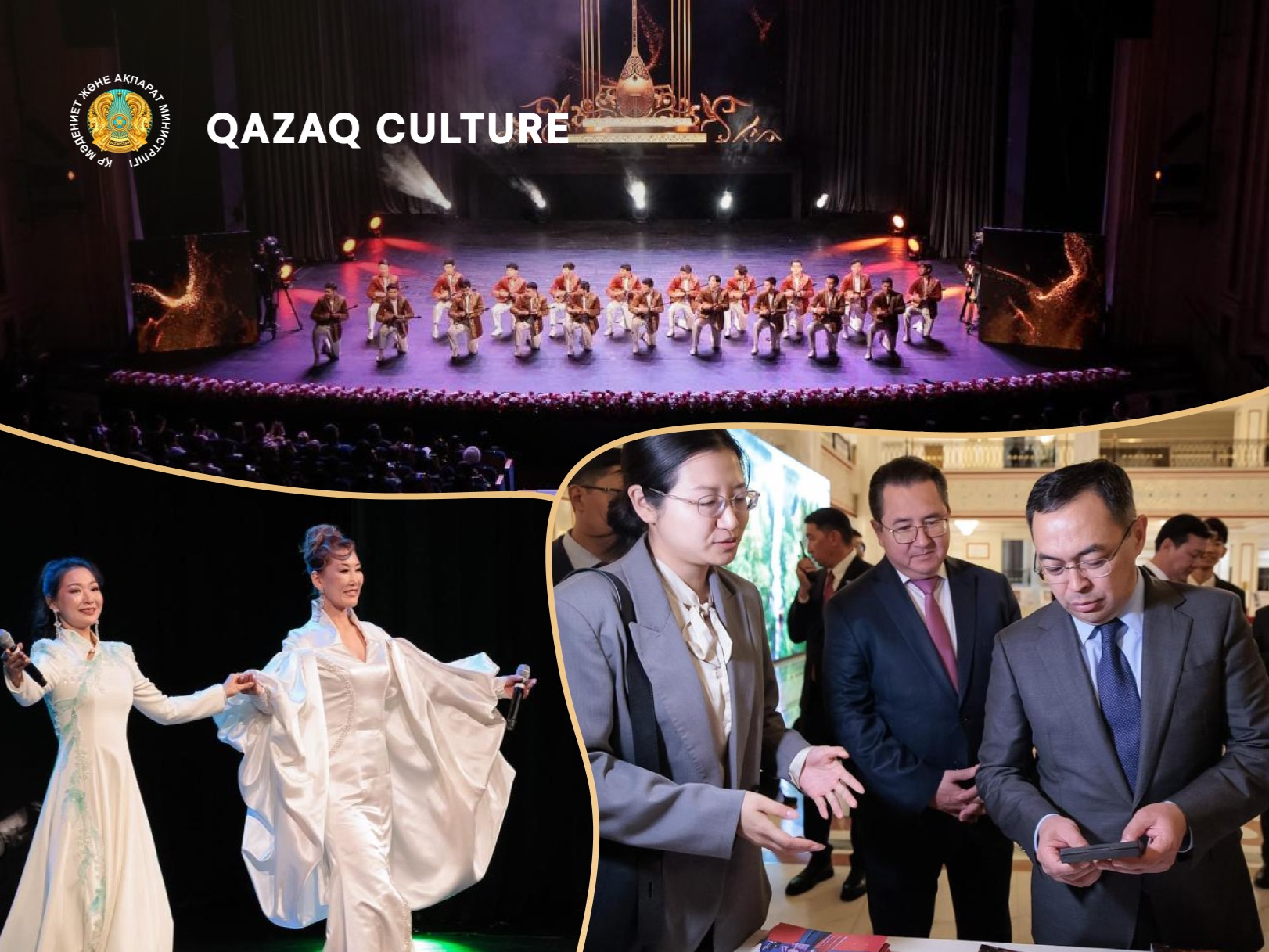
In one year, the Kazakh dombra was heard in Beijing, steppe art found its way into a Chinese museum, contemporary artists from both countries met in Almaty, and the stories of Abai and Zhambyl were told to new audiences beyond Kazakhstan's borders. In total, the program for the Kazakhstan-China Year of Culture included approximately forty events.
This figure is impressive, but in itself says little about the outcome. Cultural years easily devolve into a series of concerts, official openings, and anniversary evenings that end with the final event. Far more interesting is something else: do they leave behind infrastructure, new routes for art, and an audience that begins to perceive the neighboring country not through diplomatic formulas, but through music, literature, and museum pieces?
In the case of Kazakhstan and China, this line gradually became more noticeable than the festival program itself.
The Year of Culture officially opened at the end of March with a major concert in Beijing. But over the following months, Kazakhstan presented itself to the Chinese public not through a single, universal cultural program, but through several different images. The "Culture of the Nomads of the Great Steppe" exhibition in Zhejiang Province focused on historical heritage and material culture. Beijing hosted events celebrating Dombra Day, Abai Day, and the 180th anniversary of Zhambyl Zhabayev. The resulting exhibition offered a fascinating range: from archeology and traditional musical instruments to poetry and intellectual history.
This approach is important primarily because national culture abroad is too often reduced to a few easily recognizable symbols. The dombra, national costume, or nomadic image can indeed be a first point of introduction, but then the question arises: what follows? The year's program attempted to expand this range, presenting Kazakhstan both as the heir to the steppe civilization and as a country with its own literary, musical, and contemporary artistic traditions.
The Kazakhstan Cultural Center in Beijing played a special role in this process. It opened before the start of the Cross Year and became the first permanent Kazakh cultural venue of its kind abroad. Literary meetings, exhibitions, and educational events are held here, as well as a library space. Throughout the year, the center hosted events dedicated to Abai and Zhambyl, gradually transforming from a symbolic representation into a venue for a regular cultural presence.
This difference is significant. A one-time exhibition introduces the public to art for several weeks. A permanent center allows for return visits, changing programs, and gradually building a community around the culture of another country. In turn, a Chinese Cultural Center is expected to open in Astana, meaning that this exchange should receive a mirror infrastructure in Kazakhstan.
Moreover, this cultural movement was not limited to Kazakhstan and China. In the fall, the Abylkhan Kasteyev National Museum of Art in Almaty became the third stop of the international exhibition "Endless Clouds of the Silk Road." The project, previously shown in Tehran and Tashkent, brought together works by Kazakh and Chinese artists. Here, the Silk Road served not only as a historical metaphor for caravans and ancient trade, but as a route for contemporary art. Such projects change the very optics of cultural exchange. Instead of one country coming to "present its culture" to another, a space for joint exhibitions emerges. Artists find themselves not on opposite sides of national pavilions, but within a single curatorial narrative.
But perhaps the most apt image of the entire Year of Culture was the story that was the focus of one of the episodes of the final evening in Astana: the friendship between Bakhytzhan Baikadamov and Xian Xinghai.
During World War II, Chinese composer Xian Xinghai found himself in Almaty and lived for a time in Baikadamov's house. The musicians didn't speak the same language, but their bond was preserved in family memories, music, and later joint projects between the two countries. Concerts dedicated to this story have already been held in China, the composers' descendants have met, and their works were performed in the same program.
At the closing of the Year of Culture in Astana, this story was revisited again – through a choreographic production and photographs. Against the backdrop of dozens of official events, it unexpectedly provides the clearest answer to the question of why cultural exchange is necessary at all.
Not because art automatically bridges differences between countries. And not because a single concert can change the way millions of people perceive each other. Cultural contact usually works much more slowly: through a single work, a translation, a personal encounter, a museum exhibition, or music heard for the first time.
Around forty events per year can be perceived as a large billboard. But it's more interesting to look at them as the creation of routes. Kazakh art gains new venues in China, Chinese art gains the opportunity to become more systematically present in Kazakhstan; museums launch joint projects, and the figures of Abai, Zhambyl, Baikadamov, and Xian Xinghai enter new cultural contexts.
Therefore, the true outcome of the cross-cultural year will not be clear at its closing ceremony.
It will become apparent later – if exhibitions continue to travel, cultural centers develop their own programs, musicians return with new projects, and the introduction of the two cultures ceases to depend on a specially announced year. It is at this point that cultural exchange ceases to be a calendar event and becomes a habit.