A new production of the legendary opera "Abai" premiered in Almaty
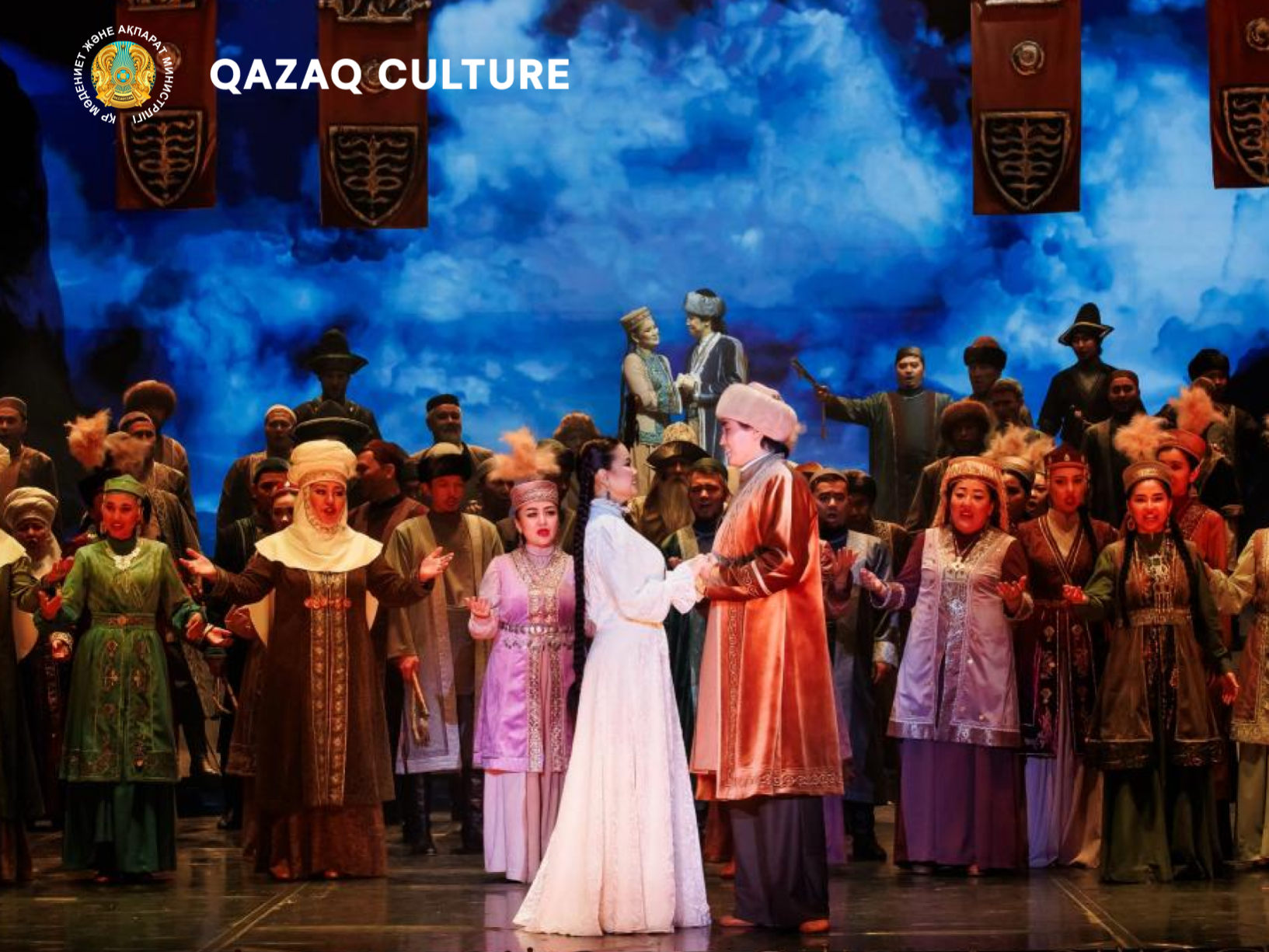
The Kazakh National Opera and Ballet Theatre named after Abai premiered a new production of the opera "Abai." This work has remained a gem of national operatic art and a hallmark of the theatre for over eight decades.
The production preserves the classical foundations and key meanings of the work. At the same time, artistic accents have been updated, emphasizing the continuity of generations and the role of the opera "Abai" as a cultural code.
The new production of the opera features a contemporary theatrical interpretation while preserving the philosophical foundation of the work, emphasizing the hero's inner world and his moral choices. The set design and visual solutions have been updated: Esengeldy Tuyakov created a generalized image of the steppe with laconic, meaningful sets. Rauan Kairullaeva's costumes draw on historical forms and national motifs with a contemporary interpretation. The musical score remains unchanged; under the direction of Nurzhan Baibusinov, the orchestra, choir, and soloists ensure a cohesive sound. Director Farkhat Moldagali emphasized the theme of intergenerational continuity.
The opera "Abai" is considered the first Kazakh opera created by national composers according to the canons of the operatic genre. The musical dramaturgy combines arias, recitatives, and ensembles, and along with Abai's songs, folk songs, and kuys, a significant portion of the composition is credited to the composers, Akhmet Zhubanov and Latif Hamidi. The libretto is based on Mukhtar Auezov's novel "The Path of Abai," episodes from which were incorporated into the libretto by the author himself.