In Almaty, new approaches to the preservation and promotion of intangible cultural heritage were discussed
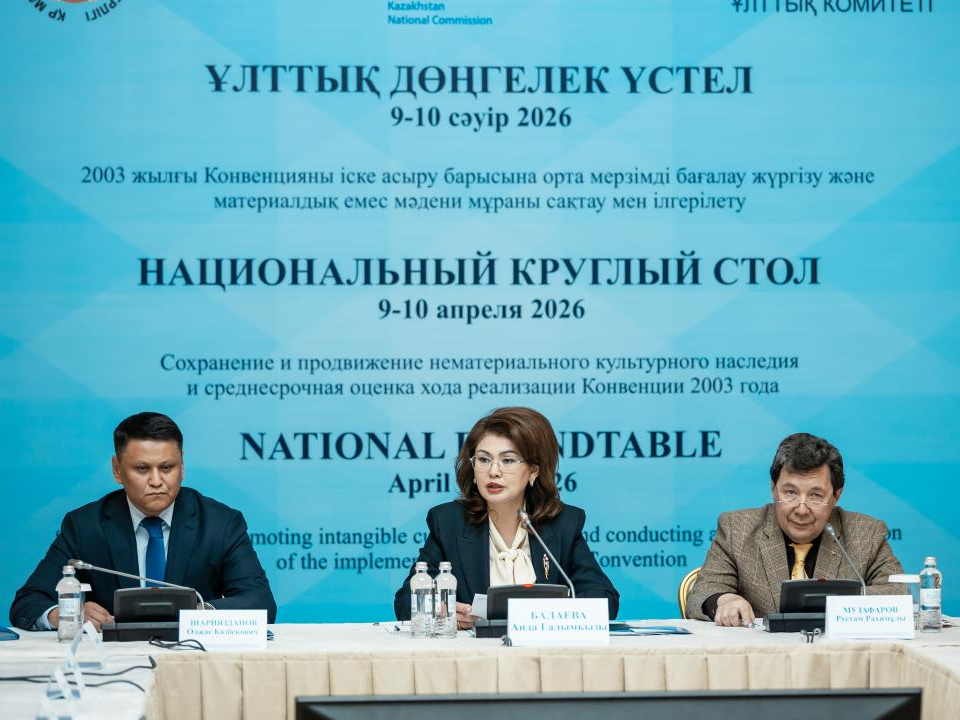
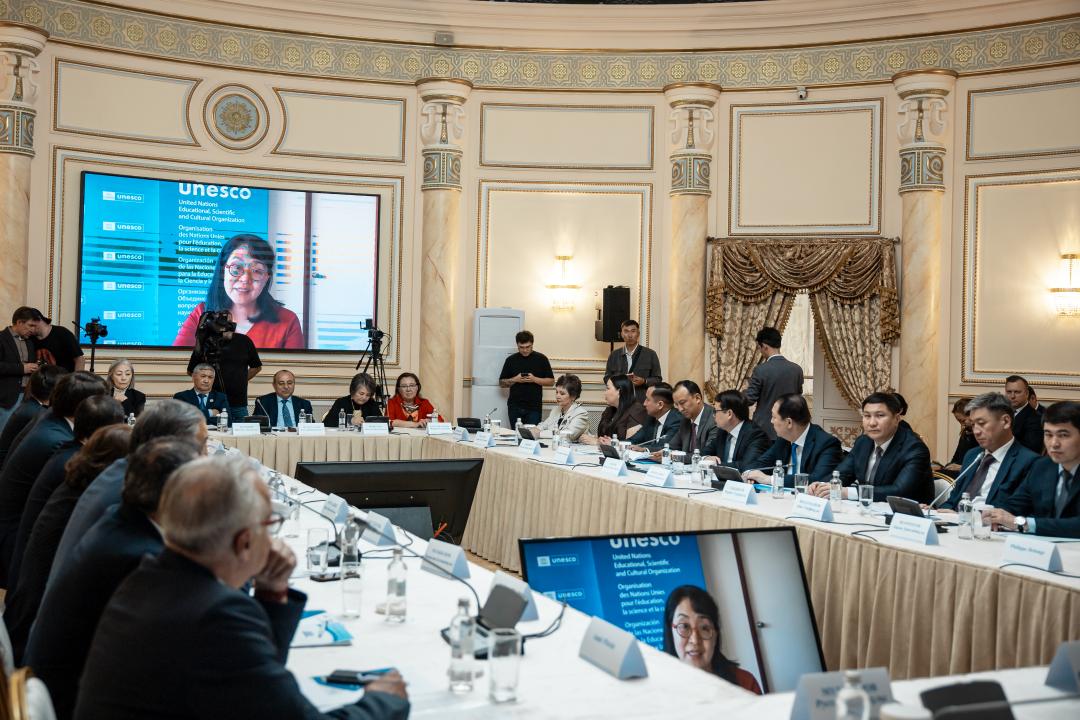
A national roundtable on the preservation and promotion of intangible cultural heritage and a mid-term assessment of the implementation of the 2003 Convention took place in Almaty. Representatives of the Ministry of Culture and Information of the Republic of Kazakhstan, the UNESCO Secretariat, the National Commission of the Republic of Kazakhstan for UNESCO and ISESCO, the expert community, and regions of the country participated.
The event was held as part of the first day of a two-day program implemented under the UNESCO Technical Grant for 2025-2026. Currently, the grant is being implemented in a pilot mode in five regions of Kazakhstan: Zhetysu, Atyrau, East Kazakhstan, Karaganda, and Kyzylorda regions. Special working groups have been created there to monitor the effective management of the grant and regularly monitor its implementation.
Opening the roundtable, Deputy Prime Minister – Minister of Culture and Information of the Republic of Kazakhstan Aida Balayeva emphasized the importance of consistent state support for national cultural traditions and the need to develop practical solutions in this area.
The regions face the task of reviving forgotten elements of Kazakh traditional culture and introducing modern methods of their popularization, including digital media.
"As the Head of State noted at the meeting of the National Kurultai, true patriotism manifests itself in concrete actions — love for one's native land and readiness to serve society. The unique heritage, carefully preserved in families and passed down from generation to generation, must receive effective state support and full development in a modern cultural environment. The 2003 Convention, as a concept of 'living heritage,' fully corresponds to the values of Kazakh society," Aida Balayeva noted.
Fumiko Ohinata, Head of the UNESCO 2003 Convention Secretariat, emphasized the importance of the international assistance mechanism as one of the key tools for implementing the 2003 Convention.
"It is gratifying to see that Kazakhstan's national inventory of intangible cultural heritage has already been updated, and the capacities of local communities in different regions of the country have been strengthened. We highly appreciate the work of Kazakh government bodies and communities and are confident that this experience can inspire other countries to actively use the international assistance mechanism," Fumiko Ohinata noted.
Summing up the discussion, it was noted that the proposals voiced during the roundtable will be systematized and taken into account in further work.
To date, during the implementation of the first stage of the UNESCO project, 56 elements out of 79 elements in the current National Inventory have been documented, and 277 bearers of intangible cultural heritage have been interviewed.
In addition, training seminars were held in five pilot regions. Work is underway to create an interactive database of bearers of intangible cultural heritage in Kazakhstan.
Two specialized sections were also held, where issues of oral and epic heritage, the training of specialized specialists, the development of documentary heritage, its digitalization and expansion of access to funds, as well as the use of traditional games and folklore competitions in the upbringing of children and adolescents were discussed.
The second day of the program includes a closed training seminar for regional leaders of the pilot regions, a seminar-briefing on identifying and developing ICH elements at the local level, and a working meeting on the implementation of the UNESCO Technical Grant.