Kazakh ornament accessible to the visually impaired
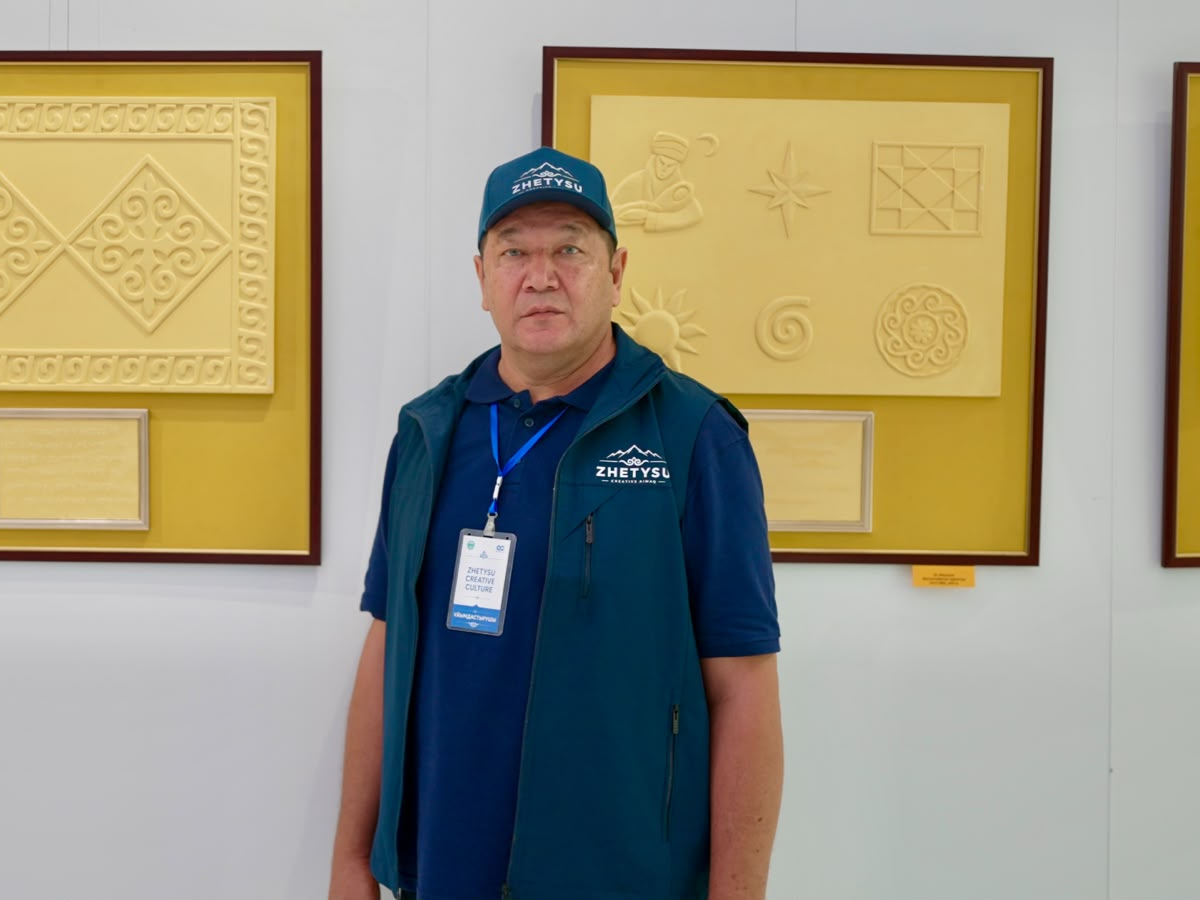
As part of the national Creative Aimaq project, representatives of Zhetisu's creative industry presented works combining traditional art and contemporary ideas to residents of the capital at the "Zhetisu - Elorda torіnde" fair. Among the participants was professional artist Muratkan Duysengaliuly, who brought his works to the fair, allowing visually impaired people to experience Kazakh national ornaments through touch.
Kazakh ornaments are an artistic heritage that reflects the nation's worldview and its relationship to the world around them. Each pattern, developed over centuries, has its own meaning, history, and figurative language. But how can this language be conveyed to people with visual impairments? The artist answered this question through art, creating a project that allows people to explore national ornaments through touch.
Muratkan Duysengaliuly's project was born during his master's degree. Seeking a new and unusual direction for his dissertation research, he decided to make Kazakh national ornaments accessible to an often overlooked audience: the visually impaired. Thus, the idea, born from a simple but important question: "How can I explain Kazakh national ornaments to visually impaired people?", gradually evolved into a full-fledged creative project. The project's key feature is that the work is perceived not visually, but through touch. At the bottom of each composition is an explanation in Braille. Visitors first learn about the history and meaning of the ornament, and then can explore its form by touch.
One of the works presented to residents of the capital at the "Zhetisu - Elorda Töründe" fair was a composition featuring the "KoshkarmuyÖz" ornament. It is based on the image of a ram, which holds a special place in the traditional culture of the Kazakh people. First, a visitor imagines the image of the animal and then traces how this image gradually transforms into an artistic ornament. This approach allows the pattern to be perceived not simply as a decorative element, but as an artistic expression of a specific idea and meaning.
According to the artist, Kazakh ornaments can be roughly divided into four main groups: zoomorphic, associated with the animal world; cosmogonic, reflecting celestial phenomena; and floral and geometric. Within the project, each of these categories is presented in a way that makes its content accessible.
Particular attention is paid not only to the finished image but also to the explanation of its origin. Thus, visually impaired visitors can perceive not only the form of the ornament but also the national worldview embedded within it.
The presentation of these works at the "Zhetisu - Elorda torinde" fair allowed a wider audience to become acquainted with the artist's creative pursuits. With his project, Muratkan Duysengaliuly demonstrated that national art can not only be preserved but also adapted to various perceptions. Muratkan Duisengaliuly's works offer a new perspective on Kazakh ornamentation and demonstrate how national heritage can be made accessible to everyone.