When the opera speaks without translation: foreign guests talk about "Appak – the daughter of the Kipchak"
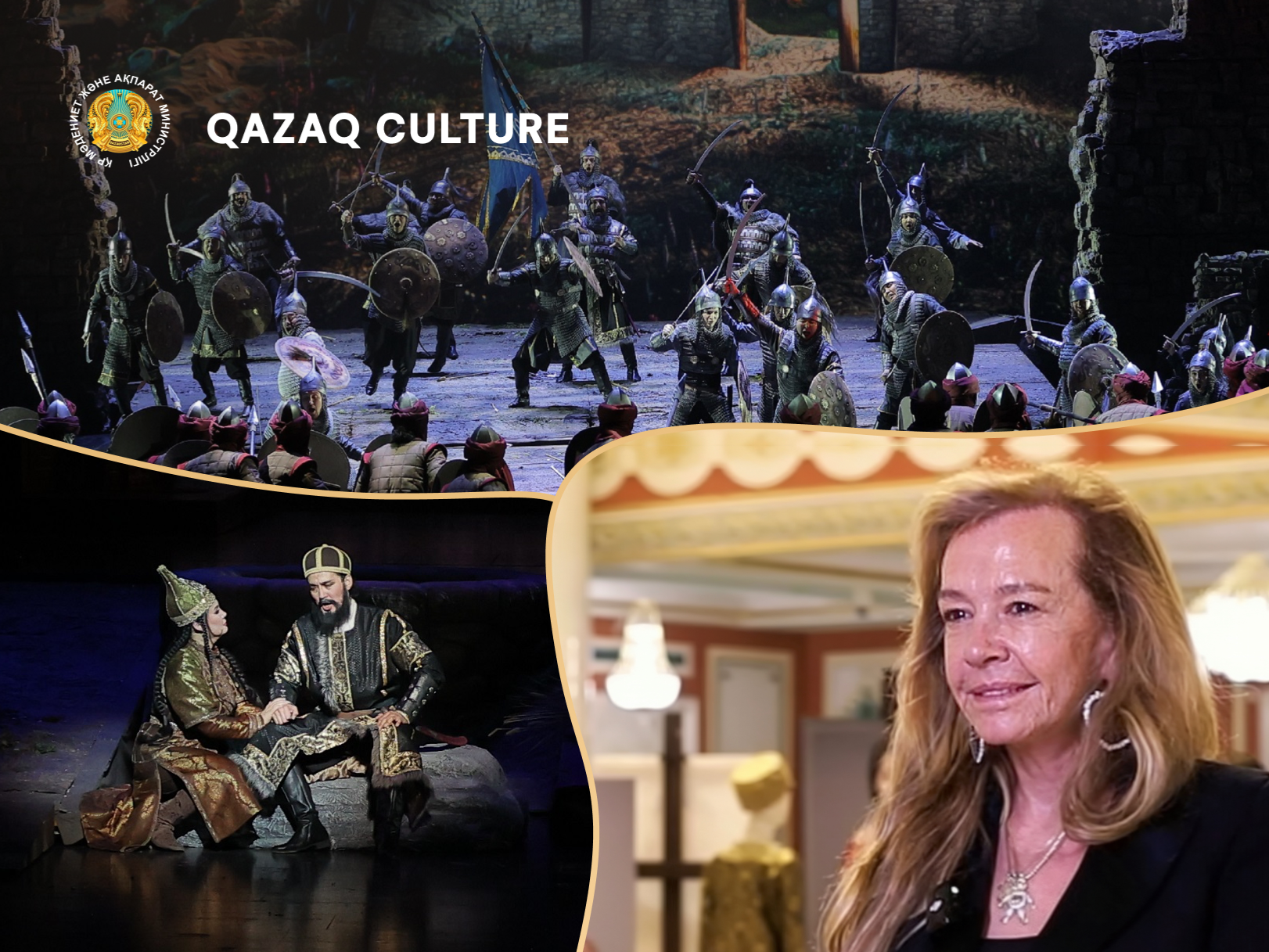
A national production undergoes a crucial test when viewed by someone previously unfamiliar with the characters' history, the cultural context, or the authors' intentions. Does the story remain comprehensible? Does the music itself work? Does it create an emotional connection with the audience?
In this sense, the opera "Appak – Daughter of the Kipchak" by Serikzhan and Alibi Abdinurov gradually transcends the confines of a domestic theatrical event. At the October performances at the Astana Opera, members of the international cultural community were among the audience, and their impressions allow us to see the production from a truly outside perspective.
Caroline Scheufele, co-president and artistic director of the Swiss jewelry house Chopard, visited the theater for the first time. After the performance, she primarily praised the Astana Opera space itself, its acoustics, and the orchestra's performance.
"The performance leaves an incredible impression, and I am very pleased with its happy ending. And the music and the orchestra's performance are simply delightful, breathtaking!" " shared Caroline Scheufele.
This reaction is particularly telling for the production. "Appak" was created as a national opera, but its dramaturgy is built around a universal story—love, separation, trials, memory, and the ability to preserve inner freedom.
The libretto by Tleugazy Beysembek, based on a drama by Gabit Musrepov, is based on the fate of the Kipchak girl Appak and the great Azerbaijani poet Nizami Ganjavi. Finding herself far from her native land, the heroine becomes the poet's wife and muse. Through her personal story, the authors address broader themes—the human clash with historical circumstances, spiritual fortitude, and the price of peace.
Theater and music critic and professor at the Azerbaijan National Conservatory, Ulkar Aliyeva, previously expressed her impressions of the production. According to her, the love, intrigue, and battle scenes seem to tear the viewer from the present and transport them to a distant era. It is precisely the spectacle that works together with the music here.
The orchestral score combines the academic operatic tradition with the timbres of Kazakh and Azerbaijani national instruments. Different cultural spaces emerge on stage, but they do not exist in isolation – Appak's story becomes a meeting point for them.
A large production team worked on the production: director Mikhail Pandzhavidze, musical director Abzal Mukhitdin, and composers Serikzhan and Alibi Abdinurov. Yerbolat Akhmedyarov conducted the October performances.
Professional critics are also showing interest in the production. Russian musicologist Alexander Matusevich came to Astana specifically for the performances, intending to prepare a separate review of the production.
Such a perspective is especially important for a young opera.
The premiere of "Appak – Daughter of the Kipchak" took place only a few months ago. The production still has a life of its own onstage, undergoing various casts, meeting new audiences, and perhaps even expanding to international venues.
But even now, the key point is becoming clear: national material doesn't necessarily require a foreign audience to have prior knowledge of history.
When music, drama, and stage imagery work together, history begins to speak for itself.
And then the Kipchak girl from the distant past becomes relatable to someone entering a theater in Astana for the first time.