A new route has opened in Turkestan, exploring the restored monuments of an ancient city.
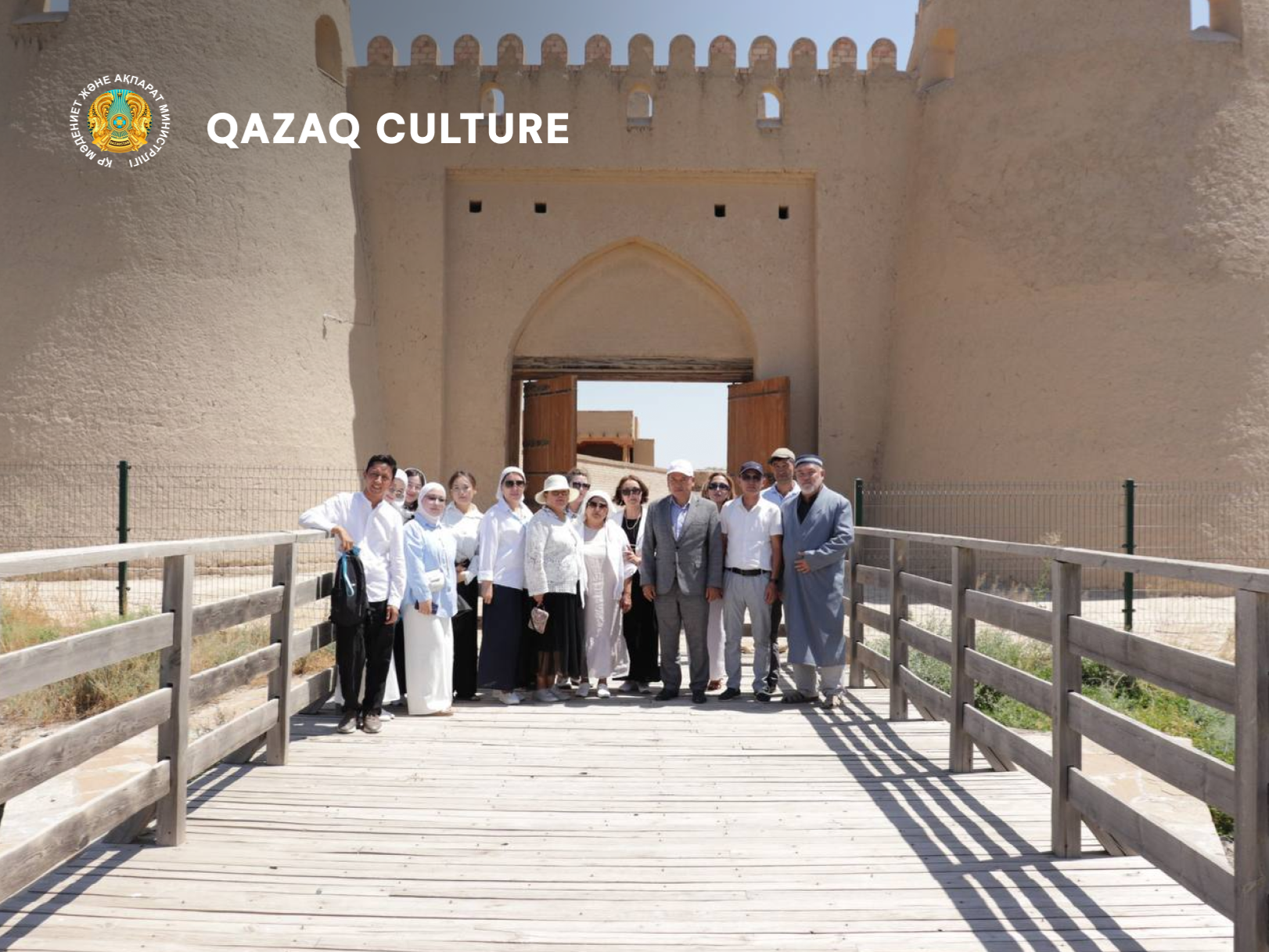
The Aziret Sultan State Historical and Cultural Museum-Reserve has developed a new tourist route linking the restored monuments of medieval Turkestan. The project is the result of years of archaeological, archival, and architectural research.
The route begins at the Jety Ata Gate, one of the four historic entrances to the ancient city. At various times, trade caravans, pilgrims, artisans, and travelers passed through it. The gates were part of Turkestan's defensive system and connected the city to the routes of the Great Silk Road.
The route also includes the Bab Arab Mosque and the Bab Arab and Undemes Ata mausoleums. These sites offer an opportunity to explore not only the famous holy sites of Turkestan but also the city's everyday history, architecture, spiritual traditions, and construction technologies.
The restoration of the monuments was preceded by comprehensive scientific work. Experts studied written sources, historical documents, and archival photographs, conducted archaeological excavations, and conducted architectural research.
One important source was a 1910 photograph depicting the Bab Arab and Undemes-ata mausoleums. This image allowed researchers to clarify the original appearance of the structures, their location, and architectural features. Research revealed that the mausoleums were built in the late 19th century from mud brick and covered with clay plaster.
During the reconstruction of the Bab Arab Mosque, specialists used the results of a 2009 theodolite survey, excavation data from the Jety Ata gate, and historical materials. Archaeologists discovered remains of fired brick walls, floor fragments, and other elements that allowed them to determine the location and layout of the building.
Features of the original architecture have also been preserved in the Undemes-ata mausoleum. During the excavations, fragments of masonry and rows of fired brick tombstones were discovered. The data obtained helped restore individual elements of the structure, taking into account historical construction techniques.
The new route introduces visitors not only to the monuments but also to the process of their study and restoration – from working with archival documents and excavations to scientific reconstruction.
The project demonstrates a comprehensive approach to preserving historical and cultural heritage, combining archaeology, restoration, museum activities, and tourism. The restored objects become part of the modern cultural space and offer a broader understanding of the history of ancient Turkestan.