A voice that transcends one scene
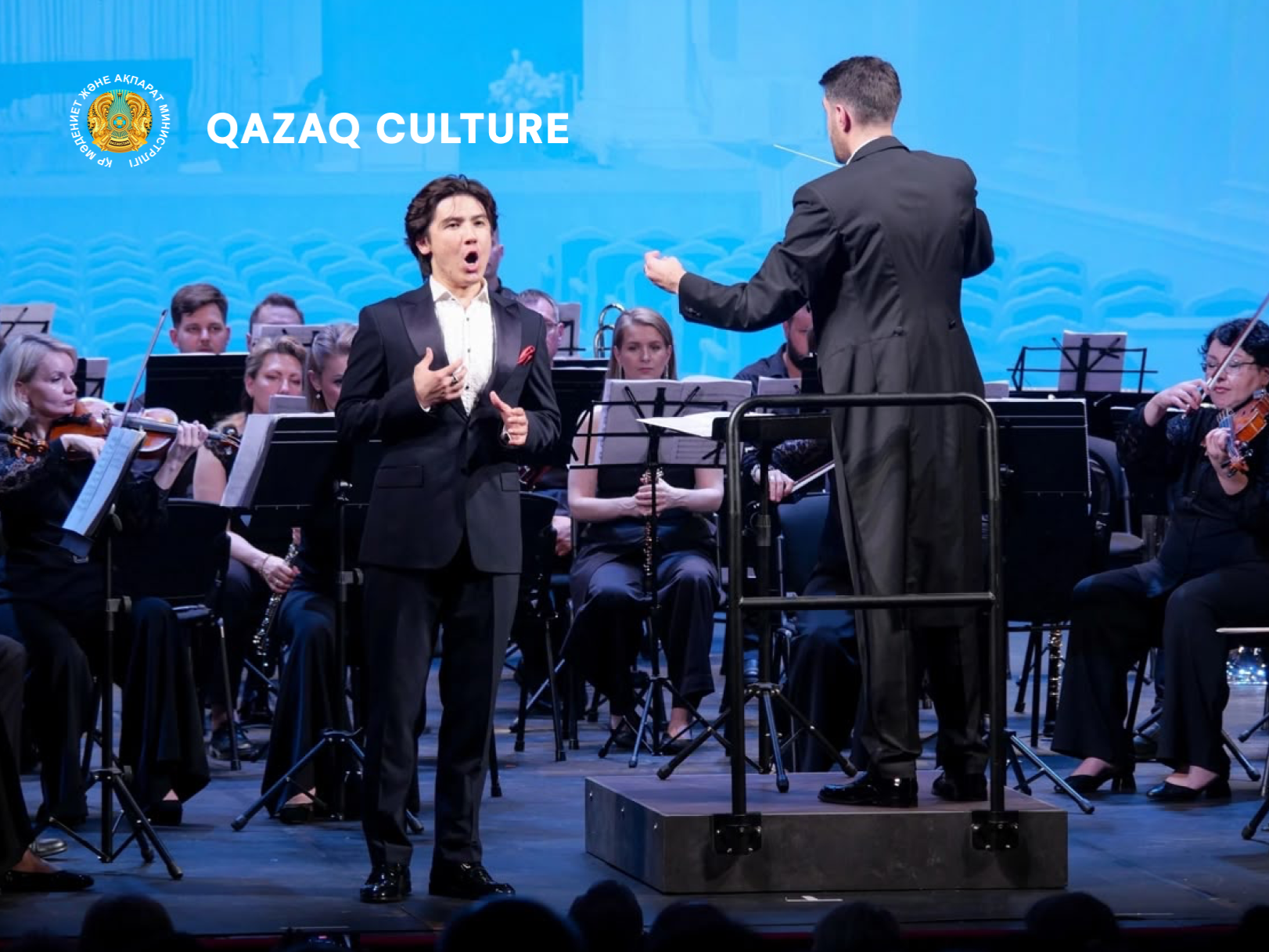
An opera career isn't built solely on sensational premieres and acclaim. Every public appearance is accompanied by auditions, competitions, new roles, and the constant need to prove one's right to remain on stage. For tenor Nursultan Anuarbek, such a new challenge was the Sergei Lemeshev International Competition for Young Opera Singers, where the Astana Opera soloist won third prize.
However, the award in Tver is just one stop on his rapidly developing professional journey. Today, the young singer combines his work in a Kazakh theater with an internship in the Bolshoi Theater's Young Opera Program, mastering a complex international repertoire, and gradually emerging on the international stage no longer as a promising debutant, but as an artist with significant performing experience.
The Competition as a Test of Maturity
More than 150 vocalists from Kazakhstan, Russia, China, Turkey, Guatemala, Bolivia, Uzbekistan, and Belarus took part in the competition. Among them were students and graduates of conservatories, soloists from musical theaters and philharmonic societies, and singers already performing at leading opera houses.
For Nursultan Anuarbek, the competition was an opportunity to showcase not only his technical vocal capabilities but also the breadth of his repertoire. The program was structured as a gradual progression of complexity – from the lyric poetry of Charles Gounod and Kazakh romances to Verdi, Rachmaninov, and Puccini.
In the first round, the tenor performed Faust's cavatina from Gounod's opera of the same name. A composition in his native language was mandatory, so the Kazakh singer chose Mukan Tulebayev's romance, "My körðim üzyn çayýn çülaçanyn," based on Abay Kunanbayev's verse.
This choice allowed national vocal music to be presented alongside European classics – not as a separate ethnographic piece, but as a fully-fledged part of the academic repertoire.
The second round featured the Duke's aria from Giuseppe Verdi's Rigoletto, Pyotr Tchaikovsky's romance "I Would Like to Say It in One Word...," and the Young Gypsy's romance from Rachmaninoff's Aleko. In the final, Nursultan Anuarbek turned to the role of Rodolfo from Giacomo Puccini's La Bohème – one of the iconic tenor roles in world opera.
The first stages were accompanied by piano, while the finalists performed with the Tver Philharmonic Symphony Orchestra. This transition alters not only the scale of the sound. The singer must instantly adjust, listen to the orchestra, maintain the freedom of the voice, and simultaneously capture the drama of the aria.
When nerves become part of the profession
Even regular performances on major stages don't relieve an artist of the tension before a competition. According to Nursultan Anuarbek, the presence of renowned conductors and vocal masters on the jury makes each performance especially challenging.
"Representing Kazakhstan and the Astana Opera, I wanted to demonstrate the caliber of our vocal school. Despite my experience performing on major stages, I was nervous before going on stage. This is natural: you are being evaluated by reputable experts who hear every detail and can see in you a future performer for their projects," says the singer.
For a young vocalist, a competition is more than just a fight for a spot. It's an opportunity to gain the attention of conductors, theaters, and international agents. Sometimes, an important professional connection arises not after a victory, but after a single, masterful performance of a piece.
After the competition, colleagues and jury members praised the tenor's preparation and the caliber of the Kazakh vocal school. For the artist himself, this recognition was no less important than the final prize.
From the Astana Academy to the Bolshoi Theatre
Nursultan Anuarbek's professional foundation was formed at the Astana Opera International Opera Academy. He later passed the rigorous selection process for the Bolshoi Theatre's Young Artists' Opera Program, where he continued working in one of the most demanding theatre systems.
During his eight-month internship, the singer performed in over twenty performances and concerts. His stage credits include Pyotr Tchaikovsky's Iolanta, Sergei Prokofiev's War and Peace, The Story of a Real Man, and The Fiery Angel, Mozart's The Magic Flute, and Richard Wagner's Parsifal.
His debut on the Bolshoi Theatre's Historical Stage in Richard Strauss's Salome was particularly noteworthy. Later, the tenor sang Ferrando in Mozart's Così fan tutte (All Women), a role where the apparent ease of musical language demands precision, flexibility, and a keen sense of ensemble.
"The program is very intense. Each performance requires a new vocal and acting approach. Working on Ferrando was especially important for me: this role allowed me to delve deeper into Mozart's style and feel the responsibility of a full-fledged role," the artist notes.
Performing under Valery Gergiev was a special experience for him. Working with a major conductor requires a singer not only to have a prepared voice but also to react instantly on stage: the musical approach can change during rehearsals, and the artist must be prepared to follow the overall dramaturgy of the performance.
Not a collection of awards, but an expansion of opportunities
Winning the Lemeshev Competition added to Nursultan Anuarbek's list of achievements, but the significance of this award goes beyond the competition diploma. It captures the moment when accumulated experience begins to coalesce into an independent artistic signature.
Today, his repertoire includes Kazakh vocal lyricism, Italian opera, and music by Mozart, Prokofiev, Wagner, and Strauss. Each new work requires a renewed search for the voice, the language of the role, and one's own place within the performance.
That's why an international competition is not a pinnacle, but a test of one's journey. It demonstrates the singer's readiness to move forward—to new roles, theaters, and audiences.
For Nursultan Anuarbek, this journey has already extended beyond the confines of a single stage. But his connection to Kazakhstan and the Astana Opera remains an important part of it: wherever the artist performs, the school in which he was formed resonates alongside his voice.