"AI doesn't make things up for you": Myrzakhan Zhumakhan on new films, big budgets, and the return of the real person
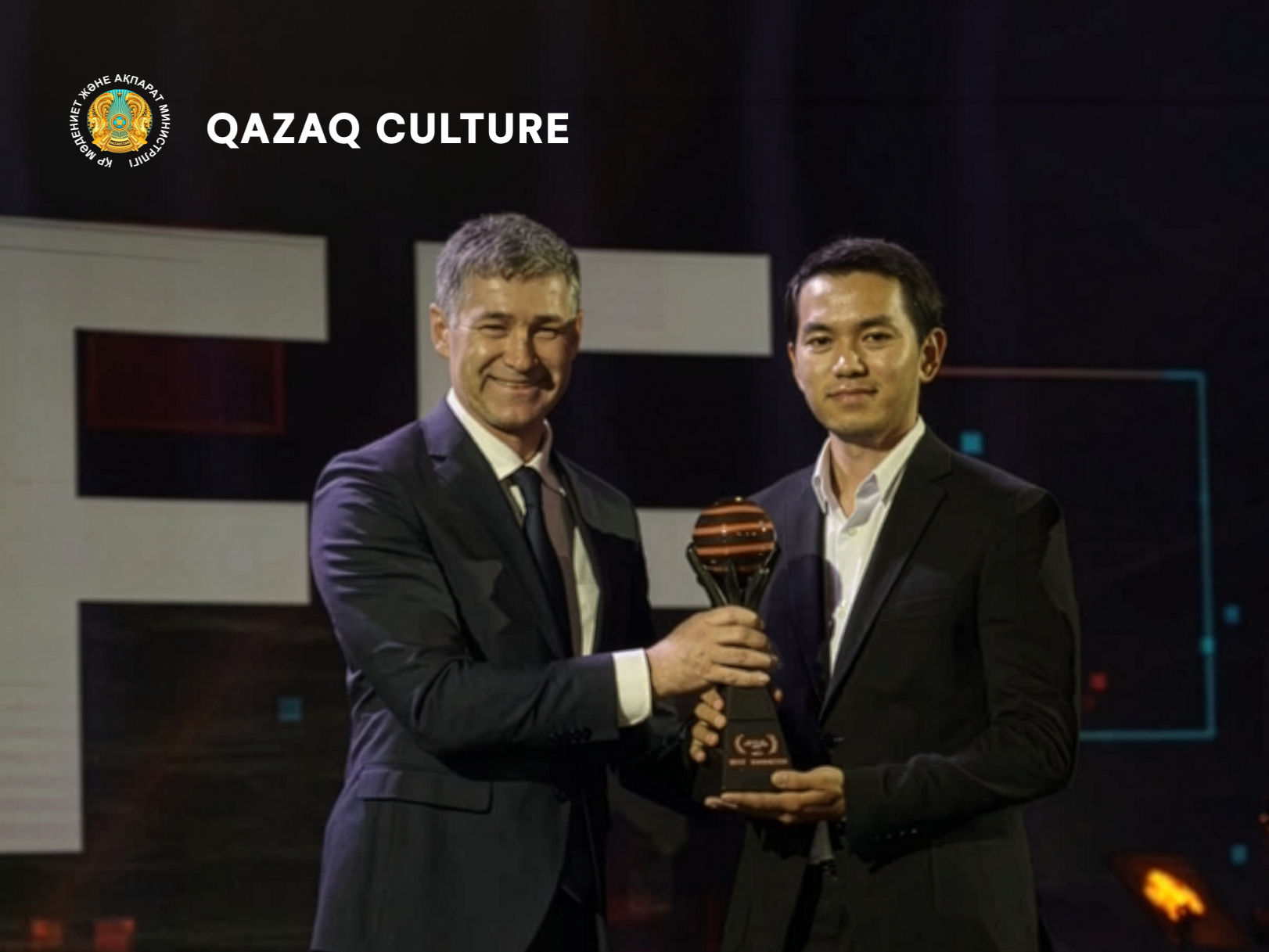
Sometimes, it's not the most difficult work that wins.
Before the Astana AI Film Festival, Myrzakhan Zhumakhan spent almost a month creating a large-scale film, experimenting with technologies and spending over a thousand dollars on production. Then, in a week and a half, he created a significantly simpler comedy about a dog and a joke gone wrong.
And it was this comedy that won the international award.
At the Astana AI Film Festival, which received thousands of submissions from around the world, the Kazakh director's film "It Was Just a Joke" won in the Best Character category. The simple story proved more noticeable than numerous fantasy worlds, large-scale sets, and technological experiments.
This result is interesting not only as a personal success for the author. It raises a broader question: if artificial intelligence is gradually making complex visual tools accessible to almost everyone, what then begins to determine a film's value?
We've compiled Myrzakhan Zhumakhan's key thoughts on the new AI cinema – the value of an idea, the changing role of the director, and why, after the technological boom, audiences may again need a real person. Thousands of entries were submitted to the competition. Why, in your opinion, did such a relatively simple story stand out?
At first, I myself was pursuing complexity. When people first gain access to artificial intelligence, they want to show off its full potential: space, fantastical worlds, large-scale scenes—things that were previously difficult or expensive to create.
I also made a complex film. I worked on it for almost a month, investing over a thousand dollars.
But I gradually realized one thing. The festival jury has to see a huge number of entries, and many creators will try to impress them with roughly the same thing—scale.
Then I wanted to go the opposite direction.
I decided to make a simple comedy that doesn't require the viewer to think hard and simply lifts the spirits. It centers on a dog and its owner's brother. A simple joke gradually leads to a serious conflict.
I thought that this very simplicity could be a differentiator.
So, the development of AI tools is bringing cinema back to the most basic question: is there such a thing as a good story? – I think so. Artificial intelligence is just a tool.
Let's give a simple example. If a person picks up an axe, they don't start chopping down a tree themselves. They still need a human being who understands what they want to do.
The same thing happens with AI.
First, I have an idea. Then I start discussing it with the AI, adding festival requirements, considering different options, accepting some, rejecting others. Only after that does the film gradually emerge.
Therefore, I think it's wrong to think that you can just press a button and AI will create the work itself.
The main creative decisions still remain with the human being.
– Your film is shot in Japanese, even though you don't speak Japanese. Why did you choose it?
– This clearly shows how technology expands the author's capabilities.
I developed the dialogue and script with the help of AI, and then the text was reviewed by a person who knows Japanese.
But the choice of Japanese wasn't only related to that. While working, I noticed that the AI model used reproduced certain scenes particularly naturally in a Japanese context. The images, characters, and movement were more convincing. So I decided to use this technology's advantage to the film's advantage.
Previously, the language barrier could be a serious limitation. Now, a filmmaker has the opportunity to experiment with cultural and linguistic spaces that were previously practically inaccessible.
But this also means greater responsibility. AI can help you write text in a language you don't know, but the result still needs to be verified with someone who actually knows the language.
– You say that artificial intelligence is changing not only film production but also the competition between countries. In what ways exactly?
– Until recently, the scale of a film was directly dependent on money.
If you wanted to show a large, fantastical city, a complex crowd scene, or a high-quality visual world, you needed a huge crew, equipment, and budget.
Therefore, the largest film industries had a clear advantage.
Now this gap is starting to narrow. Even with a budget of $500 or $1,000, a filmmaker can create a few minutes of visually stunning cinema. Of course, this doesn't mean money has ceased to matter. But its role is changing.
And then the idea comes to the fore.
For Kazakhstan and other countries that don't have Hollywood budgets, this is a very interesting opportunity. While previously it was extremely difficult to compete on the same visual level, now the technological gap is narrowing.
This means the question will increasingly be not "how much money do you have?" but "what do you want to say?"
– But if technology continues to improve, won't the need for actors, camera operators, artists, and other creative professionals disappear?
– Some professions could indeed change dramatically. I think it's pointless to deny it.
Artificial intelligence is already quite good at conveying movement, human emotions, and appearance, and is capable of creating what exists only in the creator's imagination. In a few years, the quality will improve even further.
But an interesting reverse process is possible here. The more artificially created people, voices, and images there are around us, the more valuable a real person may become.
Perhaps, after a certain peak in technological development, audiences will once again begin to seek out natural emotion, genuine acting, and the individuality of a particular person.
What seems commonplace today may become rare tomorrow.
And then authenticity will once again become especially valuable.
– So you don't see the future as a confrontation between humans and artificial intelligence?
– For me, the question is more about how humans will use technology.
AI offers enormous possibilities, but it alone doesn't guarantee a good result.
You can have access to the best tools and still make a boring film. Or you can take a fairly simple idea and find a form that will be memorable to the audience.
I experienced this firsthand. My most technically complex work didn't win an award. The winner was a film that was simpler and more relatable to me – I love humor, pranks, and lighthearted stories. There's probably an important lesson here for me as an author: you can't create a work just to demonstrate technology.
First and foremost, you still need to think about the audience.
– After such a win, what kind of film do you want to make next?
– Right now, I'm interested in horror.
But I don't want to make a film just to scare people. It's more interesting to create a story that will leave the audience thinking about what they saw for some time afterward.
That's the next challenge.
I also want to use the award I received for my own professional development – learning from more experienced directors, gaining new knowledge, and investing in future projects.
Because technology is advancing very quickly, but the author must evolve alongside it.
– What, then, becomes the most important skill for someone who wants to try their hand at AI filmmaking today?
– I think, first of all, you need to not just study artificial intelligence theoretically, but use it.
Find a problem in your everyday or professional life and try to solve it using AI. This way, you begin to understand much more quickly what technology can do, where it fails, and how to work with it effectively.
But for a creative person, this isn't enough.
You need to believe in your own idea and be persistent, but at the same time, be able to view your work from a distance.
You can't limit yourself to thinking, "My film must take first place."
You need to look at what other people are creating, listen to the opinions of others, recognize your own weaknesses, and get back to work.
I believe that a good result emerges somewhere at the intersection of these things.
The story of "It Was Just a Joke" in this sense well illustrates the paradox of new cinema.
Artificial intelligence is capable of creating what, until recently, would have required a film crew, sets, actors, extensive equipment, and a significant budget. The technological field is truly becoming more level.
But the more accessible the tools become, the less surprising the viewer is by simply possessing them. If thousands of creators can create a fantastic city, a spaceship, or an impossible creature, the competitive advantage once again becomes something that existed long before the advent of generative models: an idea, a sense of humor, an observation of life, an understanding of character, and the ability to tell a story.
Perhaps this is why, among thousands of AI-powered entries, the international jury spotted not a grandiose space epic, but a comedy about a dog and one bad joke.
Technology has changed.
But viewers still want a story.