The Golden Pen of the Era: Gabit Musrepov and His Chronicle of the People's Soul
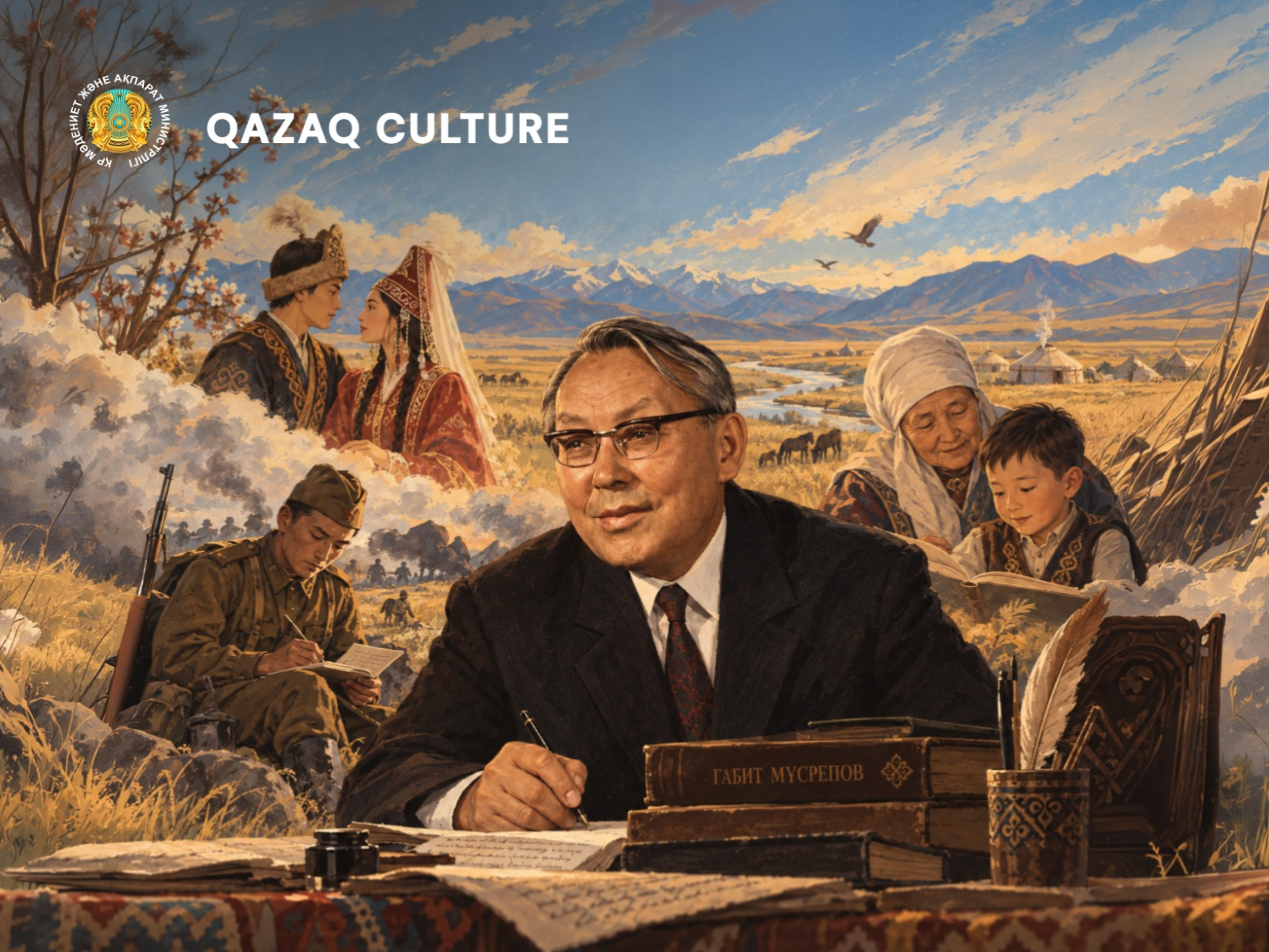
In the constellation of 20th-century Kazakh literature classics, Gabit Musrepov occupies a truly special place, illuminated by an inimitable light.
A writer, playwright, publicist, and prominent public figure, he possessed a rare gift: the ability to see a living, beating human heart behind the dry lines of history. His works have entered the golden fund of Kazakh literature, becoming exemplars of refined style, deep psychology, and boundless love for his native land.
Born in the aul of Zhanazhol in the present-day Zhambyl District of the North Kazakhstan Region, Gabit Makhmudovich absorbed the epic breath of the Kazakh steppe, the sounds of the dombra, the songs of steppe akyns, and the wisdom of folk legends from an early age. His youth coincided with a complex historical upheaval: the collapse of the old way of life, revolutionary turmoil, the establishment of a new order, and the severe trials of the early decades of the 20th century.
Musrepov was no mere bystander. He studied at a workers' faculty (rabfak) in Orenburg, then at the Agricultural Institute in Omsk, working at the intersection of journalism and literature while keenly feeling the pulse of the times. It was this school of life that shaped the comprehensive worldview later manifested in every story, novella, and novel he wrote.
Hymn to Woman and Mother
Perhaps one of the most poignant, overarching themes in Musrepov's work was his special focus on the image of the woman and mother. In the patriarchal world of the past, her voice often went unheard, but Gabit Musrepov made female characters central to his prose, endowing them with unbending strength of spirit, wisdom, and the capacity for self-sacrifice.
His play Kozy Korpesh – Bayan Sulu, based on folk epic motifs, reveals a tragic love story defying circumstances and established rules. Meanwhile, his cycle of works about mothers, including the short story The Mother of a Mother (Ананың анасы), became one of the most recognizable pages of Musrepov's prose. Here, the maternal image appears not only as the embodiment of love and compassion, but also as a moral force capable of withstanding cruelty and violence.
Architect of Kazakh Prose
Gabit Musrepov stood at the origins of the formation of many genres in modern Kazakh literature. He masterfully commanded both the short story form and the large-scale epic canvas. His novel The Awakened Land (Оянған өлке) and A Kazakh Soldier (Қазақ солдаты) created a panoramic picture of the people's life during turning points in history. A Kazakh Soldier, which grew out of the novella A Kazakh Hero, is based on the fate of Hero of the Soviet Union Kaiyrgali Smagulov and became one of the first Kazakh novels about the Great Patriotic War.
Musrepov’s language is a distinct aesthetic phenomenon. His prose is distinguished by remarkable plasticity, musicality, lexical richness, and metaphorical precision. Every sentence is crafted with jewel-like exactness: it feels as though the words are not merely lined up, but carved from the stone of steppe eternity itself. He knew how to sketch a boundless landscape with just a few strokes while simultaneously unfolding a character's complex inner conflict.
As both a man of letters and a prominent public figure—editor of major newspapers and magazines, head of the Writers' Union of Kazakhstan, and deputy—Musrepov held a notable place in the country's cultural and social life. His authority in the literary milieu was exceptionally high, and his appraisal and advice carried special weight for young authors.
A Legacy Timeless and Enduring
Gabit Musrepov passed away in 1985, leaving behind a vast literary legacy. Streets, schools, and theaters are named after him, and his books continue to be republished and resonate in the hearts of new generations.
Reading Musrepov today means rediscovering the nobility, honesty, and beauty of the Kazakh soul. He remains in history not merely as a classic from school portraits, but as a living interlocutor who, across the thickness of decades, continues to speak with us about the most important things: honor, dignity, devotion, and humanity.
Would you like to explore a specific literary work or a particular aspect of Gabit Musrepov's creative legacy in more detail?