A carpet that is no longer just a carpet
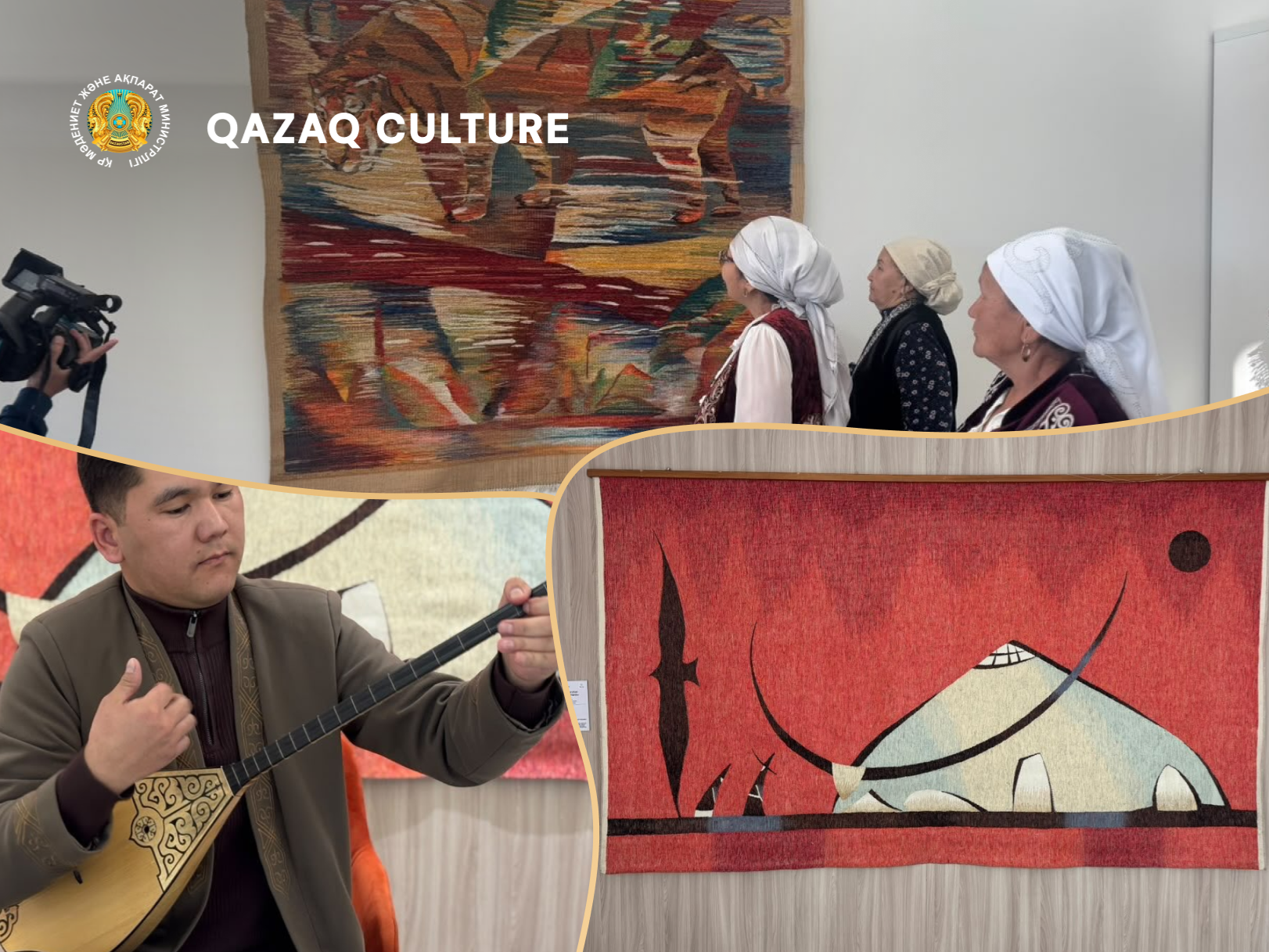
Before finding its way onto a gallery wall, the Kazakh carpet was a part of domestic life. People sat on it, entertained guests, and gathered around it. Its creation could take months, and working at the loom became a time of communication, the sharing of knowledge, and family stories. In contemporary art, this object takes on yet another meaning: through it, artists attempt to understand what connects people in an era when being in person is no longer necessary for communication.
This very question lies at the heart of the exhibition SHE RUG 02 – ALONE TOGETHER, which opened in November in Shymkent. Traditional Kazakh carpet weaving is displayed alongside textiles, installations, and video art. The project's curator, Sandugash Beisenbekova, founder of the ShyraQ studio, proposes viewing the craft not as a preserved fragment of the past, but as a way to understand contemporary life.
Textiles held a special place in traditional Kazakh culture. Pile carpets—thick pile carpets, pileless carpets—thick pile carpets, felt carpets, and felt carpets—created the interior design of homes. Varying in manufacturing techniques, they served practical and aesthetic functions, and their patterns reflected the artistic preferences of individual regions and craftswomen. Unlike monumental architecture, these rugs could move with a person, maintaining a sense of home even when moving.
Creating a carpet required not only artistic imagination but also a deep knowledge of the material. Preparing the wool, dyeing the threads, calculating the composition, and weaving itself were a lengthy process. Much of this knowledge was passed down within the family, often without written instructions. Younger children learned by observing the movements of their elders, gradually mastering techniques that cannot be fully explained in words.
In this regard, a carpet is not only the result of labor but also its material trace. The repeating lines of the pattern reveal the time spent on the piece's creation, the sequence of processes, and the experience of several generations. When a carpet is brought into an exhibition space, this previously almost unnoticeable aspect becomes part of the artistic statement.
Kazakhstani artists have been exploring these possibilities of textiles for several decades. One of the participants in SHE RUG 02, Alibay Bapanov, a trained muralist, began with tapestry and then began working with felt, creating large-scale canvases and three-dimensional compositions. A material traditionally associated with home furnishings, he develops an artistic value of its own. Felt allows one to work with space, texture, and color in a completely different way than canvas.
Botagoz Tolesh uses tapestry to discuss female identity, freedom, and the relationship between a person and their own cultural heritage. In her works, traditional techniques do not necessarily require reference to familiar ethnic themes. Weaving becomes a fully-fledged language for the contemporary artist, capable of conveying personal experiences and complex images. Almagul Menlibayeva explores even broader boundaries of artistic mediums. In her practice, textiles exist alongside photography, video, performance, and digital technologies. The artist addresses the cultural memory of Central Asia, its mythology, history, and contemporary transformations, freely moving between materials and formats. The presence of such diverse artists in a single project demonstrates how far contemporary art can depart from the usual notion of traditional crafts while remaining connected to their origins.
In the Shymkent exhibition, contemporary works are complemented by historical textiles from private collections. This creates the opportunity to compare objects created primarily for everyday life with works by artists originally intended for exhibition space. The distinction between the two is not always obvious. In both cases, we are confronted with composition, work with color, material, and form. Above all, it is the context in which the viewer perceives the object that changes.
The title ALONE TOGETHER – “Together, but Alone” – adds an additional dimension to the exhibition. In a world of digital communications, a person can maintain dozens of simultaneous contacts, but the mere availability of communication does not guarantee intimacy. The project's curator addresses collaborative practices as an alternative experience of interaction, in which human presence cannot be replaced by a single message or image on a screen.
This idea has been practically embodied in the exhibition's educational program. Specifically, The Living Loom project is conceived as a collective textile installation: visitors can observe craftswomen at work and participate in the weaving process themselves. As a result, the viewer finds themselves not only in front of the finished piece but also within the process of its creation.
SHE RUG also has an economic dimension. ShyraQ Studio, founded in 2023, works with traditional carpet weaving as a social enterprise, creating livelihood opportunities for rural craftswomen. An educational partnership with the Uzbekali Zhanibekov South Kazakhstan Pedagogical University expands this perspective: it focuses on incorporating traditional craft knowledge into contemporary design and professional education.
Thus, the conversation about the carpet inevitably extends beyond aesthetics. Who creates these objects? How is manual labor paid? Who will possess the corresponding skills in twenty or thirty years? Will there be a place for them in the contemporary artistic and economic environment?
The exhibition SHE RUG 02 does not offer a single answer to these questions. It returns attention to the material and the person working with it. An object that could be perceived solely as an interior element becomes a testimony to the relationships between people, their ideas of beauty, and their belonging to a common history.
Perhaps this is why, surrounded by screens and digital images, woven fabric is once again becoming interesting to contemporary art. It preserves something difficult to reproduce technologically—the visible trace of human time.
The exhibition SHE RUG 02 – ALONE TOGETHER is open until December 12 at the Orbis Auto Shymkent space.