"You can return to Giselle all your life": Altynai Asylmuratova's ballet relay
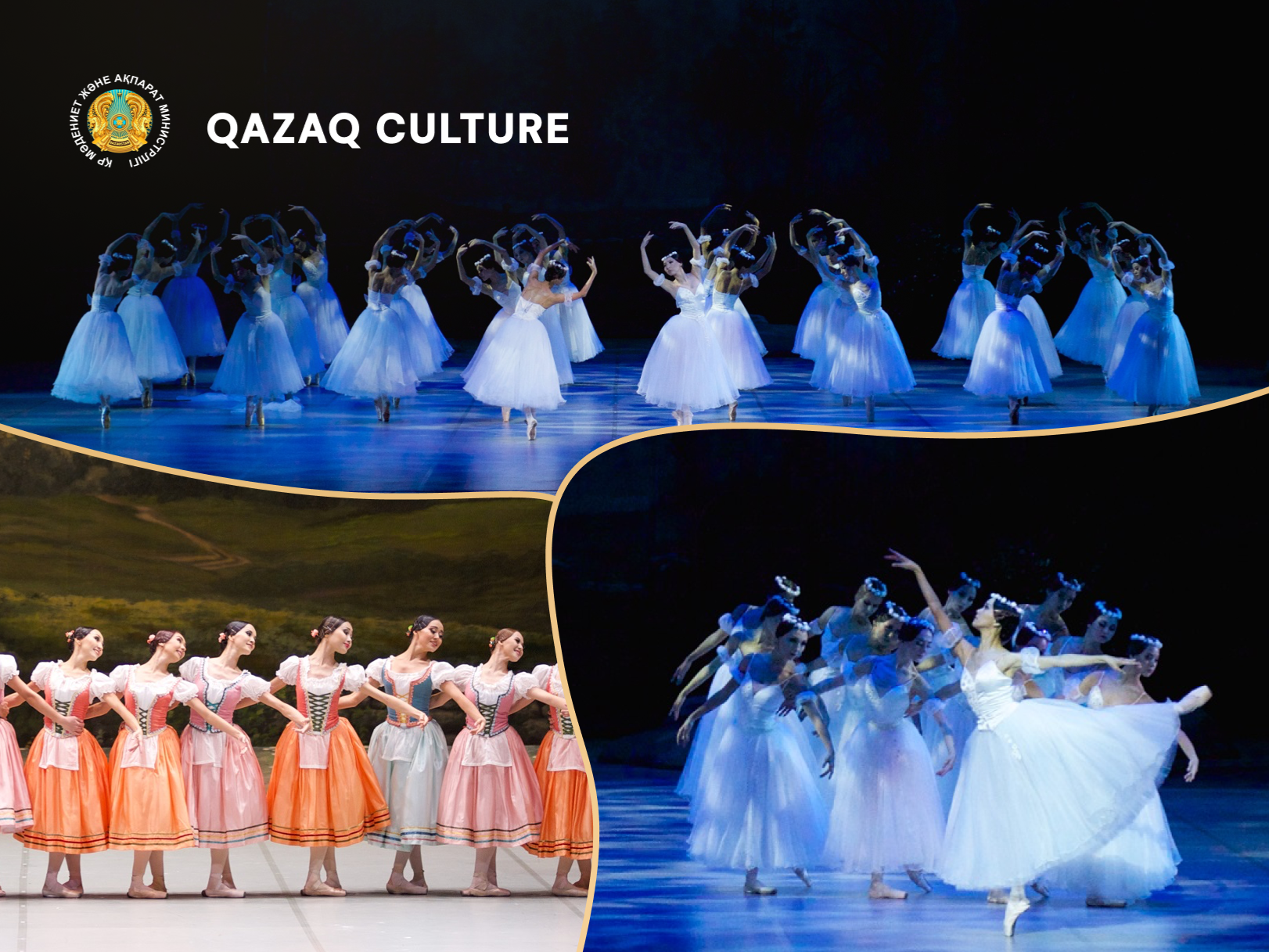
There are roles in ballet that are passed down from generation to generation not only through learned movements. Along with choreography, a young dancer gains the stage experience of others—an understanding of a pause, a glance, a character's inner state, sometimes even a barely perceptible gesture that cannot be written down in a score.
Adolphe Adam's "Giselle" is precisely such a performance.
For Altynai Asylmuratova, Artistic Director of the Astana Opera Ballet Company, this role was one of the most important in her own stage career. She danced Giselle at the Mariinsky Theatre, the Royal Ballet, and other international venues. Now, this accumulated experience is being passed on to a new generation of dancers.
In October, Shugyla Adepkhan and Alina Zyryanova prepared for one of the most challenging roles in the romantic repertoire. This is a new stage for both: in a single evening, the ballerina must go from a young girl facing betrayal for the first time to a nearly ethereal being who, after death, retains the ability to love and forgive.
Altynai Asylmuratova and the Astana Opera dancers discuss why Giselle cannot be "learned" once, how to find your own intonation in a classical role, and why technique in this ballet is only part of the task.
– Altynai Abduakhimovna, you yourself have performed Giselle many times. Why does this role remain special to you?
– Giselle is one of the greatest ballets and, perhaps, one of the most harmonious. There is nothing superfluous in it. It is a true example of romantic and dramatic ballet.
Giselle is one of my favorite roles. Every ballerina dreams of such a role, because there is always room for her own interpretation. Each artist can express something unique in it. In the first act, we see a naive, pure girl who truly believes in love. She loves with all her heart and simply cannot believe that she could be deceived or betrayed. That's why everything ends in a scene of madness.
In the second act, we see a different Giselle. She becomes a Wilis, but, unlike the others, she doesn't seek revenge on the man who betrayed her. She continues to love Albrecht and protects him. Even after death, love remains the primary factor that determines her actions.
This is truly a role one can return to endlessly and grow in throughout one's life.
– Now you're passing this role on to young ballerinas. How important is teaching experience in this regard?
– I myself was very fortunate in my teacher. Olga Moiseyeva gave me so much, and so now I want to pass on this experience to the young dancers.
It's important to me that they don't just perform the role technically. They need to experience the joy of the work themselves, understand the role, and be able to convey this feeling to the audience.
Everyone has their own individuality. Therefore, the goal isn't for a young ballerina to imitate someone else's Giselle. It's important to help her find her own path within the great choreography that already exists.
– Shugyla, what was the most challenging part of preparing for your debut?
– Giselle is one of the most profound, multifaceted, and dramatically complex roles in world choreography. It's not enough to simply master technique—you need to experience an entire human story on stage.
For me, the greatest challenge of the first act lies in the emotional transformation.
At the beginning, Giselle is a pure, bright, and naive girl who sincerely opens her heart to love. Then her entire world collapses, and the dancer must convincingly accompany her through the profound tragedy and scene of madness.
Moreover, this transition can't be performed abruptly. The audience must feel how her inner state gradually changes.
– And the second act requires a completely different existence on stage?
– Yes, and that's another challenge of the role. Giselle is no longer human – she is being reborn as a Wilis. It's necessary to create the sensation of an almost incorporeal being, to change the very quality of her movement. But at the same time, we mustn't lose what connects her to the first part of the performance.
Love still lives within her.
Now it's an all-forgiving and saving love. Therefore, it's important to find a very fine line between the unearthly nature of the image and the human feeling that Giselle retains.
– What does it give to work directly with Altynai Asylmuratova, who has experienced this role herself?
– For me, it's an incredible professional and personal gift.
Altynai Abduakhimovna teaches me to perceive every nuance – gaze, movement, state. She helps me understand that thought must exist behind the outer form.
At the same time, she guides me very precisely and doesn't demand mechanical repetition. On the contrary, she helps me find my own intonation and reveal myself in this role.
I was very lucky to learn from such legends. It's an invaluable experience. Erkin, in a ballet of this scale, how much does the result depend on the onstage partnership?
Very much.
Alina Zyryanova and I have danced together many times, so we find common ground on stage quite quickly. There's mutual understanding and trust, and this allows us to focus less on the mundane aspects of interaction and more on the characters.
In Giselle, it's especially important not to exist separately from each other. We must tell a single story together.
If there's no inner connection between the partners, the audience will feel it.
You danced Albrecht two years ago. What changes when an artist returns to a familiar role after some time?
It's a different stage experience.
That's why I'm interested in revisiting this character and trying to discover new traits in him. You already know the choreographic material, and this gives you the opportunity to delve deeper into the character itself.
For me, the most challenging part of Albrecht is the character itself.
The technical part can be gradually refined. It's much more difficult to maintain the character's inner state, their emotions, and the logic of their actions throughout the entire performance. You can't just leave the role after a difficult moment and then return to it again.
Now we're working simultaneously on both technique and the dramatic component, so that they ultimately cohere as a single whole.
– Why does a story created almost two centuries ago continue to resonate with modern audiences?
– Because the feelings that "Giselle" tells have remained virtually unchanged.
These are love, trust, betrayal, forgiveness, the ability to sacrifice oneself for another.
Time passes, people and circumstances change, but the characters' experiences remain relatable.
Perhaps that's why this ballet still has the power to move audiences.
For the new generation of Astana Opera dancers, the October "Giselle" became several debuts. In addition to Shugyla Adepkhan and Alina Zyryanova, new roles were prepared by Ademi Zhanabil as Mirta, Akhmet Kabkenov as Hansa, and Aliya Amirkhan as the inserted pas de deux. Elmar Buribayev conducted the theater's symphony orchestra.
But something else is particularly interesting about the history of these debuts.
Classical ballet survives not because each new generation attempts to precisely replicate the previous one. It thrives on the opposite process: the artist receives tradition from the hands of a master, studies its laws, and then must find his or her own intonation within them.
Altynai Asylmuratova's Giselle was once born under the direction of Olga Moiseyeva. Now Asylmuratova herself passes on her accumulated experience to young ballerinas.
And this is how the nearly two-hundred-year-old production begins anew each time.