When the flute meets the saxophone
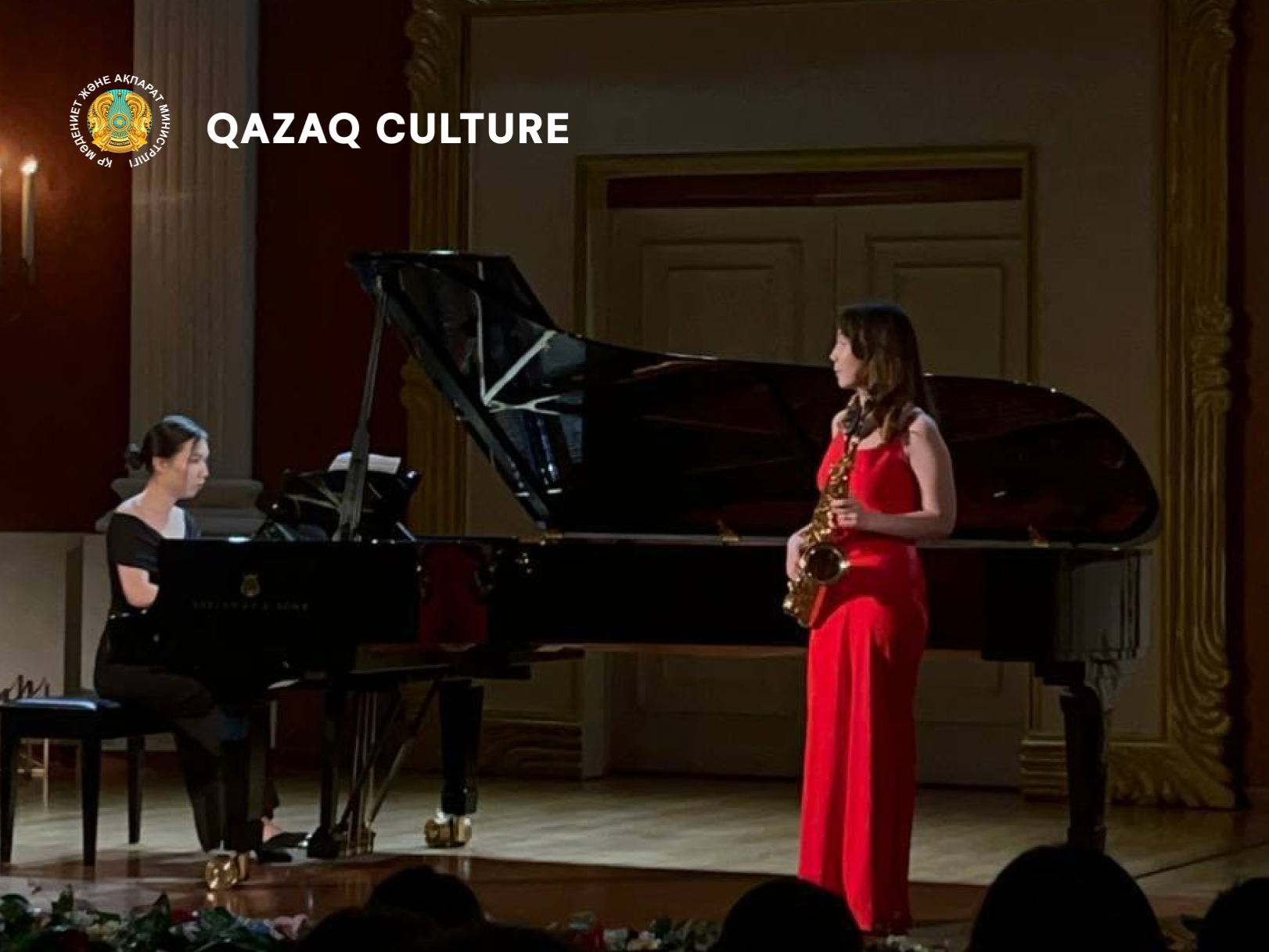
The flute and saxophone have almost nothing in common. One instrument evokes air, transparency, and lightness, the other the rich, velvety sound and freedom of jazz. Between them lies the piano, capable of supporting both voices, engaging in a debate, or uniting them into a single musical space.
This combination is rare on the academic stage. It's all the more intriguing when three young Kazakhstani artists, whose musical lives currently span Vienna, Moscow, and Astana, take the instruments.
Kamilya Ismagulova plays the flute and studies at the University of Music and Performing Arts Vienna. Aysha Raimkhan is continuing her education at the Tchaikovsky Moscow State Conservatory, and her sister, Azhar Raimkhan, is mastering the classical saxophone at the Gnessin Russian Academy of Music.
For the past five years, they have lived in the rhythm of conservatories, master classes, competitions, and daily lessons. But the experience they've gained abroad takes on a special meaning at home – in front of an audience that remembers them from the very beginning.
Their meeting at the Kulyash Baiseitova Chamber Hall is more than just a concert by three successful students. It's an attempt to combine different musical schools, temperaments, and ideas about sound. Each artist brings her own experience to their home stage, but the real intrigue begins when the three individual voices become an ensemble.
The musical evening is built on contrasts. Here, romantic classics sit alongside jazz, a familiar operatic melody sits alongside an avant-garde piece, and music designed for a large orchestra takes on a chamber feel.
One such experiment will be George Gershwin's "Rhapsody in Blue." The work is often heard in a large orchestral setting, but in this chamber version, it reveals itself differently. Details, rhythmic echoes, and the almost improvisational freedom inherent in the music itself come to the fore. Another premiere is "Three Letter Word" by British composer and saxophonist Andy Scott. This work exists on the border between two worlds: academic precision constantly collides with jazz grace. It's not enough for the musicians to perform their parts flawlessly – they must feel the overall rhythm, instantly respond to each other, and maintain the feeling of a lively conversation.
Each artist's solo program is structured like a separate portrait.
Kamila Ismagulova's flute will initially appear in its familiar, melodious form. In Gabriel Fauré's Fantasy, its sound seems born of breath, and in Lensky's aria from the opera "Eugene Onegin," the instrument must replace the human voice and convey the mood of one of Tchaikovsky's most lyrical episodes.
But then the familiar image of the flute literally crumbles.
In Ian Clarke's piece "Zoom Tube," the classical instrument begins to beatbox, hiss, whistle, produce several sounds simultaneously, and unexpectedly resemble an electric guitar. The performer must not only play but also sing while performing, using sharp, airy attacks, quarter tones, and multiphonics.
"Working on Zoom Tube was challenging. It utilizes modern techniques that require a completely different approach to the instrument. You need to simultaneously control your breathing, voice, rhythm, and finger movements. But that's precisely what makes the piece so interesting to perform—it reveals an unexpected side of the flute," explains Kamilya Ismagulova.
In Aysha Raimkhan's program, imagery, not timbre, is paramount. Her piano journey ranges from the airy Scherzo of Felix Mendelssohn to the dramatic depths of Sergei Rachmaninoff and the shifting, almost unreal world of Maurice Ravel.
"Undine" from the "Gaspard d'Night" cycle is music in which water becomes a character. It shimmers, moves, and changes shape, sometimes approaching, sometimes disappearing. For a pianist, this isn't just a technical test: beneath the complex texture, a sense of lightness must be maintained, as if the entire soundscape emerges spontaneously.
Azhar Raimkhan has a different goal: to showcase the saxophone beyond its usual associations. For many, this instrument remains primarily associated with jazz, nightclubs, or pop orchestras. However, its academic history is much broader, and its timbral possibilities allow it to sound equally compelling in both modern scores and film music.
Azhar will perform music by Ennio Morricone from the film "Cinema Paradiso." Here, the saxophone reveals itself not through virtuosity, but through intonation—warm, slightly melancholy, and almost human.
"I enjoy observing how listeners' attitudes toward the saxophone change. Many hear it for the first time in an academic program and are surprised by how soft, deep, and expressive this instrument can be. After concerts, people sometimes admit they've rediscovered it," says Azhar Raimkhan. For her, such projects are important precisely because they break down traditional boundaries. Academic music is no longer perceived as a closed space with strict rules, and instruments are freed from their established roles. The flute can sound like a rock guitar, the saxophone can convey the most subtle lyricism, and the piano can replace an entire orchestra.
Behind this freedom, however, lie years of discipline. Studying at European and Russian conservatories is not only about meeting renowned teachers and discovering new repertoire. It is a constant need to redevelop one's technique, acclimate to a different professional environment, and develop one's own performing style.
"During our five years of studying abroad, we became acquainted with various schools and contemporary works rarely performed in Kazakhstan. It is important for us not just to gain this experience, but to bring it home, share it, and make it part of the musical life of our country," notes Azhar.
Perhaps that is why their return to their native stage cannot be called a typical report on their years of study. They come not to demonstrate their acquired skills, but to test whether their new experience can engage with the Kazakh public.
And in this conversation, it's not just the music chosen for the program that matters. What's important is the very meeting of three artists who have developed in different professional environments but still feel a connection to the same home.
On stage, this story will be told wordlessly. Through the breath of the flute, the deep voice of the saxophone, and the piano, which for one evening will become their shared musical space.