Pottery is a developmental opportunity for special children.
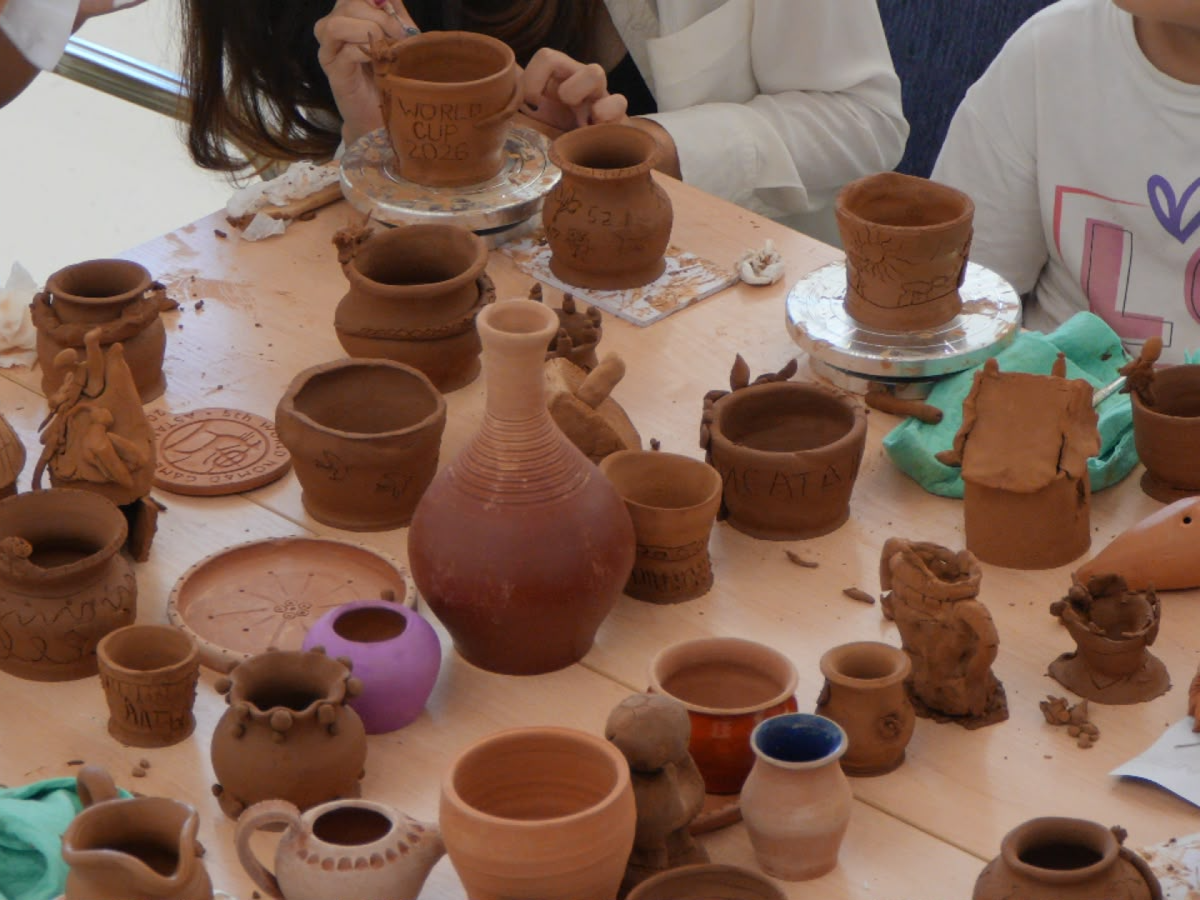
Tolegen Namazbekov, a master potter at the School of National Crafts, teaches traditional pottery to the younger generation and conducts classes aimed at developing children's creativity. One of his key areas of work is introducing children with special educational needs to pottery.
Tolegen Namazbekov has been close to the craft since childhood. His father was a woodworker, so he grew up surrounded by manual labor, observing work in the workshop. Later, Tolegen chose this path himself, mastering the art of pottery. Today, he passes on his accumulated experience to children and introduces them to the unique features of traditional crafts.
The art of pottery is based on working with a natural material—clay. Kneading clay, shaping it, and creating various objects develops a child's imagination and allows them to express their thoughts and ideas through creativity. During classes, children become familiar with the properties of the material, learn to sense the nuances of manual labor, and consistently perform each stage of the process. These classes also create a unique creative environment for children with special educational needs. As part of a special project, they learn basic clay techniques, and the classes are tailored to each child's individual needs. The key is to consider the children's abilities and interests, not rush them, and allow them to work at their own pace.
"Children with special educational needs often find it difficult to remain in one place for long periods of time. But when working with clay, the child shows interest and engages in the process because they enjoy what they are creating with their own hands," says Tolegen Namazbekov. Working with clay, the child makes various hand movements and gradually shapes the material. This process promotes the development of fine motor skills, helps them focus on one activity, and teaches them to plan their actions. But most importantly, the child sees the result of their own labor and begins to understand the value of the creative process.
In pottery, results don't appear immediately. First, a child's creation must dry, and then it is fired in a special kiln at a high temperature. By going through all these stages with their work, the child learns patience, precision, and understands the value of the work they put into it. Each finished piece is the result of their diligence, research, and determination to see it through to completion.
Pottery classes at the School of National Crafts are aimed not only at introducing children to traditional art but also at creating an environment in which they can freely develop their creative potential. The project for children with special educational needs expands these opportunities and helps them become part of the world of crafts and creativity.
By working with clay, the child gives shape to the material, and with it, to their own imagination. Therefore, the value of pottery is not measured solely by the finished product. Its true meaning lies in the process itself: the opportunity to create with your own hands, learn, explore new things, and unleash your own creative potential.