Cultural infrastructure and digital projects are being developed in seven regions.
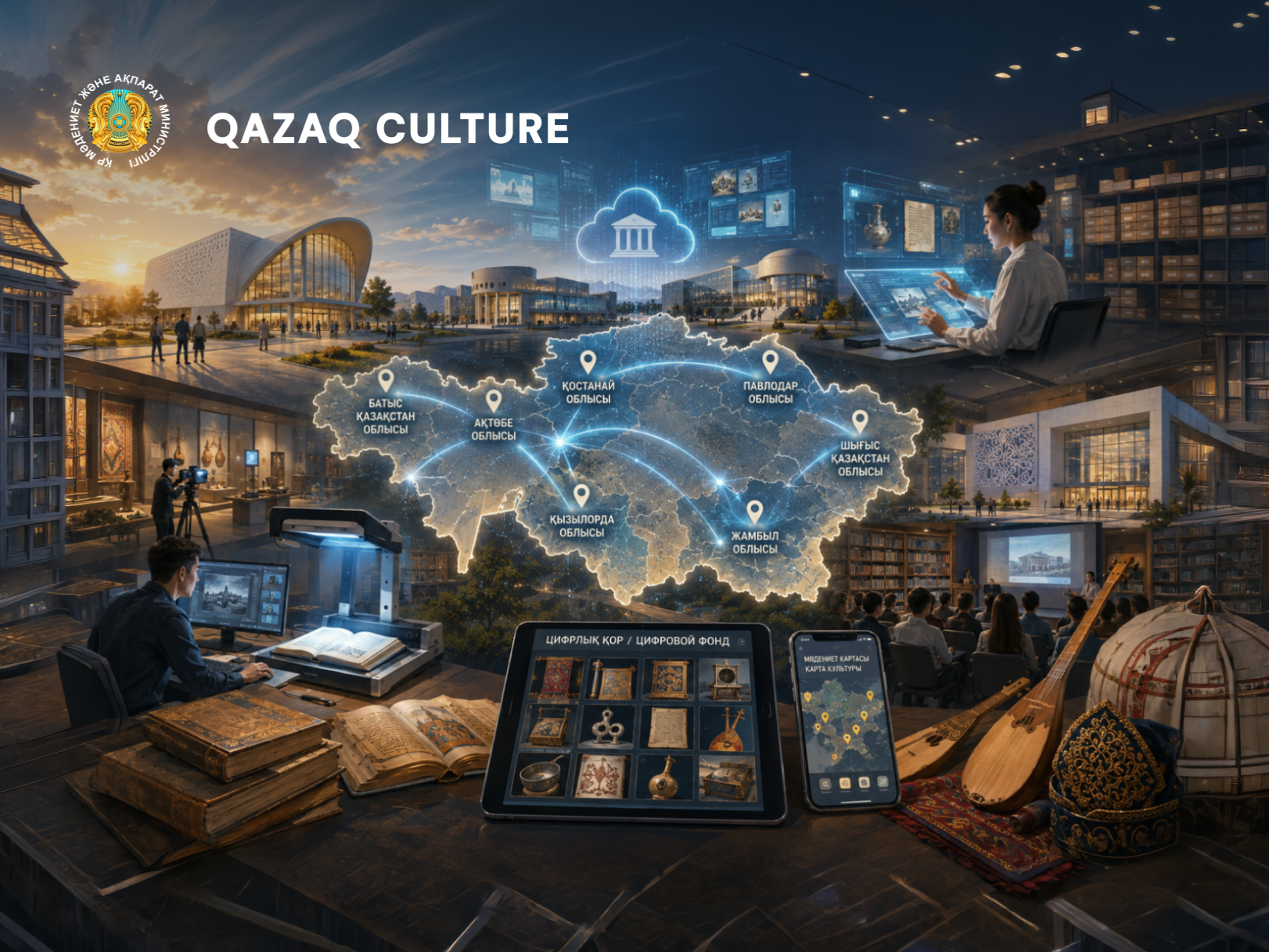
The Ministry of Culture and Information of the Republic of Kazakhstan presented the results of cultural activities in the East Kazakhstan Region, Almaty, Abay Region, Karaganda Region, Shymkent, Kyzylorda Region, and Turkestan Regions for the first half of 2026.
In the East Kazakhstan Region, the international festival "Altai – the Golden Cradle of the Turkic World" brought together representatives from ten countries and regions and attracted over 50,000 visitors. Museums hosted 328,400 people and conducted over 5,500 excursions. Major renovations to the East Kazakhstan Museum of Art and preparations for the Berel Museum-Reserve visitor center are ongoing.
In Almaty, cultural events are held in a polycentric manner, at venues across the city. The 4th Almaty Circus Festival brought together artists from 18 countries and attracted 10,000 spectators. Seven library branches are open 24/7, and the "Almaty Kitaphanalary" app is used by over 27,000 people. A unified cycle of creative competitions has been prepared for City Day.
In the Abai region, two rural clubs with 100 seats have opened in the villages of Zhogary Yeginsu and Kokzhyra. Three more cultural facilities are under construction in the Beskaragay district and are scheduled to open by the end of the year. As part of the Jana Klub project, modernization of 15 rural libraries, serving over 109,000 residents, has begun.
In the Karaganda region, the "Oqityn Ult" project brought together 67,800 participants and achieved the best results among the pilot regions. The first ethno-gastronomic festival, "BaiQymyz Qarqaraly – 2026," was attended by over 20,000 people. A new club has opened in the village of Kokpekty, the reconstruction of the city archive building has been completed, and construction of the Arts Center in the Nurinsky District is ongoing.
In the Kyzylorda Region, preparations are underway for the construction of a new drama theater building. The first Nartai Theater Fest attracted approximately 4,000 spectators. A 24-hour Presidential Library project with a capacity of 600,000 items is underway, and the Smart Archive platform, developed in the region, was presented at the International Congress of Archivists.
In the Turkestan Region, 11 community centers are planned for opening this year: two have already opened, and three more are ready for use. Free creative clubs have reached over 17,000 children. Three professional theaters presented 186 performances and toured throughout the region and other regions of the country. The "ULYLARDYN OTANY" symposium brought together 26 artists from seven countries.
In Shymkent, seven city theaters presented 16 new productions, which were attended by over 124,000 spectators. Soloists of the Opera and Ballet Theatre won awards at international competitions in Xi'an and Nagasaki, and the Youth Theatre presented "Antigone" at a festival in Algiers. Design work continues on a new opera and ballet theatre, along with work on establishing a University of Culture and Arts. A new House of Culture has opened in the Tekesu residential area, and renovation plans for 11 more cultural facilities are underway.
The hearing addressed issues related to electronic reporting for theatres, the inclusion of works by Kazakhstani composers in the repertoire, training specialists in scientific restoration, preserving monuments, and promoting cultural tourism. Regions were recommended to strengthen information support for cultural sites and develop tourist navigation. The second half of the year is scheduled to host the "Shygys Salbyryny – 2026" international berkutchi tournament, the "Ayaz Ata, Akshakar – 2026" festival, the Almaty Puppet Festival, the "Kok-Toebe Opera" festival, the "Voice of Turan" international competition, as well as theater, music, and exhibition projects.
Following the hearing, the regions were recommended to ensure the timely implementation of the instructions of the Head of State, the Government of the Republic of Kazakhstan, and the Ministry of Culture and Information, complete planned projects, and take action on the identified issues. The Culture Committee is monitoring the implementation process.