The results of the "School of National Crafts" project were summed up in Astana.
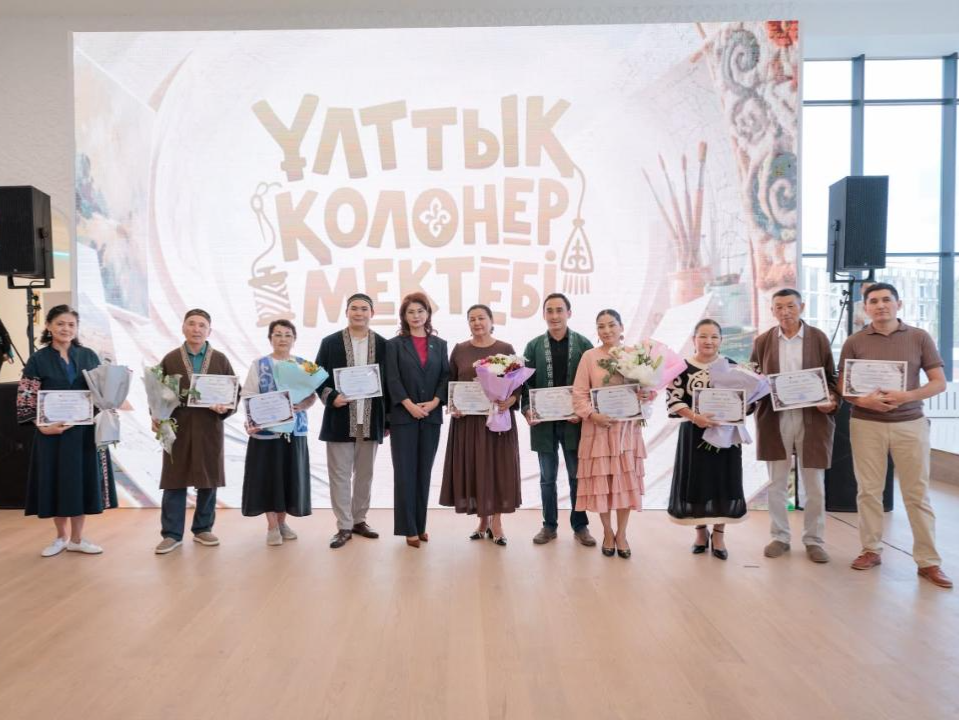
The final event of the "School of National Crafts" educational project, implemented with the support of the Ministry of Culture and Information of the Republic of Kazakhstan by the Creative Industries Development Fund, was held in Astana.
From July 27 to August 12, 10 of Kazakhstan's best national craftsmen trained 208 participants aged 8 to 20 in traditional techniques and secrets of national crafts.
Deputy Prime Minister and Minister of Culture and Information of the Republic of Kazakhstan Aida Balayeva congratulated the participants on the successful completion of the project. She thanked the mentoring masters, organizers, parents, and all project participants. The Deputy Prime Minister noted the growing interest in national aesthetics in design, fashion, architecture, tourism, and other areas of the creative industries, which opens up new opportunities for both artisans and young people.
"The head of state pays special attention to the preservation of national values, historical and cultural heritage, support for creative youth, and the development of creative industries. Folk crafts occupy a special place in this work. The skill of our artisans embodies the history of the people, their traditions, worldview, and centuries-old creative experience. Therefore, today it is important not only to preserve unique techniques and products, but above all to ensure the continuity of generations – the transfer of knowledge from master to apprentice. This is precisely the goal of the "School of National Crafts." Today, we face another important task: not only preserving traditional crafts, but also giving them contemporary development. "Tradition should not remain a thing of the past, but become a resource for modern development," said Aida Balayeva.
Project participants gained practical knowledge in 10 areas of national crafts. The educational program included jewelry making, wood and leatherworking, felt felting, ceramics, carpet weaving, bone carving, and other traditional applied arts.
Special attention was paid to inclusive education within the "School of National Crafts." A special group was organized for children with special educational needs, where activities helped develop the participants' creative potential, fine motor skills, and practical work skills.
During the event, project masters and graduates were presented with certificates, their original works were presented, and the educational program's achievements were summarized.
More than 450 applications were received for participation in the project, and following a competitive selection process, 208 participants received the opportunity to participate in the training free of charge. The selection of master mentors also generated significant interest: 331 applications were received from all regions of the country. Following the technical selection, the selection committee reviewed 271 applications and selected the top 10 masters of national crafts in Kazakhstan.
"School of National Crafts" is a project aimed at preserving and transmitting national cultural heritage to the younger generation, popularizing traditional crafts, and developing them as a significant area of the modern creative industry. The project creates conditions for unlocking the creative potential of children and young people, fostering interest in national art, and developing new opportunities for future representatives of the creative industries.