How Abai's name first appeared in America
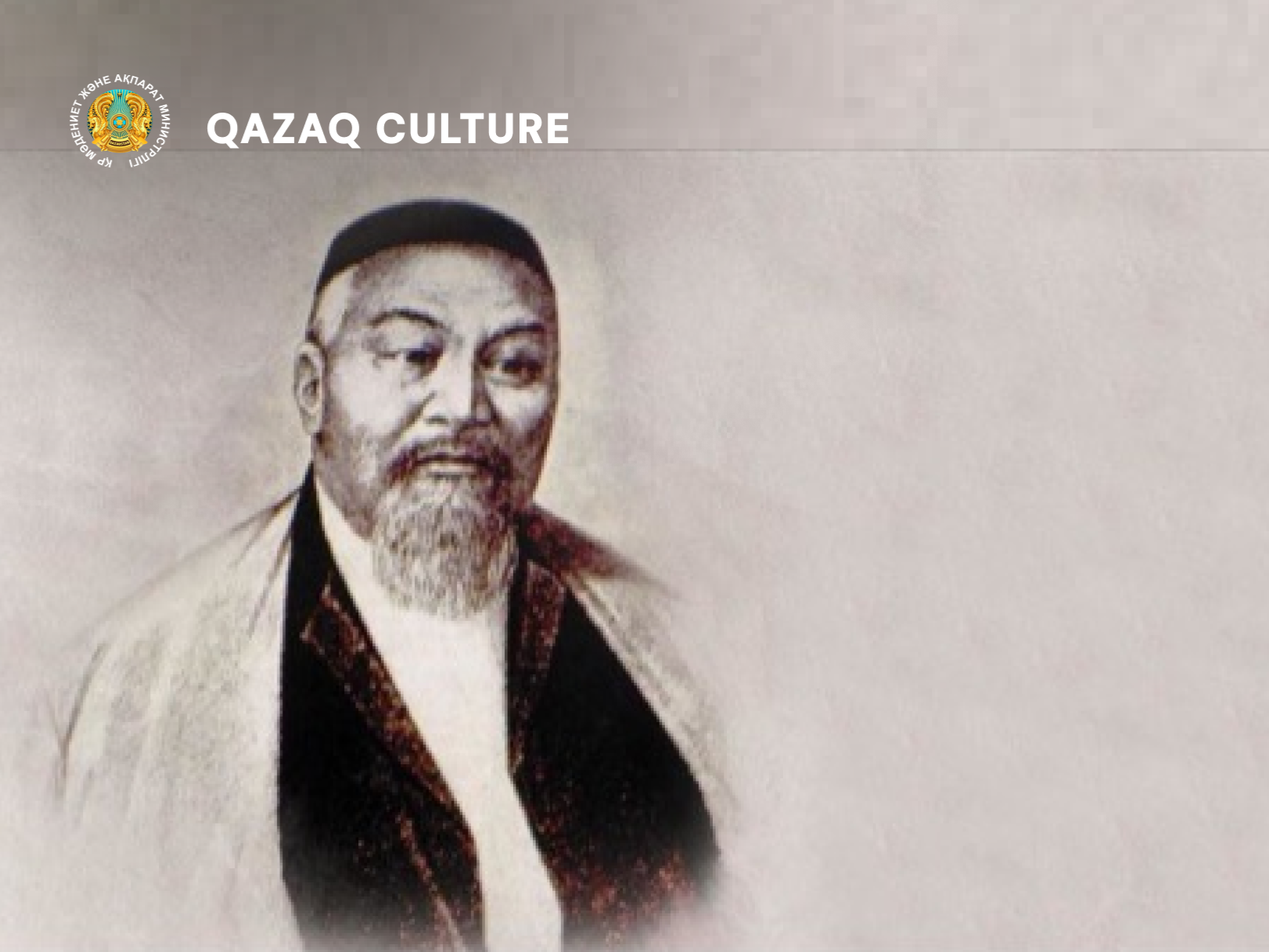
The history of Abai's international recognition began long before his works were translated into dozens of languages, monuments were erected outside of Kazakhstan, and scholarly centers studied his legacy. One of the most intriguing episodes in this story occurred during the poet's lifetime. To trace it, one must mentally transport oneself to Semey at the end of the 19th century – to a small public library where the Kazakh steppe, European thought, and an American traveler unexpectedly intersected.
A lifetime portrait of Abai. Drawing by P.D. Lobanovsky, 1887.
In 1885, the American journalist and traveler George Kennan visited Semipalatinsk. He was studying life in the Russian Empire and the situation of political exiles in Siberia. His impressions from this trip later formed the basis for his famous book, Siberia and the Exile System.
In the city, Kennan's attention was drawn to a public library that had opened shortly before his arrival. For provincial Semipalatinsk, its collection was unexpectedly rich: it included works by European philosophers, historians, natural scientists, and social thinkers.
But the American was even more surprised by the people who read these books.
During his stay in Semey, Kennan met the political exile Alexander Leontiev. It was from him that the traveler learned of an educated Kazakh who used the library and was interested in the works of Henry Thomas Buckle, John Stuart Mill, and John William Draper.
In his book, Kennan rendered his name as Ibrahim Konobai. Researchers associate this reference with Ibrahim Qunanbayuly – Abai.
Thus, the name of the Kazakh thinker appeared in the pages of an American author as early as the 19th century.
Judging by surviving evidence, Kennan himself never met Abai in person. And this is where the story becomes even more interesting. The American traveler documented not a chance encounter with a famous figure, but Abai's reputation within the intellectual community of Semipalatinsk. He was already spoken of as someone capable of freely engaging with the ideas of European authors and seeking answers to his own questions.
The city library played a major role in this intellectual life. Opened in Semey in 1883, it became a meeting place for diverse cultural and social circles.
Political exiles Evgeny Michaelis, Alexander Leontiev, Nifont Dolgopolov, Severin Gross, and other members of the educated community were connected with the library and the city's cultural life. Interacting with them broadened Abai's intellectual horizons, and the library provided access to books unavailable in the everyday life of the steppe.
Abai's interests went far beyond fiction. He was drawn to history, philosophy, social thought, and the natural sciences. He sought to understand the ideas that animated the wider world, comparing them with his own reflections on knowledge, labor, morality, justice, and the future of his people.
A special place in this story belongs to Evgeny Michaelis, whose acquaintance is traditionally associated with the expansion of Abai's reading and intellectual interests.
Interaction with political exiles became an important part of the intellectual milieu of Semipalatinsk in the second half of the 19th century.
Therefore, the episode recorded by Kennan is interesting not only as an early appearance of Abai's name in an American source. It allows us to see the poet in a slightly different light – not only as a great author who shaped a new tradition of Kazakh literature, but also as an intellectual engaged in a much broader cultural dialogue.
The very geographic scope of this dialogue is impressive. On the Kazakh steppe, Abai reads European philosophers and historians. An American traveler learns of this from a Russian political exile and takes the story overseas. It then appears in a book published for Western readers. But Abai's American history didn't end there.
Decades later, not only his philosophical and literary interests, but also his own creative work, began to be discovered overseas.
In 1970, Wesleyan University Press in Connecticut published musicologist Viktor Belyaev's book, "Central Asian Music: Essays in the History of the Music of the Peoples of the U.S.S.R." It devoted special attention to Abai's musical legacy.
For international readers, the Kazakh thinker emerged not only as a poet but also as a composer, who managed to expand the traditional musical language of his time.
The researcher turns to Abai's songs, including "Aittym sälem, Qalamqas" and "Közümnän qarasy," and examines the relationship between poetic text and melody. Particular attention is also given to "Segiz Ayak," a work in which Abai's innovations in rhythm and form are particularly evident.
Almost a century passed between the 19th-century American traveler's account and the academic study published in the United States. But these two episodes unexpectedly come together to form a single story.
First, people outside the steppe learned of Abai as a man who read European thinkers and was part of the intellectual life of his time. Later, Western scholars themselves began to turn to his works.
There is a peculiar historical symmetry here. Abai spent his entire life striving to expand the cultural horizons of his people: he translated Pushkin, Lermontov, and Krylov, turned to Russian and European thought, and reflected on knowledge, education, and the human being's place in the world.
Over time, the movement reversed itself—Abai himself began to open up to the world. And one of the first traces of this long journey remained in the book of an American traveler who, almost a century and a half ago, heard in Semey a story about an educated Kazakh named Ibrahim Kunan.