Ziyat Berikuly: «Every Kazakh ornament hides its own story»
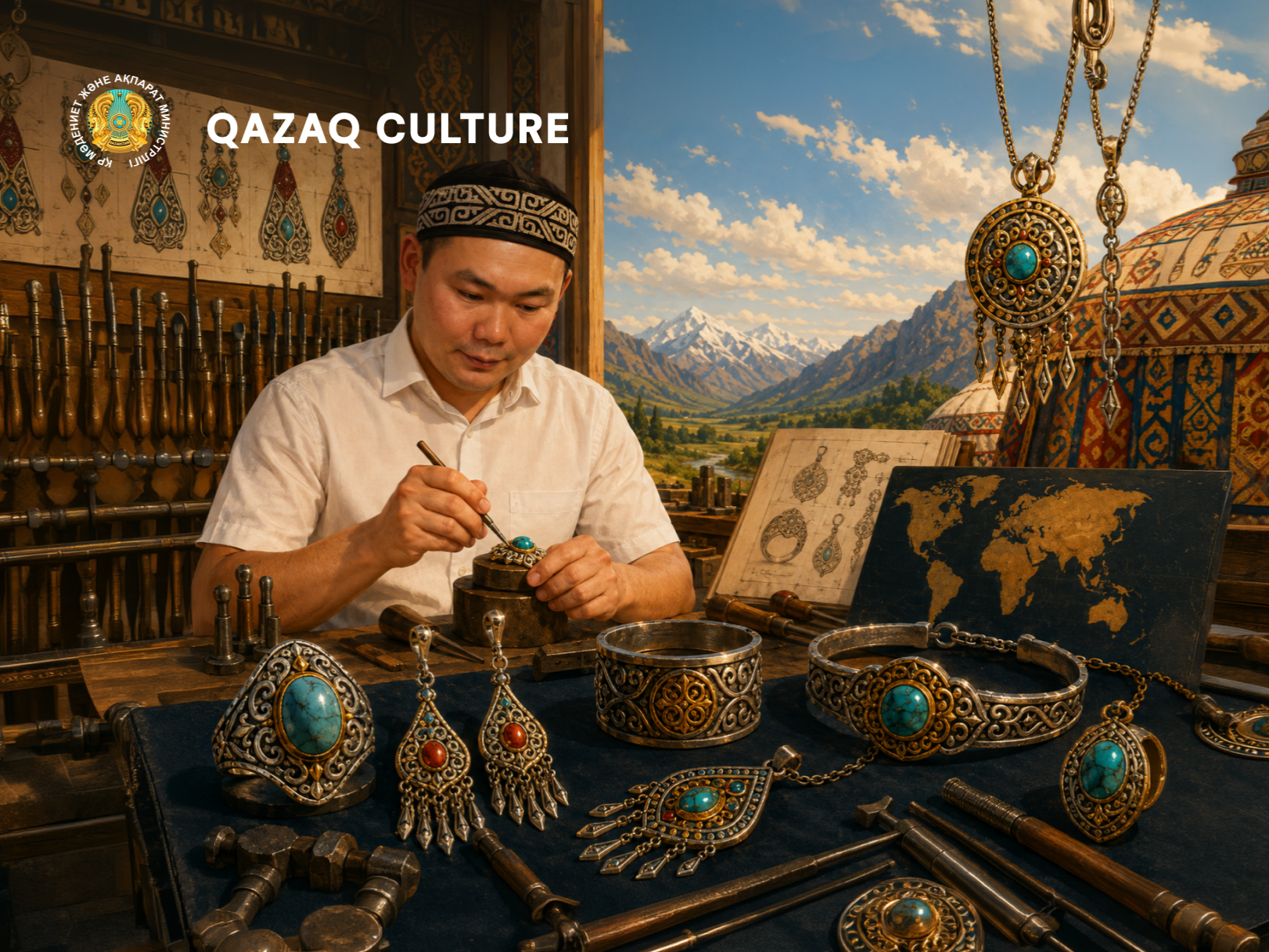
Earrings, rings, bracelets, and sholps have never been mere adornments in Kazakh culture. Their shape, ornamentation, and choice of metal concealed wishes for well-being, ideas about beauty, family traditions, and belief in the protective power of each item. Therefore, the work of zergers has preserved not only craft techniques but also a whole layer of cultural memory over the centuries.
Ziyat Berikuly is a fourth-generation jeweler. He grew up alongside master craftsmen, learned from his father and grandfather, and from childhood perceived the art of zergers as a natural part of family life. Today, he not only continues the work of his ancestors but also strives to pass on his accumulated knowledge to young artisans, combine traditional methods with modern technology, and make Kazakh jewelry art recognizable beyond the country's borders.
In an interview with Qazaq Culture, Ziyat Berikuly explained why each piece of jewelry has its own meaning, the role silver played in Kazakh culture, how sholps influenced a girl's behavior, and what needs to be done to ensure this ancient craft remains relevant in the 21st century. Ziyat, what inspired you to participate in the "National School of Crafts" project?
For me, participating in this project stems, first and foremost, from a desire to preserve my family and cultural heritage. I am a fourth-generation jeweler. In our family, the craft has been passed down from elder to younger generations, uninterrupted for several generations. I learned its intricacies from my father and grandfather.
Therefore, jewelery is more than just a profession or a way to earn a living. It is a great responsibility. I have received the knowledge once preserved and passed on by my ancestors, and now I must not only continue their work but also pass it on.
Today, it is especially important to interest young people in crafts. Behind every ornament and every form lies the history of a people, their worldview and understanding of life. If young people understand this meaning, they will begin to perceive jewelry as more than just a beautiful object.
At the same time, tradition should not remain an unchanging museum piece. I am interested in combining craft techniques with modern technology, using new tools, and seeking opportunities for development. The main thing is to preserve the recognizable character of Kazakh jewelry art and not lose its inner meaning.
I believe that this combination of tradition and modern approaches will help our products become more competitive and recognizable internationally.
– What was the main message you wanted to convey through this project?
– I wanted to show that national crafts are not just a legacy of the past. They can be relevant today and remain valuable in the future.
Through handcraft, a person learns more than just technique. They begin to understand the way of life of their ancestors, their relationship to materials, beauty, family, and the world around them. Therefore, crafts can strengthen a person's connection to their own culture in a much deeper way than simply learning historical facts.
It is especially important to impart this knowledge to young people. I would like my students to not simply replicate ready-made designs, but to understand the meaning of ornamentation, know the history of objects, and gradually find their own signature style. If one day they open their own workshops, begin creating new pieces, and introduce Kazakh jewelry art abroad, this will be my greatest achievement as a master and mentor.
– In Kazakh culture, there was a belief that jewelry could protect a person from evil. What was the reason for this?
– Kazakh jewelry was truly used for more than just beauty. It had spiritual, educational, and protective meanings, linked to folk beliefs and ideas.
Silver held a special place. Our ancestors considered it a symbol of purity and goodness, believing it had beneficial properties and the ability to protect a person.
Therefore, not only earrings, rings, and bracelets were made from silver, but also various amulets. Tumarsha and boytumar were worn in the hope of protection from the evil eye and evil forces.
Protective significance was also attached to the sound of jewelry. For example, small silver bells, sholpy, or shashbau would ring when moved. It was believed to ward off all evil.
Such pieces served several functions simultaneously. They decorated a person, served as a talisman, and introduced them to tradition from childhood. Therefore, Kazakh jewelry cannot be viewed solely from an aesthetic perspective. It reflects the people's worldview, philosophy of life, and attitude toward the spiritual world.
– What types of jewelry existed, and what did they mean?
– Each piece of jewelry had its own function and symbolism. Earrings were associated with a girl's femininity, beauty, and tenderness. A ring or signet ring could express respect, fidelity, and the strength of a promise. A bracelet not only complemented a woman's image but was also perceived as a symbol of purity and protection, especially if made of silver.
Hair jewelry had a special meaning. Sholpy and shashbau accentuated a girl's beauty, but also served an educational role. Their movement and ringing were believed to help control her gait and behavior. A girl was expected to move calmly and collectedly, maintaining her dignity. "Tumarsha" and "boytumar" were worn as amulets. People believed they could protect their wearers from the evil eye and misfortune.
Each such object reflects centuries of experience. Therefore, jewelry can reveal a great deal about a person's age, social status, marital status, and society's ideas about beauty and proper behavior.
In this sense, every Kazakh piece of jewelry truly has its own hidden story.
– What is needed today to develop national crafts?
– First and foremost, we need to awaken the interest of young people. Simply telling them that crafts are part of their heritage is not enough. It's important to give them the opportunity to experience them with their own hands.
We need to develop relevant educational programs in schools and universities, and more frequently organize practical classes, master classes, exhibitions, and creative projects. When people try their hand at metalworking, creating an ornament, or assembling a craft, their attitude toward the craft changes.
A modern approach is also important. Kazakhstani jewelry art needs to be actively represented at international exhibitions and festivals, online platforms need to be developed, high-quality visual content needs to be created, and the story of each piece needs to be told.
At the same time, it's important to view this craft as part of a creative industry. It can preserve its traditional foundations while simultaneously developing as a contemporary field of design, education, and entrepreneurship.
My goal is to preserve what has come down to us from our ancestors, pass this knowledge on to our students, and ensure that Kazakh jewelry art is recognized worldwide. To achieve this, it must not only preserve the past but also confidently live in the present.