Serik Nakyspekov: Skill, Tempered by Character
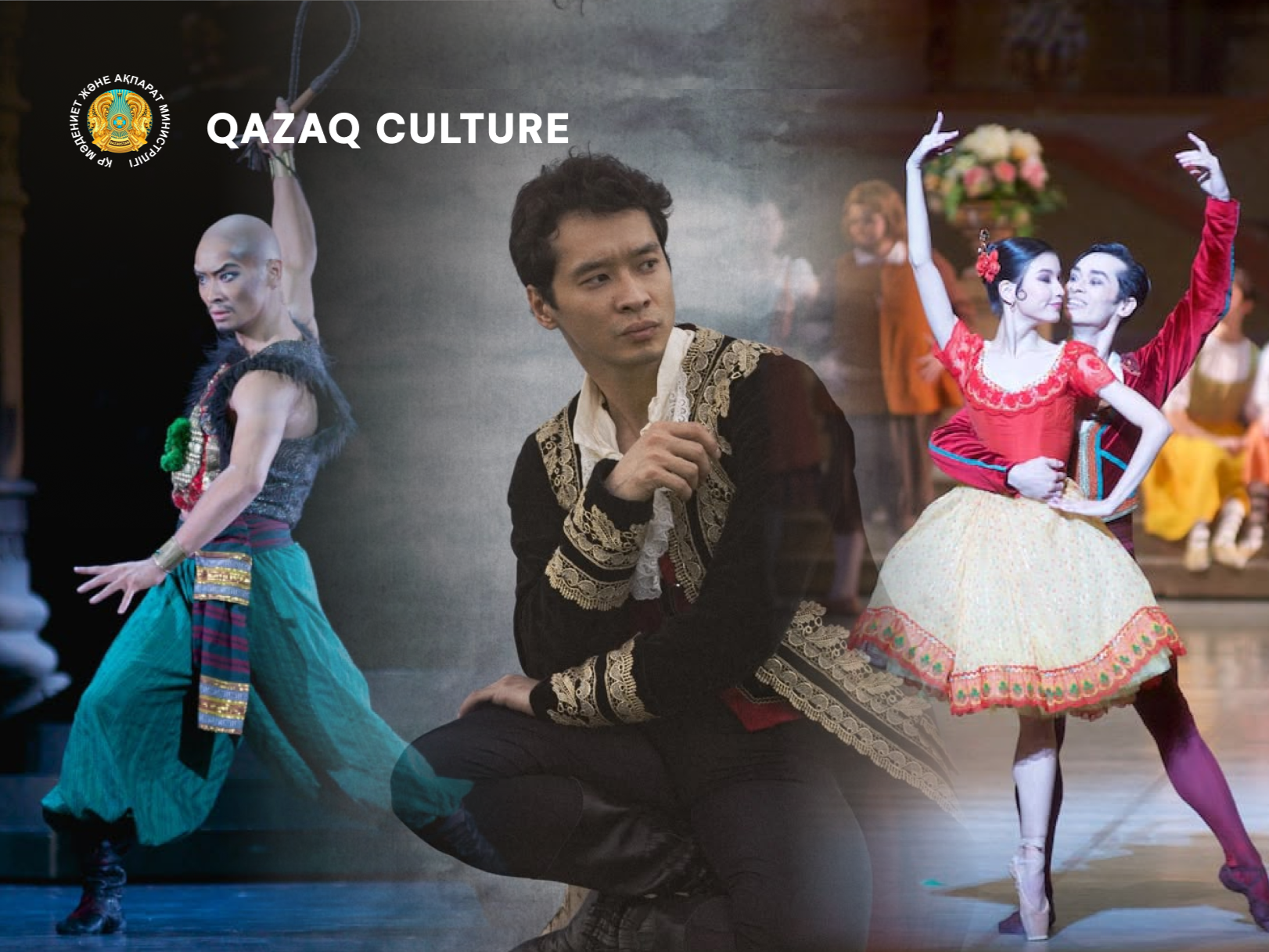
The ballet stage leaves viewers with a fairy-tale impression: soaring jumps, flawless movements, dazzling lights, and majestic music. However, behind this beauty lies daily relentless labor, injuries, and strict discipline that tolerates no relaxation. The hero of our interview is ballet dancer, soloist of the Astana Opera Theatre, and laureate of international competitions, Serik Nakyspekov. He knows the full weight of this behind-the-scenes hard work all too well. From a boy passionate about art growing up in a small town to an accomplished artist who easily masters complex dramatic and character roles, Serik’s creative destiny reveals one fundamental truth: true mastery is born when an indomitable character and a genuine love for art intertwine. In this open conversation, he speaks about the lesser-known aspects of the ballet world, the responsibility of feeling and portraying the inner world of various characters on stage, and the unique, heart-fluttering emotion before every performance. – Serik, which region are you from, and how did you come to ballet? – I am from the small town of Sarkan. My parents had nothing to do with art; my mother worked in a bank, and my father was a plumber. Yet, as destiny would have it, both my younger sister and I chose creative paths. As a child, the thought that I would one day become a renowned ballet dancer never even crossed my mind. I studied at an ordinary school in Almaty. Later, you could say I accidentally entered the Almaty Choreographic School named after A.V. Seleznev. I was good at drawing, so my father initially thought of steering me toward the arts. One day, seeing an announcement about admissions to the choreographic school, he took me there, and I was accepted. Back then, competition among girls was extremely high, while there was a shortage of boys. To be honest, the first three years were very difficult for me. I didn't fully understand what I was doing, and the exhausting all-day training wore me down. Gradually, however, I began to get used to it. A competition held within the school played a special role in this; I performed my variation very successfully there, and that achievement gave me a huge boost. After the school, I continued my education at the Vaganova Russian Ballet Academy. This was a completely different level, as the academy is considered one of the most prestigious choreographic educational institutions in the world. – What achievements have you accomplished in your creative ballet career? – I have participated in sixteen international competitions and won prizes in fourteen of them. I have performed roles in Spartak, Scheherazade, Swan Lake, The Nutcracker, and other productions. I have performed extensively in different countries, seen the world, experienced other cultures, and interacted with foreign artists. All of this has given me tremendous inspiration. One of the most prestigious competitions for me is the Moscow International Ballet Competition, held once every four years on the stage of the Bolshoi Theatre. My first participation was unsuccessful. When I went the second time, I realized it was my last chance, so I had to give it my all. I went to that competition with an injury in my leg that hadn't completely healed. The injury was severe, and I lived with agonizing pain for several months. Despite that, my performance went well. Participating in the competition and becoming a diploma recipient was an invaluable professional experience for me. – What challenges did you encounter during your formative years as an artist? – First of all, injuries. You can never completely escape them in ballet, as tremendous stress is placed on an artist's body, and daily training itself is far from easy. In addition, performing in front of foreign audiences and representing Kazakhstan carries a heavy psychological responsibility. On one hand, it is a great honor; on the other hand, it is a massive duty. Recalling the times when I participated in early competitions, financial difficulties sometimes arose. There were even times when my parents had to sell some of our belongings just to send me to a competition. Today, state support systems are much better organized, but back then, such opportunities were scarce. Entering into a character's persona is also not easy. You must convey their character not just through movement, but through facial expressions, posture, and your overall plasticity. In the end, everything must blend together flawlessly. You want the viewer to leave the theater not just having watched a spectacle, but carrying the impression away with them. Even if they wake up the next day remembering yesterday's joy, sorrow, compassion, or heavy emotion—that is the greatest result for an artist. – Based on your life and professional experience, what must a person do to achieve their goals? – First of all, you need to find work that you genuinely love. That is where enthusiasm, growth, and results will come from. Challenges exist in any profession; without them, a person does not grow. Every obstacle overcome increases the drive to push forward. You must be hardworking. You must not fear taking risks. No matter how difficult it is, you must keep moving forward without stopping. That is how a person gradually grows and is forged, both intellectually and professionally.