A golden bear from a plundered burial mound: what archaeologists have found near Almaty
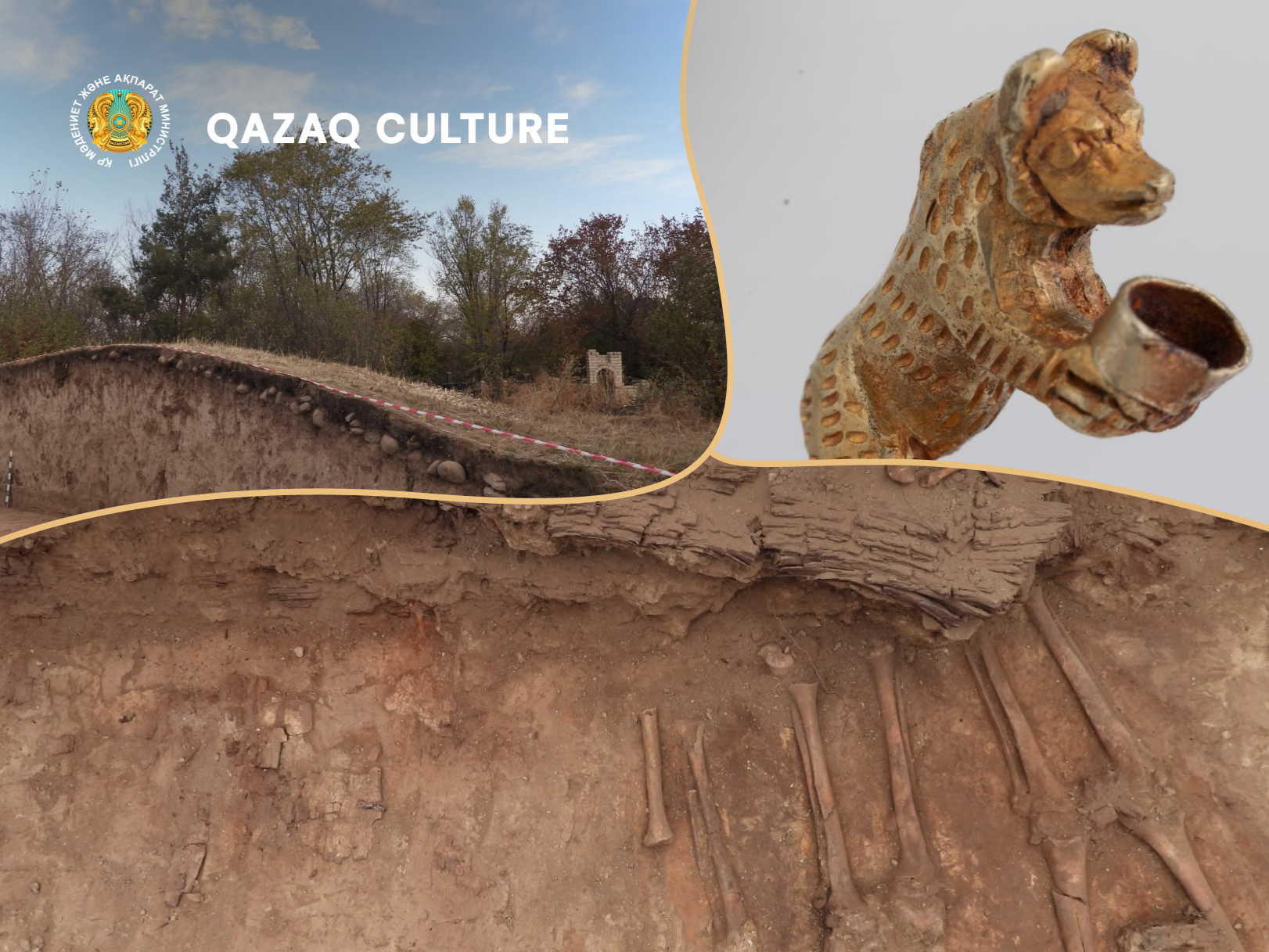
The burial mound was plundered in ancient times. A three-meter-wide pit remains in its center, human remains and objects are mixed together, and the burial's original appearance has to be reconstructed literally fragment by fragment. But among the remains of both the burial itself and its destruction, archaeologists discovered a tiny gold object—a cast figurine, presumably depicting a bear.
The discovery was made during emergency excavations at the Karagayly burial ground in the Nauryzbay district of Almaty. The mound, approximately 25–26 meters in diameter and approximately 2.5 meters high, is tentatively dated to the 4th–3rd centuries BC. In addition to gold jewelry, fragments of Saka pottery and a large number of human remains were discovered here.
It is this latter circumstance that poses one of the main questions for researchers.
Presumably, four adults and three children may have been buried in the mound. Anthropologists have yet to determine the exact number. This is unusual for a burial of this size: according to archaeologists, comparable Saka burial mounds were more often intended for one or two people. Why so many people were buried here, whether they were buried simultaneously, and their relationship to each other remains unknown.
But the most striking item from Karagayli was a small gold figurine.
The plate retains holes, leading experts to speculate that it was part of a headdress and was sewn onto fabric or another base. This design principle is well known from Saka costume: headdresses could be decorated with gold images of animals. The famous "Golden Man" headdress, for example, features a top in the form of an argali sheep, and a snow leopard sculpture, also associated with clothing decoration, was previously found at the Kok-Kainar burial ground.
The situation with the bear is different. According to specialists from the Almaty Museum Association, such a gold figurine has never been found in Kazakhstan before. Therefore, this small object is interesting not so much for the amount of precious metal, but for the animal's image itself. Animals occupied a special place in the artistic language of the Saka world. Argali sheep, deer, predatory cats, birds, and other animals appeared on jewelry, weapons, and clothing not as random decoration. They formed the visual language that is today commonly associated with the animal style of the ancient nomadic cultures of Eurasia. Each new image allows archaeologists to compare finds from different regions and trace how similar artistic motifs migrated across the vast expanses of the steppe.
This is precisely why Almaty researchers are discussing possible parallels from the Black Sea region to the Altai. However, Karagaily is still asking questions rather than providing ready-made answers. What exactly did the image of a bear mean to the person wearing this jewelry? Was it associated with status, ideas of protection, or membership in a particular group? Without additional context, it is impossible to say.
In such cases, archaeology rarely offers a complete story immediately after excavations, especially if the site was looted. Ancient looters sought things of value to themselves. For a modern researcher, something entirely different may be significant: the position of a human bone, a fragment of a broken vessel, a small hole in a gold plate. From such details, not only the burial's appearance is gradually being reconstructed, but also an understanding of how people dressed, what objects they considered significant, and how they bid farewell to the dead.
Therefore, the story of Karagayla is not yet over. The remains will be examined by anthropologists, archaeologists will clarify the burial's structure and dating, and the discovered objects will undergo scientific processing. The most valuable of these will eventually be displayed at the Almaty Museum.
And then the little golden bear will change context once again. It was likely once part of the clothing of a person who lived more than two thousand years ago. Then it ended up underground, survived the plundering of the burial mound, and centuries of oblivion. Now its task is different – to help researchers reread the history of a place of which only scattered fragments remain.
Sometimes an archaeological discovery is an undiscovered answer. This is one small thing that only leads to more questions.