Institute of Hospitality (Qonaqasy) – a strict code of honor of the Great Steppe
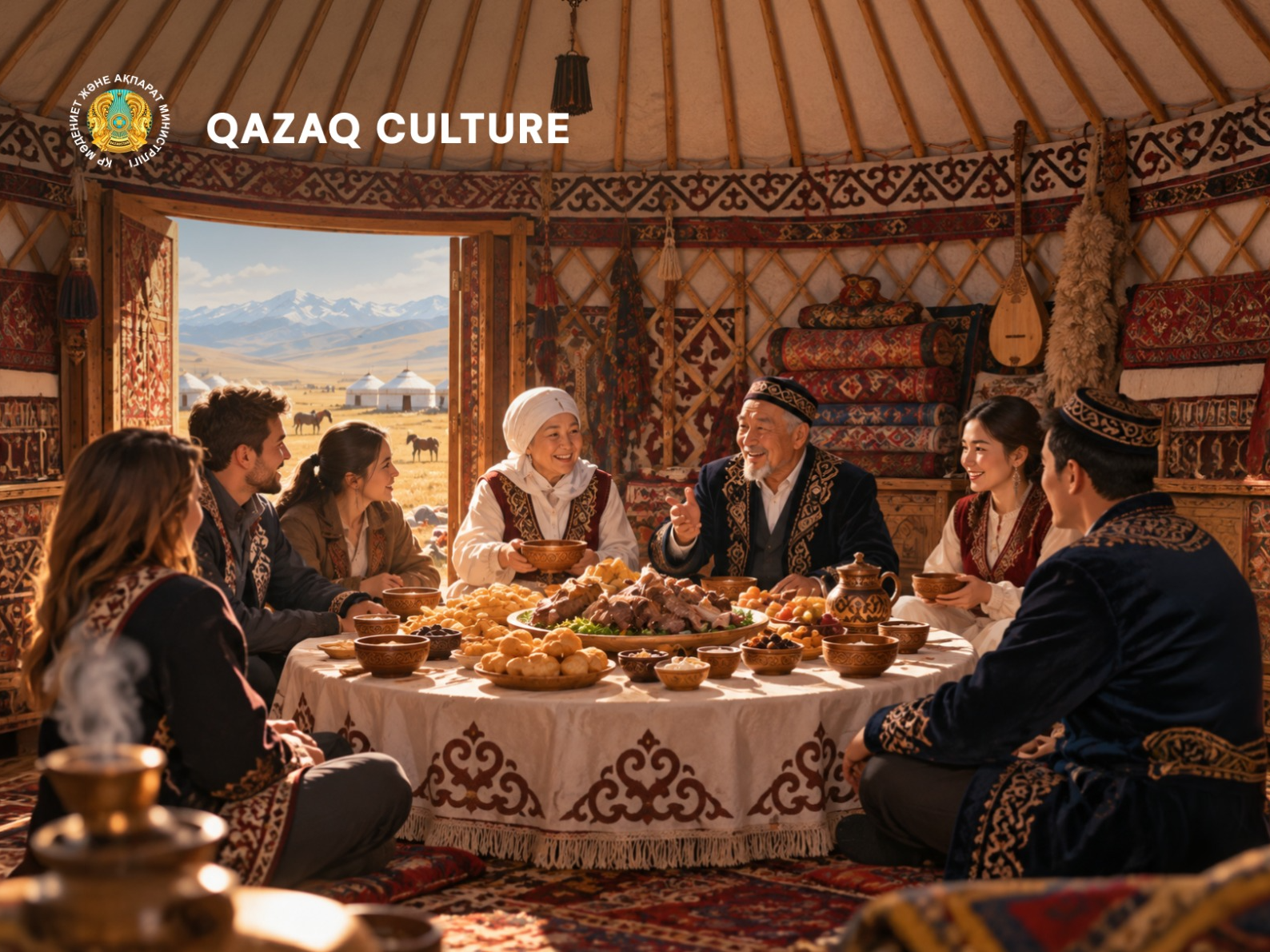
In modern culture, hospitality is often perceived as an expression of personal warmth, generosity of spirit, or national identity. However, in traditional Kazakh society, hospitality was never simply a matter of good manners or an emotional impulse. It was a powerful social institution, a strict code of honor, and a vital element of security in nomadic civilization, where a person’s well-being on the road could depend on adherence to the rules of receiving a guest.
To understand the scale of the qonaqasy phenomenon (a meal or treat offered to a guest), one must recall the geographical and climatic realities of nomadic life. The vast steppe, with its sharply continental climate, harsh winters, and summer droughts, did not forgive solitude.
In conditions of isolation, the steppe turned every traveler into a person dependent on the assistance of those around him. A lone rider in the steppe was extremely vulnerable to the elements, lack of water, predators, or sudden illness.
The Law of Mutual Assistance: In the nomadic world, the distinction between “one of us” and “a stranger” faded in the face of the challenges of the steppe. Helping a traveler was not merely an act of mercy; it was like a promissory note for the future: today you save a stranger, tomorrow someone in a distant aul may save your lost son.
An Information Artery: In an era without means of communication, travelers and wayfarers were the primary “carriers of information.” They brought news about weather conditions on the pastures, the state of trade caravans, the political situation, and the fate of relatives from other clans. Every guest was regarded as a bearer of news, change, and connection with the outside world.
The institution of hospitality performed several fundamental functions. The Kazakh proverb “Қонақ келсе – құт келер” (“When a guest arrives, blessings arrive”) reflected the belief that the arrival of a guest was associated with құт — blessing and prosperity. A guest brought well-being into the home, broadened the horizons of the inhabitants of the yurt, and strengthened the social ties between the aul and the outside world.
Respect for a guest enhanced the reputation of the family and the entire clan. A person who was stingy or refused someone shelter and food could face public criticism. Rumors spread rapidly across the steppe, and the loss of reputation could seriously damage the standing of the entire family.
Protection of the Guest: Once a guest crossed the threshold of a home, they came under the protection of the host. Ensuring the guest’s safety and treating them with respect were essential elements of traditional hospitality.
The Code of Honor in Detail: Rules That Could Not Be Broken
Kazakh guest etiquette was regulated down to the smallest detail. Violations were governed not so much by formal law as by centuries-old traditions and social morality. A host had no right to ask a tired traveler the purpose of their journey or even their name until the guest had rested, washed, and eaten. A person might be a fugitive or a debtor, but at that moment they were, above all, a guest.
The Ritual of Serving Meat: Each guest was served meat according to their age, seniority, and social status. Serving the wrong part of the carcass could be perceived as an insult or a sign of disrespect toward the guest.
Qonaqkade and Yerulik: There were various traditions associated with hospitality, ranging from receiving an unexpected traveler to welcoming new settlers (yerulik). Qonaqkade involved the hosts asking the guest to sing a song or play a musical instrument. A special form of honor was the tradition known as at mingizip, shapan zhaby — presenting a distinguished guest with a horse and placing a chapan, a traditional robe, over their shoulders.
The institution of qonaqasy in Kazakh tradition is a monumental testament to humanity elevated to the level of law. Behind the outward generosity of the festive dastarkhan and the warmth of Eastern hospitality stood a rock-solid structure of survival, in which the honor of the clan was valued above material prosperity, and respect for every person regardless of their origin helped make steppe society a highly organized community long before the emergence of modern legal institutions.