Actress Merey Makazhannyn shygarmashylyk zholy
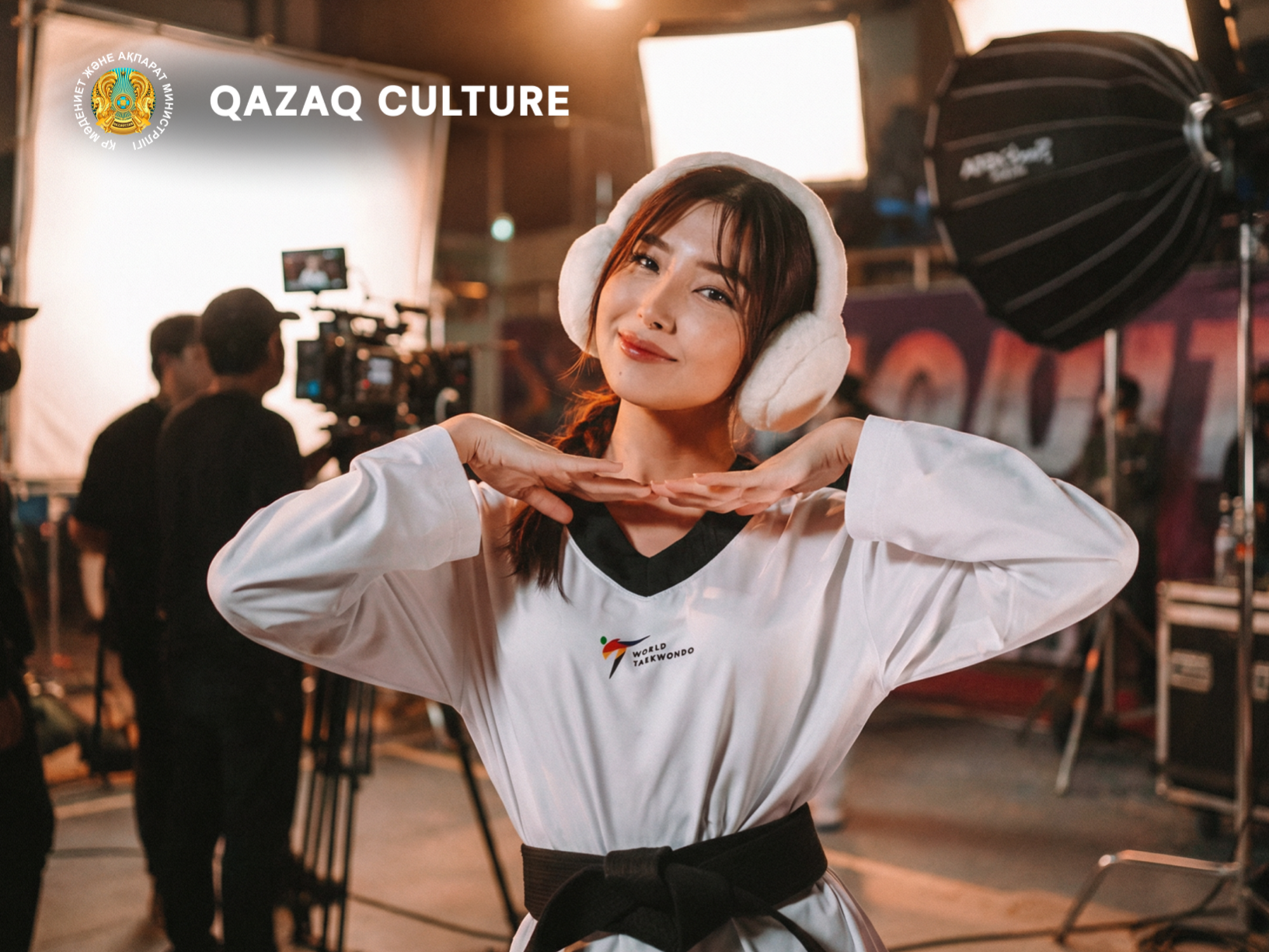
Contemporary Kazakhstani cinema is currently shaping itself at the intersection of generations, where experience meets new perspectives, and tradition meets the search for a distinctive artistic language. Against this backdrop, young actors are particularly notable; they enter the profession not by chance, but consciously, with an inner sense of their path and a sense of responsibility to the audience. One such actress is Merey Makazhan, a representative of the new generation for whom cinema has been a part of her life since childhood.
In an interview with Qazaq Culture, Merey discusses her path in cinema, the inner work she puts into her roles, the importance of education, and her vision for the future of Kazakhstani cinema.
– When did you realize you wanted to pursue acting as a career?
– I've been immersed in this profession since early childhood – I started acting at the age of three, so the acting environment has always been a natural part of my life. It wasn't something separate or new – on the contrary, I grew up in this world, absorbed its atmosphere, and perceived it as something familiar and personal. We were constantly hosting castings at home, with directors, photographers, and actors visiting and discussing projects—and all of this gradually shaped my understanding of the profession from the inside. Of course, my father, Timur Makazhan, played a major role. He became a role model, a guide, and an inspiration. Watching him work, I saw how much depth, hard work, and responsibility this profession entails. But at the same time, it was important for me to come to this choice on my own. And at some point, it happened—consciously. I realized it wasn't just the influence of my environment or family, but an inner need. Acting ceased to be something familiar and became something I truly couldn't imagine my life without. It was a feeling of complete connection—when you realize you're in the right place and want to develop in this direction.
— How are your studies at the Academy going, and what skills are you already using in your work?
— Studying at the Zhurgenov Kazakh National Academy of Arts was an important and conscious stage for me, one that has significantly shaped my professional thinking. Here, a strong emphasis is placed on practical work, which is especially valuable for an actor. We study a wide range of subjects: acting, stage speech, director-actor work, and archival analysis. All of this helps us not only master the profession technically, but also understand it more deeply from within—as a system where every detail matters.
The "Television Directing" course stands out for me. In our classes, we not only watch and analyze films but also learn to formulate our own opinions, write reviews, work on scripts, and shoot our own video projects. This gives us a different perspective on the profession—not only as an actor, but also as a creator of a visual product. On set, I feel like I've begun to perceive the role differently, analyze it more deeply, and work more confidently both in front of the camera and in collaboration with the crew.
— How important is professional education for an actor?
— I believe that there are indeed many different paths to filmmaking—everyone has their own experience and story. There are examples of people without specialized education achieving success through strong desire, hard work, and practice. In this sense, the profession remains open to those willing to work and develop. However, professional education provides a very important foundation. It's not just knowledge, but also discipline, an understanding of the profession from the inside, and an awareness of the processes behind the creation of a role and the project as a whole. This is a kind of foundation that can be relied upon at any time, especially in difficult or unusual situations.
Furthermore, training provides tools—working with text, the body, the voice, and a partner—that help an actor be more conscious in their work. This allows them to not simply exist intuitively on camera, but to develop a role more deeply and precisely. At the same time, I am sure that much, of course, comes with experience. If someone has a strong desire, hard work, and constant practice, they can enter the profession even without an academic foundation. But education in this case becomes an advantage that accelerates development and makes it more sustainable. What internal challenges did you face at the beginning of your career, and how do you prepare for a role today?
Even now, before every new project, like many actors, I feel nervous. Sometimes I also feel unsure in front of the camera. There have been emotionally challenging moments when I had to experience strong emotions. Over time, I've learned to accept this as part of my profession. Now I have my own methods of preparation: I like to analyze a character in detail, inventing their past, habits, even small details that aren't visible on camera. Sometimes I create a playlist for the role; this helps me get into the right state faster.
What's the difference for you between working in film and TV series?
Working in feature films and TV series actually differs in their internal logic and pacing. In film, it's often important to immediately get into a precise state—it's a more compressed format, where you have less time to warm up, and each scene requires maximum concentration and depth. Much of this relies on precision and the ability to quickly experience complex emotional states. A series is a more extended process. An actor has the opportunity to gradually develop a character, observe their development, and build an inner arc over a long period of time. This creates a special sense of a living process, where the character isn't fixed but changes along with the story.
I value both formats because they offer different professional experiences. But right now, I'm especially drawn to roles that involve internal transformation—where the character goes through a journey, changes, and faces internal and external conflicts. These are the kinds of stories that allow me to develop more deeply as an actress and live the role more consciously.
– Do you have a favorite role, and what role do you dream of playing? How do you choose projects?
– Each role becomes special to me at the very moment I work on it. It's always a living process, connected to a specific stage of life, inner state, and experience, so it's difficult for me to single out one "favorite" role—each is important in its own way and leaves its mark. When it comes to my dream roles, I gravitate toward complex, multifaceted characters—heroines with internal contradictions, strong personalities, and profound experiences. Such characters offer the opportunity to not only depict the external story but also explore a person's inner world, their transformation, choices, and struggles with oneself.
When choosing a project, everything is important to me as a whole. Of course, the script, the team, and the director's vision are crucial—they are the foundation on which the quality and depth of the work depends. But the decisive factor is still the inner resonance. If I feel that this story and this character resonate with me, that I can be honest and authentic in this material, then this is my project. This feeling of "getting it right" becomes the main guideline for me in my choices.
— How do you assess the development of Kazakhstani cinema today, and what do you see for its future?
— I think Kazakhstani cinema is currently at a very interesting and, in many ways, pivotal stage. We are seeing more and more bold and diverse projects emerging, and directors are actively seeking their own forms, language, and intonations. This is no longer simply an attempt to follow external trends; it is the gradual formation of a recognizable cinematic language that reflects our culture, thinking, and contemporary reality. The genre diversity is particularly encouraging. Today, Kazakhstani cinema coexists with original statements, social dramas, commercial projects, and experiments with visual style and new formats—from fantasy to thrillers. This expansion of boundaries gives the industry the opportunity to develop more dynamically and find its audience both domestically and internationally. I believe that this openness to exploration and experimentation will be a key factor in further growth. In the next 5-10 years, I believe, Kazakhstani cinema will make an even more active international presence, strengthening its position and creating a stable professional environment. This is a period when it is important not only to maintain this momentum but also to continue developing one's own identity, to be interesting to the world precisely because of one's uniqueness.
– What does it mean to you to be an actress in Kazakhstan today? And what advice would you give to young people just starting out? "For me, being an actress in Kazakhstan isn't just about the profession, it's about being part of the culture, telling the stories of my time, and connecting with people through emotion. It's inspiring, but it also comes with a responsibility. To those just starting out, I'd say: don't be afraid to be authentic. In our profession, the sense of inauthenticity is very strong, but sincerity always captivates. Learn, observe, work on yourself, and don't give up, even when it's difficult. And most importantly, love what you do."