Zhetygen – the Voice of the Ancient Steppe
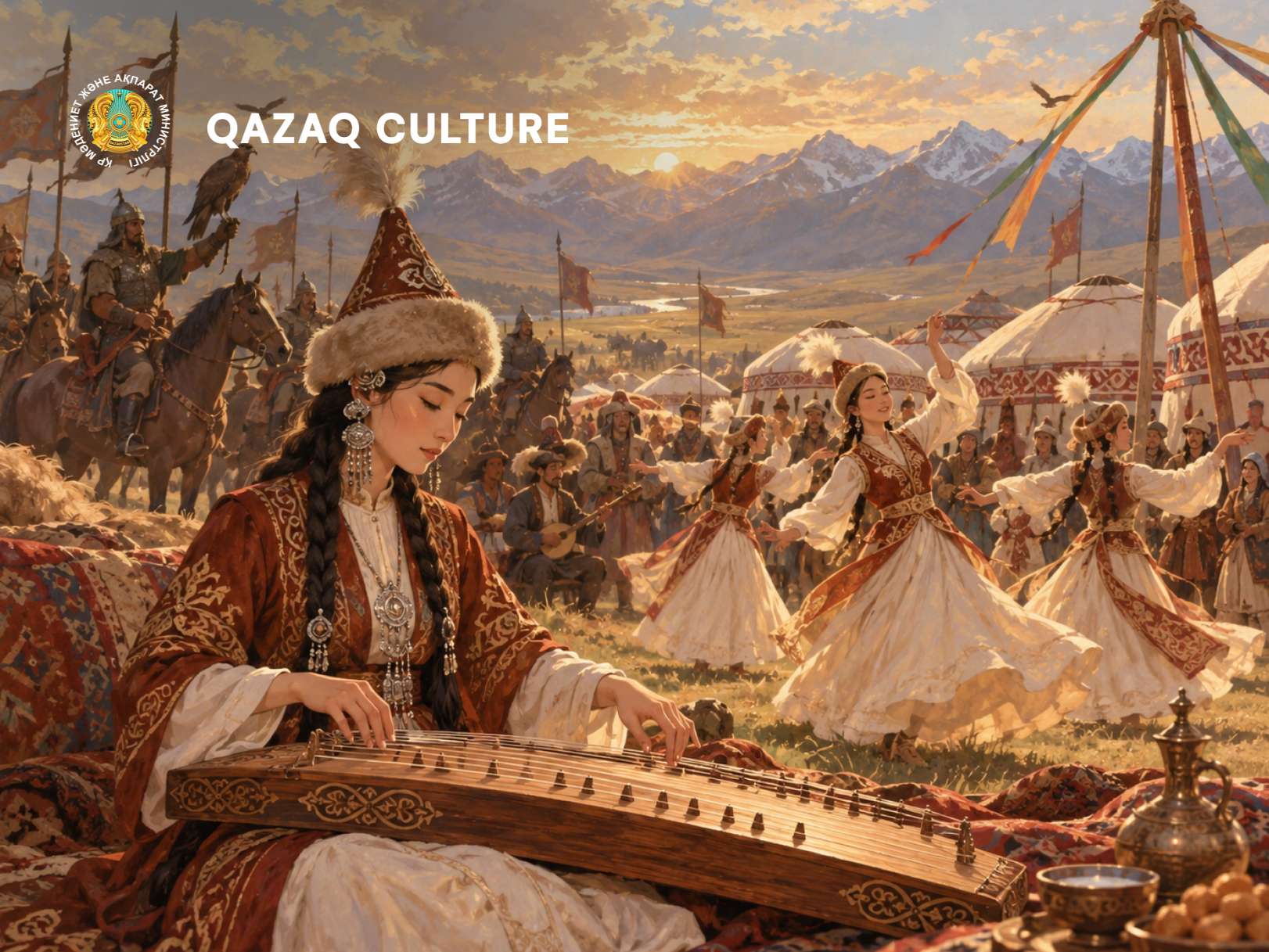
The Kazakh people have musical instruments that do more than simply create melodies — they seem to preserve the living memory of generations, conveying through every sound the stories of ancestors, quiet sorrow, joyful happiness, and the deepest emotions of the human soul. One such instrument is the Zhetygen, one of the ancient plucked instruments whose history is closely intertwined with the culture of the Great Steppe.
The Zhetygen has an elongated wooden body with strings stretched across its soundboard. Its sound is distinguished by exceptional softness, clarity, and depth. Its melodies evoke the vastness of the steppe, the sadness of the soul, hope, and the inner strength of the human spirit. That is why the Zhetygen is perceived not merely as a musical instrument, but also as a unique voice of the people’s soul.
According to one of the best-known legends, the history of the Zhetygen is connected with a father who lost his seven sons during a harsh winter. After the death of each son, he added a new string to the instrument and performed a kui dedicated to the memory of his child. Thus, seven melodies were created, and the instrument came to be known as “Zhetygen.” Passed down from generation to generation, this legend gives its sound a special emotional meaning — a memory of loved ones, loss, and hope.
In the traditional culture of the Kazakh people, music was an integral part of life. Through kui and song, history, emotions, philosophy, and life experience were passed down. Music helped preserve the connection between generations, while each instrument became part of this great spiritual heritage.
Today, the Zhetygen continues to be performed on concert stages in Kazakhstan and beyond. It is played by members of folk ensembles, professional musicians, and young performers. Contemporary artists are discovering new dimensions of the instrument, combining its traditional sound with classical, ethnic, and contemporary music.
The strings give the instrument much of its expressive power. Each one seems to open a separate page of history, while together they create a musical narrative about humanity, destiny, and the boundless steppe. There is something deeply personal yet timeless in the gentle voice of the Zhetygen — a melody addressed to the memory of generations.
The Zhetygen continues to live and evolve. It is studied at music educational institutions, its traditions are preserved by master craftsmen and performers, and young musicians find in it a source of inspiration.
Talgat Sarybayev, Kaiyrzhan Makanov, Yedil Kussainov, Saule Merekeeyeva, Shakhbanu Kylhyshbayeva, and Nurgul Zhakypbek have made a significant contribution to promoting the instrument and developing its performance tradition.
Thanks in large part to their efforts, this ancient instrument is gaining a new voice while preserving its unique identity.
Today, the Zhetygen and the art of playing it are included in the National Inventory of Intangible Cultural Heritage of the Republic of Kazakhstan under the National Commission of the Republic of Kazakhstan for UNESCO.
The Zhetygen is more than just strings and wood. It is the living memory of a people in sound — a place where the past and present, humanity and the steppe, history and music come together.