When dance becomes the voice of culture
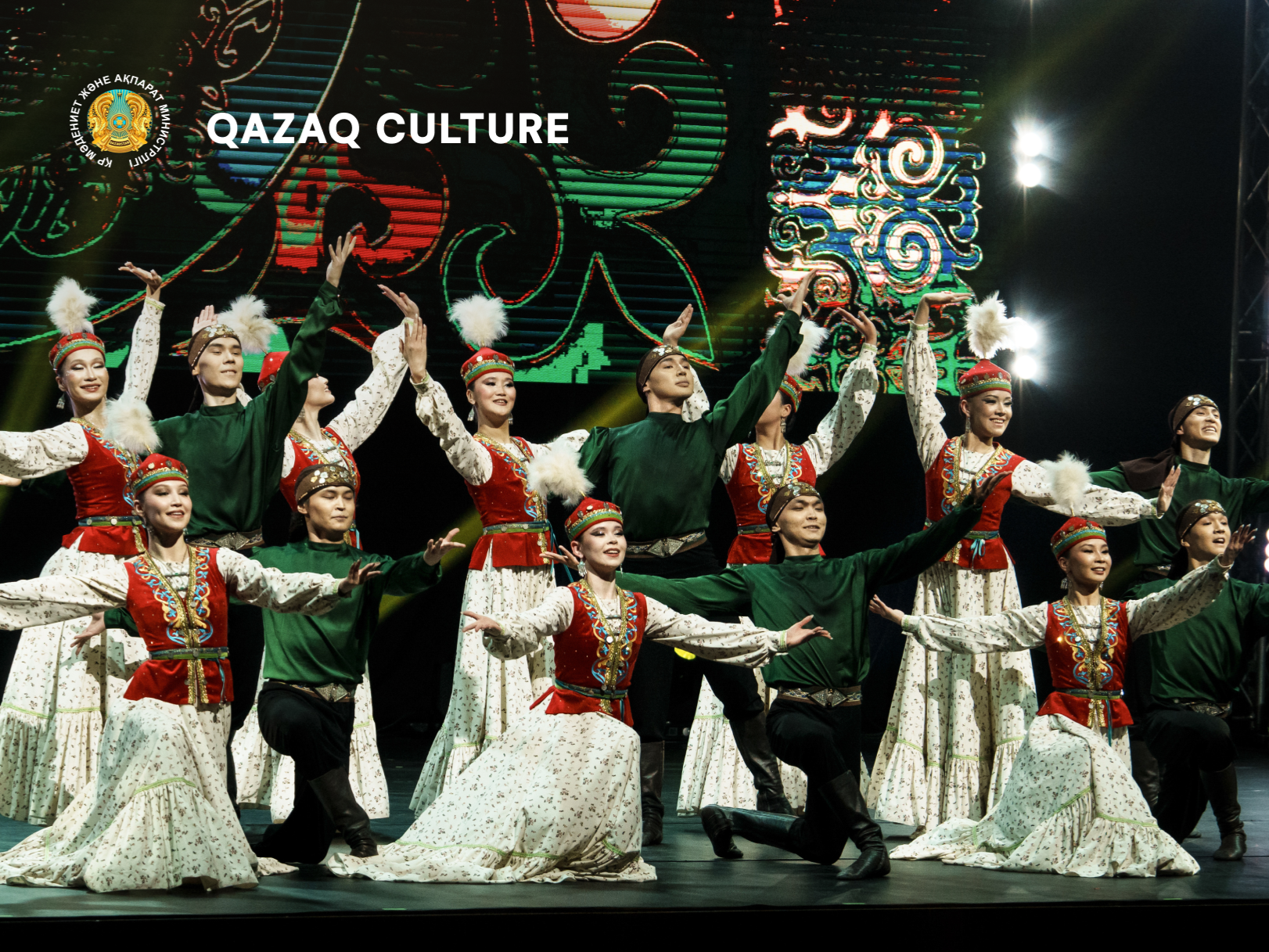
The culture of any nation is a living organism that dies if it stops breathing through its traditions, values, and modernity. In an era of globalization that is erasing borders, how can we preserve our identity while remaining interesting, expressive, and unique? The answers to these questions are known to Anvara Sadykova, an acclaimed choreographer and educator, Candidate of Arts, principal choreographer of the Gülder Ensemble, and creator of more than 80 choreographic compositions and three one-act ballets. Her works have been successfully presented in different countries around the world and are part of the repertoire of leading choreographic companies in Kazakhstan.
In our interview, she spoke about her long journey in the arts, as well as why traditions are our most important compass and how dance can reach the hearts of the younger generation.
– Anvara Aripovna, tell us how you came to the art of dance. Who had an important influence on your development?
– My mother, Sadykova Bakytkul Kumisbekovna, played an enormous role in my development. From an early age in Balkhash, my mother took me to various extracurricular classes because she wanted me to develop in many different ways. I attended wushu classes, learned knitting and chess, and studied violin at a music school. But eventually, I found myself staying in the ballet studio. First, it was at the Palace of Builders, and then I joined a wonderful ensemble called Veterok, led by Ivan Mikhailovich and Lyudmila Leonidovna Strusinsky. They played a major role in helping me enter the A. V. Seleznev Almaty Choreographic School, where I studied to become a ballet dancer. That is how my professional journey began. 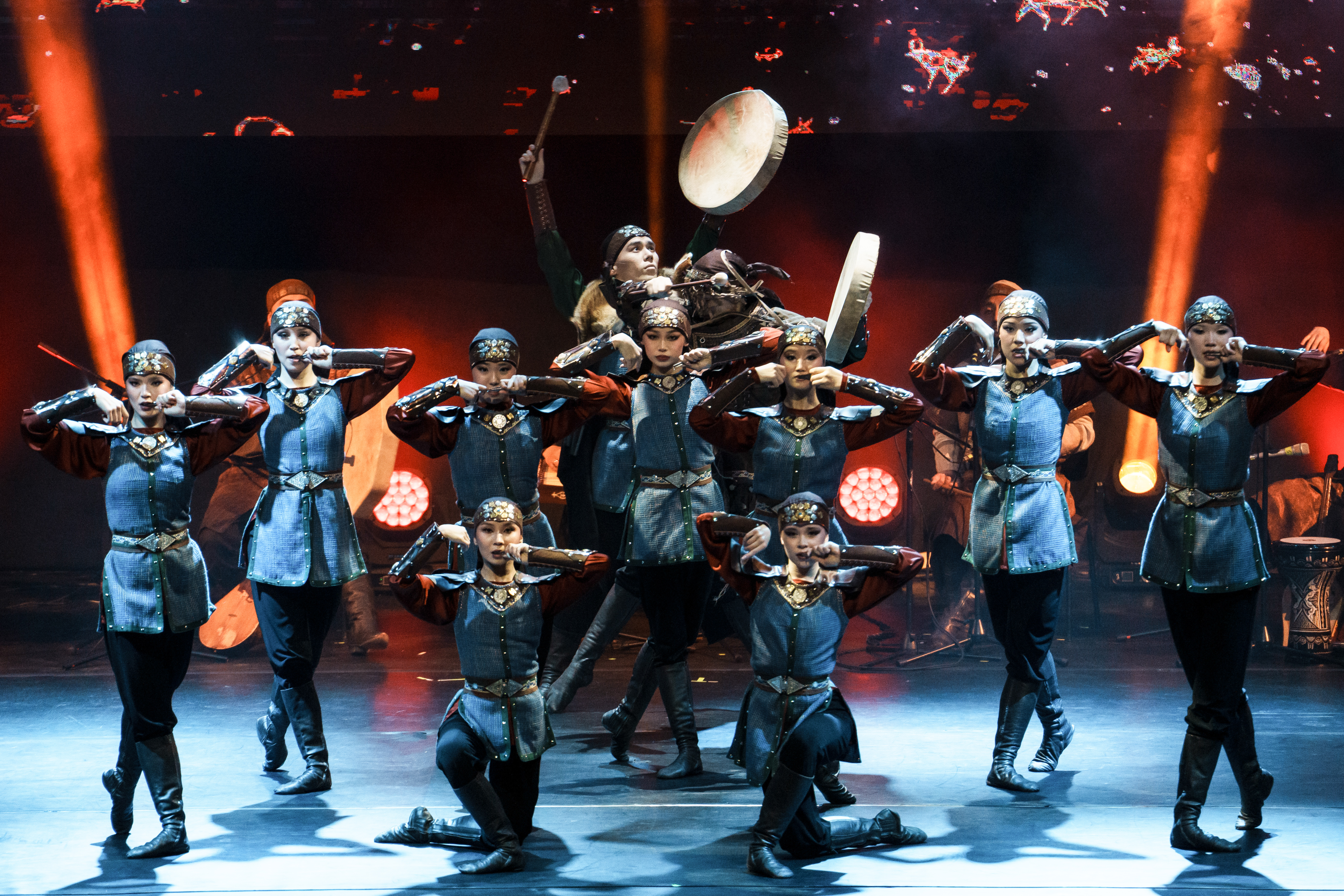
After graduating from the school, I became a ballet dancer with the Abai State Academic Opera and Ballet Theatre. At the same time, I entered the Choreography Faculty of the T. Zhurgenov Kazakh National Academy of Arts. Later, at the same institution, I earned a Master of Arts degree specializing in Choreography Pedagogy. In 2020, I defended my dissertation for the degree of Candidate of Arts at the A. A. Altmyshbaev Institute of Philosophy, Law and Socio-Political Studies of the National Academy of Sciences of the Kyrgyz Republic.
I consider myself very fortunate in life. I had the opportunity to study under a whole generation of outstanding teachers and major figures in Kazakhstan’s choreographic arts.
– How has your academic and research work influenced you as a ballet dancer and choreographer-educator?
– Studying the art of choreography through the lens of science helped me understand the nature of dance. I began to see dance not simply as an aesthetic spectacle or a set of beautiful movements, but as a complex system of thought involving concepts such as genetic memory, the worldview of a people, knowledge of deep-rooted traditions, and their reflection through a distinctive plastic language that makes it possible to identify national identity and comprehend our place in the global cultural space.
I can say that I came to love our culture, language, and traditions even more when the wisdom of our ancestors and the meaning they embedded in particular actions began to reveal themselves to me. There were no unnecessary movements or meaningless actions. Openness and generosity of spirit, patience, strategic thinking, and wisdom helped our people survive the most difficult periods in the history of the Kazakh land.
It was precisely my academic work that encouraged me to begin creating choreographic productions. My knowledge, communication with outstanding figures of Kazakh culture, personal experience, feelings, and understanding of traditions that I absorbed in my family and came to know throughout my life allowed me to immerse myself in the world of Kazakh choreography and create what I have defined as “neo-Kazakh choreography.”
I became a teacher relatively early. This path began at the A. V. Seleznev Almaty Choreographic School, where I taught various disciplines: classical dance, historical and everyday dance, ballet history, and an introduction to ballet studies. Later, my teacher, Gaikarnamal Nygmetzhanovna Beisenova, a student of the famous Shara Zhienkulova, suggested that I teach Kazakh dance. I found it interesting and agreed.
Alongside my teaching career, I headed the Museum of the A. V. Seleznev Almaty Choreographic School for ten years. As part of this work, I conducted research to collect, process, and systematize materials, photographs, and film documents related to the history of the formation and development of choreography in Kazakhstan. Based on this work, I became an author and co-author of scripts for a number of television programs, as well as a co-director and consultant for documentary films and the author of academic articles and books devoted to issues of national choreographic art.
All the academic knowledge I acquired helped me answer fundamental questions and better understand what dance is, where I am going, what I am doing, and what national dance means. After all, dancing is one thing, being a teacher is another, and being a choreographer and creator of productions is something entirely different. Nevertheless, these aspects cannot truly exist or develop without one another.
– A particularly important milestone in your career was the famous Gülder Ensemble. Over more than half a century, this renowned ensemble has become the very soul of Kazakhstan’s musical arts. Tell us about your work with the ensemble.
– Indeed, Gülder, which was established back in 1969, has played a special role in popularizing and developing Kazakhstan’s musical culture. At that time, the ensemble was multidisciplinary: it included traditional singing, pop music, circus arts, and choreography. This multidisciplinary nature determined the multifaceted character of the ensemble’s repertoire policy. It created opportunities for the development of high-quality stage performance based on Kazakh culture, language, and traditions. The ensemble enjoyed tremendous success.
In 2022, a new chapter in the history of the ensemble began. The Ministry of Culture and Information of the Republic of Kazakhstan and the State Concert Organization Qazaqconcert named after Roza Baglanova launched a project to revive the ensemble.
Today, in our work, we strive to remain faithful to our deep roots amid the rapid pace of globalization, while also opening new horizons through creative experimentation and new arrangements. Alongside regular performances in Kazakhstan, we seek to participate in international projects, competitions, and festivals in near and far-abroad countries. While preserving our heritage and the ensemble’s golden repertoire, we are also creating entirely new works. To date, we have more than 80 choreographic productions in solo, duet, and mass formats, as well as an ethno-ballet, Zamana Zhangyrygy / Echo of the Era, which premiered as part of the FLOW / AǴYN concert dedicated to the 25th anniversary of my creative career.
We have also launched a new project called EXPERIENCE, where our artists can demonstrate their creative potential as choreographers. It is a very interesting platform that requires a creative approach, and I would say a personal enthusiasm and a desire to immerse oneself in the world of different genres of choreographic art. It is a major undertaking that requires a great deal of effort, creativity, and talent from the entire team.
Without a doubt, the ensemble’s greatest asset is our performers—our young dancers and musicians. My own efforts, as well as the work of the entire team, are aimed at unlocking their potential and creating productions that are relevant today and, hopefully, tomorrow. It is important for us to remain interesting to audiences of all generations: older, middle-aged, and young.
– How does international audiences respond to Kazakh melodies and dances?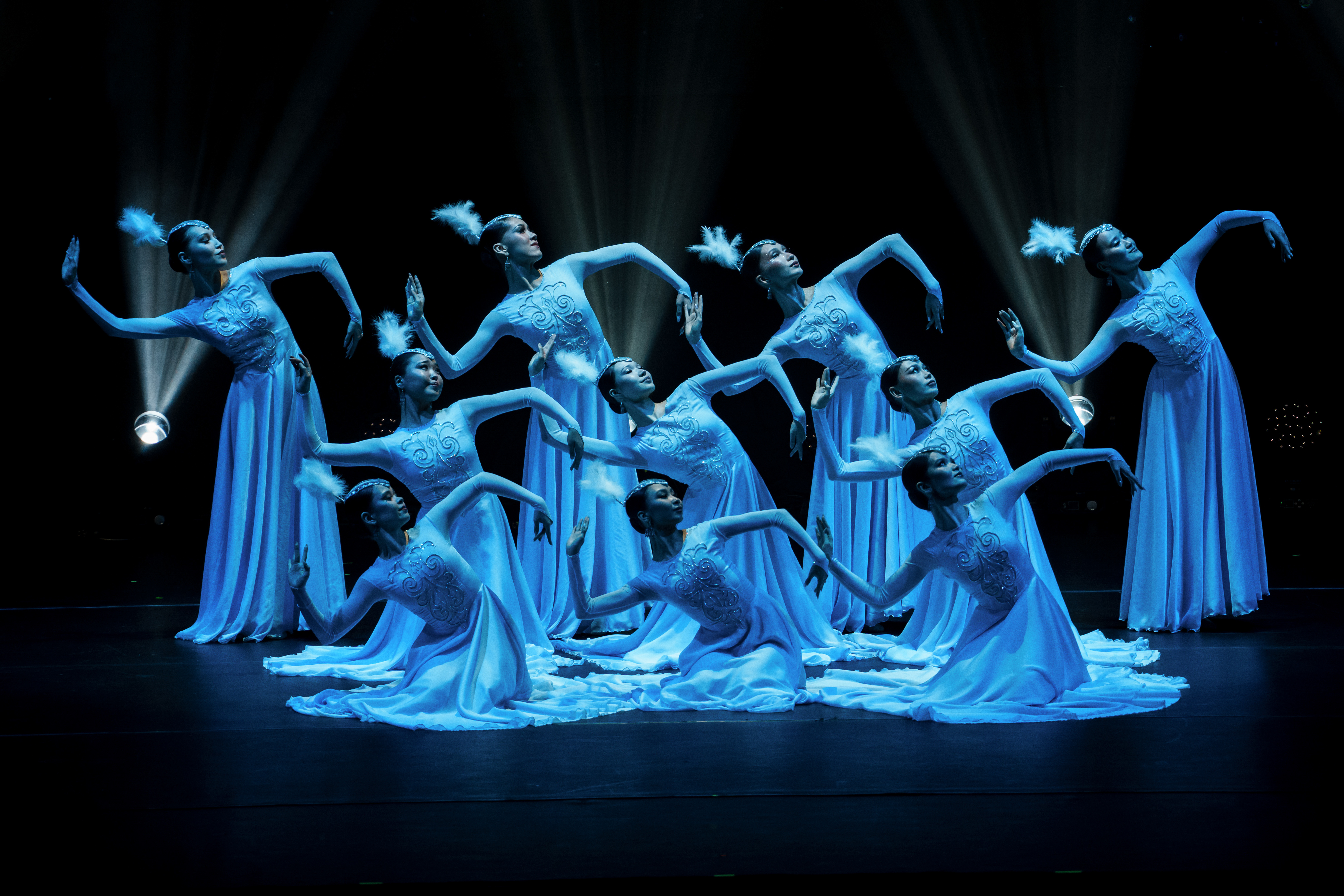
– Our work is highly appreciated around the world. This is demonstrated by the great interest, standing ovations, awards, and enthusiastic feedback from people of different ages—from representatives of the arts to people from other professional fields.
The numerous awards our ensemble has received at international and national competitions demonstrate the high appreciation of our work. Among them are gold medals and first places at the Festival of Culture and Arts of the Eurasian Countries in Sochi, Russia (2023); the 21st International Choreographic Competition TanzOlimp in Berlin, Germany (2024); the 17th International Choreographic Competition Riga Spring 2024 in Latvia; the 5th International Choreographic Festival-Competition dedicated to George Balanchine in Kutaisi, Georgia (2025); the 7th All-Russian Choreographic Competition Dance Experiment in Ufa, Bashkortostan (2025); the Republican Shara Zhienkulova Kazakh Dance Competition in Astana (2023); the Republican Dauren Abirov Men’s Solo Dance Competition in Astana (2023); the Republican Gulzhan Talpakova Folk Solo Performance Competition in Atyrau (2023), and others.
Overall, the new lineup of the Gülder Ensemble, performing both solo and in mass formations, has presented its art in 13 countries: China, Türkiye, Malaysia, the United States, Sweden, Germany, France, Latvia, Russia, Georgia, Uzbekistan, Tajikistan, and Kyrgyzstan.
These victories and awards received by our dancers demonstrate the high status of national choreography and the recognition of the professionalism of our performers, choreographers, composers, musicians, and costume designers.
Our ensemble regularly performs for heads of state and official representatives of other countries. One of our most recent memorable performances was our participation in the World Nomad Games in the Kyrgyz Republic.
Every performance we give shows audiences that we have an extraordinary, powerful, and vibrant national Kazakh culture. It is open to the world and peaceful in spirit. It carries spiritual values and universal principles of life. This is what the history of our people has been built upon for centuries. And we simply have no right to lose it. It is the foundation on which we can move forward.
– Anvara Aripovna, as someone who has achieved a great deal in your field, what do you believe is the key to success?
– As cliché as it may sound, hard work is the main component of success. Your work should serve the purpose you have set for yourself. It is also important to remain open to new things and strive to learn and explore. A person is capable of achieving a great deal, and I believe that hard work and openness to knowledge are the foundation of all achievements.