Abilkhair Abilghazy: "Animation becomes an important tool for promoting national values"
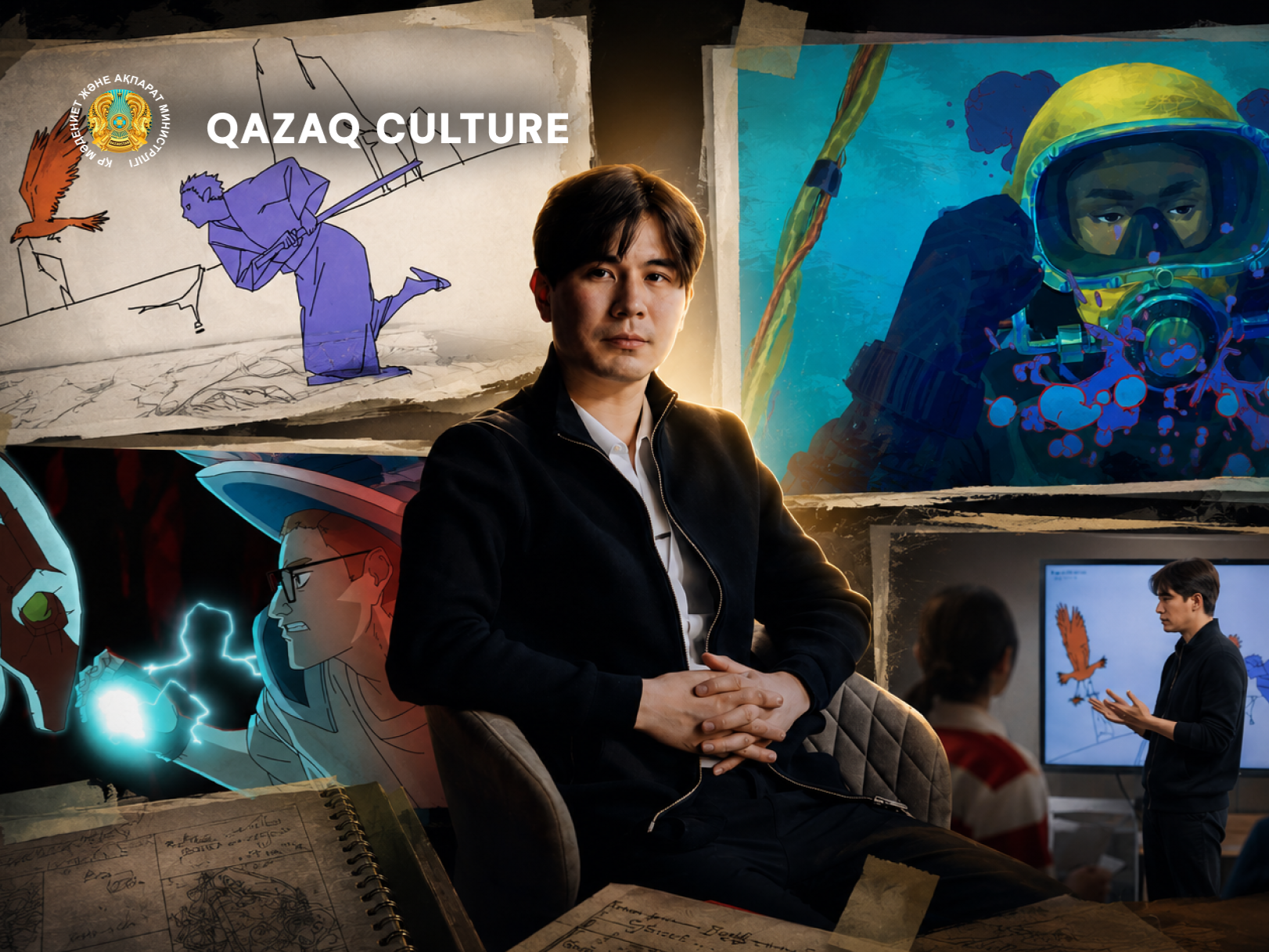
Animation has long since transcended the confines of children's entertainment. Today, it's an independent artistic language that allows us to communicate with diverse audiences-from the very young to adults-about culture, history, memory, and values. Through image, movement, color, and character, cartoons can explain complex concepts simply, captivate children, and leave a powerful message.
In Kazakhstan, the animation industry is gradually gaining momentum. New projects, formats, and original solutions are emerging, along with young professionals striving to create a distinctive visual language for Kazakh animation. We spoke with Abilkaiyr Abilgazy, an animation artist at the Kazakhanimation creative association, about how characters are born, why cartoons influence children's upbringing, and the place of national values in this field.
– Abilkaiyr, do you remember your first drawing?
– I was very impressionable as a child and loved to invent different stories. Cartoons had a great influence on me. My parents brought home DVDs of various animated films, and I would watch them over and over again.
My older brother was also into cartoons. When he liked a character, he'd pause the frame and redraw it in a notebook. I watched with great interest and marveled at how he could so accurately capture the character's image. After a while, I wanted to try my hand at it myself.
Around the age of five or seven, I started drawing actively. I had several notebooks completely filled with characters. Gradually, I not only learned to draw characters but also began to better understand their form, emotions, movements, and personality. This developed my imagination and the desire to create my own images.
And when I was 10 or 11, I first tried something resembling animation. I drew a simple flipbook in the margins of a Kazakhstan history textbook. Of course, it was a very simple piece, but for me, it was a real revelation. I saw the drawing come to life right before my eyes. I think that's when my path in animation began. At that time, I didn't fully understand what animation was as a profession or an art form. But my interest in moving images, in creating stories, and bringing my own imaginations to life emerged in childhood.
– To what extent do you think cartoons influence a child's upbringing?
– Upbringing, of course, begins in the family. But a child's worldview is also greatly influenced by the environment in which they grow up, as well as the content they watch every day. In this sense, animation plays a very important role.
Through stories, characters, and their actions, children learn to distinguish good from evil, understand the value of friendship, responsibility, honesty, and mutual support. They see different behavior patterns and often react to them very emotionally.
A good cartoon does more than simply entertain a child. It can develop thinking, broaden horizons, shape tastes, and even influence character. Therefore, children's animation should be taken seriously. There should always be meaning behind a bright image.
– How is a cartoon created? How does an idea turn into a finished animated work?
– It all starts with an idea. First, it's discussed, refined, and revised several times. It's important to understand the story's theme, its meaning, and why the audience should be interested in it.
After this, visual development begins: the initial character designs are created, locations, atmosphere, and style of the future project are thought out. Then, the production designer prepares a storyboard based on the script. This is a kind of visual plan for the cartoon, which already shows how the action will unfold.
The next important stage is the animatic. It helps to get a feel for the story's rhythm, scene length, mood, and overall dynamics. All of this falls under the preparatory period, which in the industry is called pre-production.
Once pre-production is complete, a team is formed to work on the production. The main process of creating the cartoon begins. It includes many areas: character animation, motion graphics, visual processing, backgrounds, sound, and editing. In the final stage, all elements are combined into a cohesive work.
In reality, this is a very complex and multi-stage process. Each stage requires individual attention and a professional approach. The script occupies a special place. It establishes the idea, conflict, emotion, and central theme of the cartoon. A good script helps the viewer empathize with the characters and understand the purpose of the story. It's important for the author not just to come up with a plot, but to find the right form, genre, and artistic technique to convey their message as accurately as possible.
– How important is it to discuss national values through animation?
– I believe it's very important. Animation allows children to become familiar with national culture, traditions, and history from an early age. Cartoons directly influence a child's perception, so they can be used to carefully and clearly communicate the heritage of their people.
The key is to do this in an engaging, not didactic manner. National themes should be presented in a simple, accessible, and modern way, so that the child not only receives information but also wants to follow the story, develop a love for the characters, and memorize the atmosphere.
Today, many genres and formats are developing in animation. Elements of national culture, traditional motifs, and images related to the history and worldview of the Kazakh people are already appearing in various projects. This is a very positive trend.
When viewers see national values in a modern visual format, they perceive them naturally. Therefore, animation can truly become one of the most important tools for promoting cultural heritage.
– What do you pay attention to when creating a character's image?
– Every detail is important when creating a character. Their figure, silhouette, color palette, clothing, facial expressions, and body language should all contribute to the development of their character.
For a character to be memorable to the viewer, they must have their own recognizable features. Therefore, when developing an image, we always look for details that make the character unique and distinguish them from others.
For example, if a character is kind, gentle, and likable, this can be conveyed through rounded shapes, smooth lines, and warm, graceful movements. Even before the character utters a line, the viewer should already sense their personality.
Negative characters often use sharper, more angular, and rigid forms. This visual language helps create a specific impression immediately. In animation, an image can convey a lot without words.
– How do you assess the development of Kazakh animation today?
– "I believe Kazakh animation is currently in a crucial period of formation and development. We may have less accumulated experience than some countries, but interest in this field is noticeably growing.
It's crucial that many young, talented, and inquisitive professionals are entering the animation industry. They bring new ideas, experiment with form, explore different styles, and gradually develop their own artistic language.
I believe that, over time, Kazakh animation will reach a new level. We have a rich culture, a deep history, powerful images, and themes that can be explored through cartoons. We can create works that are not only visually beautiful but also meaningful, educational, and memorable.
The main thing is to continue developing the professional environment, supporting creators, and enabling new projects to reach audiences."
"What changes have you noticed in domestic animation in recent years?"
"More and more diverse projects are emerging now." These are no longer just children's cartoons, but also experimental short films, animated series, and projects for older audiences.
Furthermore, a new generation of specialists is entering the profession. These are young artists, animators, directors, and screenwriters who have a broader and bolder view of animation. They are eager to find their own style, address current topics, and develop Kazakhstani animation not only technically but also substantively.
I believe this interest and creative exploration can give our animation a new impetus.
– Thank you for the conversation.