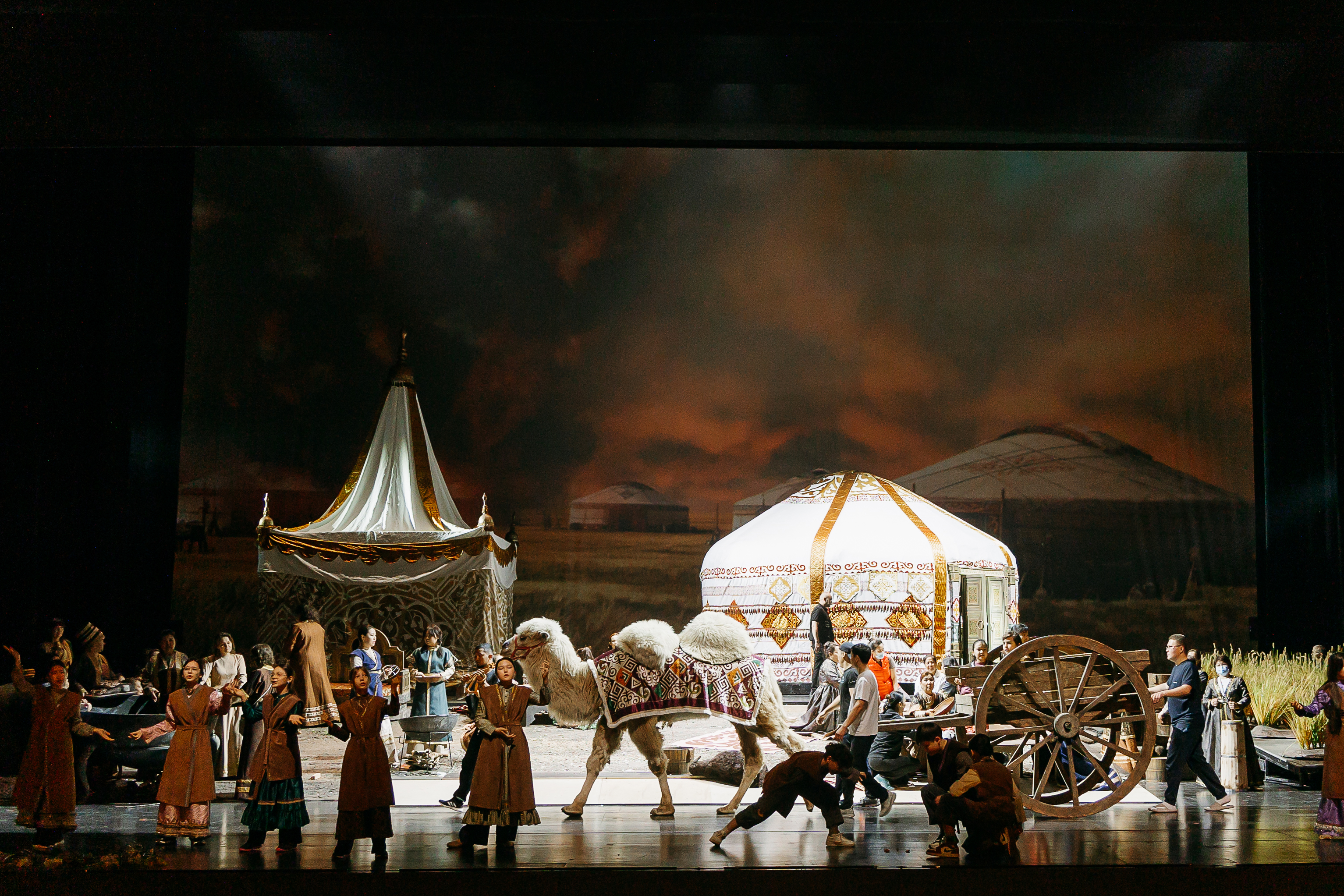
Nizami's Steppe Muse: How a new opera about Appak is being born at Astana Opera
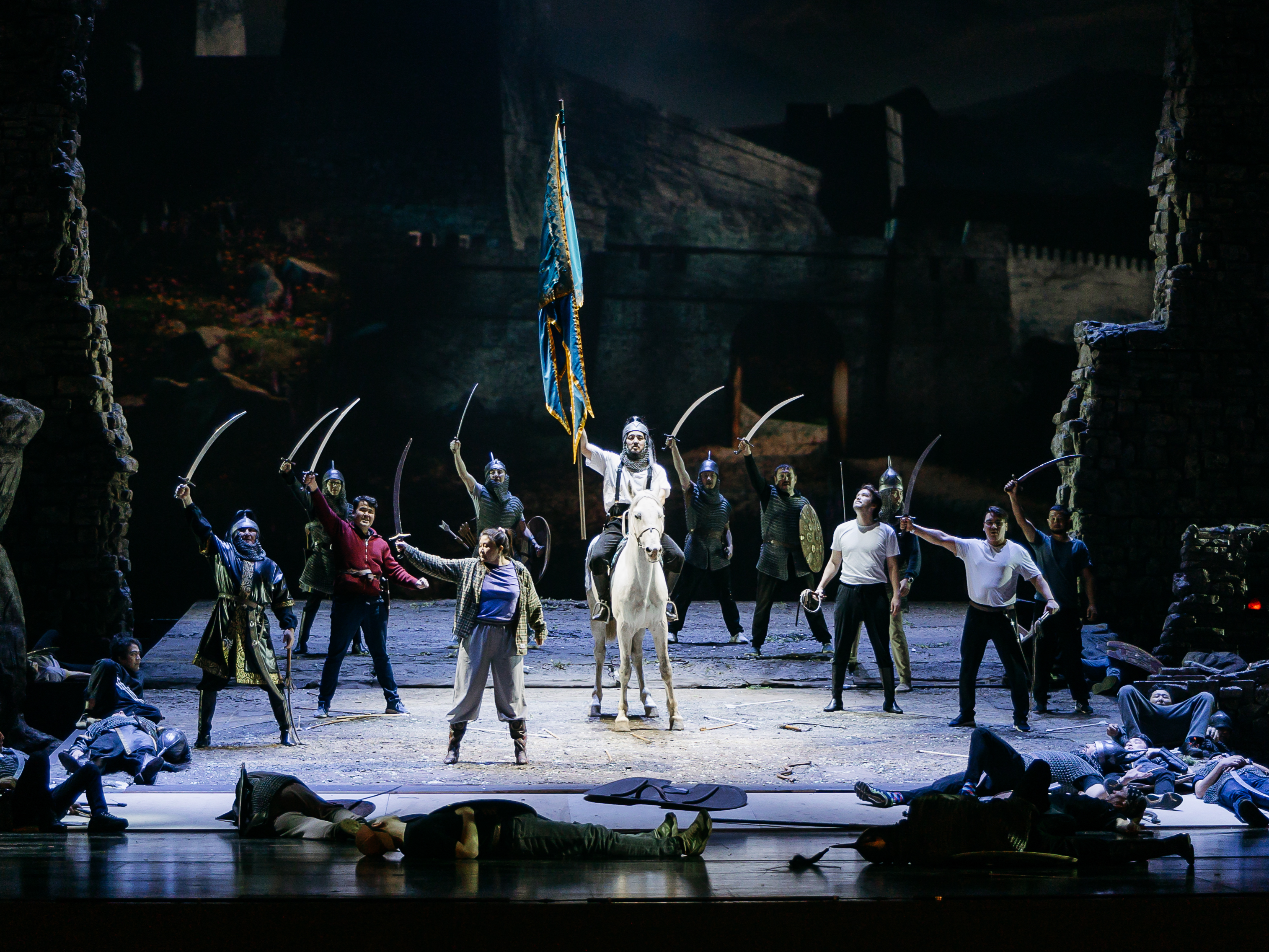
There are stories that cannot be told simply as a love story. They contain too much memory, pain, war, betrayal, and hope. It is to such material that the new opera "Appak – Daughter of Kypshak", premiering on May 21 and 22 at the Astana Opera stage, turns.
The production will be presented on the Day of Workers of Culture and Art. It is timed to coincide with the 35th anniversary of Kazakhstan's Independence and is implemented with the support of the Ministry of Culture and Information of the Republic of Kazakhstan. But behind the official occasion lies not just another premiere of the theatrical season. "Appak – Daughter of Kypshak" looks like an attempt to reread history through a grand operatic form, where a woman's personal destiny becomes part of the fate of a nation.
The opera is based on Gabit Musrepov's famous drama "Appak – Daughter of Kypshak". However, the authors of the production did not follow the path of a direct stage retelling. Composers Serikzhan and Alibi Abdinurov, librettist Tleugazy Beisembek, stage director Mikhail Pandzhavidze, and musical director Abzal Mukhitdin build a multi-layered canvas where an intimate human drama and a large-scale epic history coexist.
One line leads the viewer to Nizami Ganjavi – the great Azerbaijani poet, into whose life enters the captive Kypshak beauty Appak. She is presented to him as a precious gift from the ruler of Derbent. But in this story, the gift quickly ceases to be a gift. Appak becomes destiny, a trial, an inner light, and the very muse through whom the poet connects with another culture, another pain, and another truth.
The second line reveals the world of war. Here there are intrigues, betrayal, a struggle for power, and a vicious circle of violence in which one enmity inevitably gives birth to the next. But the main thing in the new opera is not the clash of forces itself, but how Appak's personal story gradually grows into a national tragedy. Her memory of her native steppe, her connection with her ancestors, and her inner wisdom become not weakness, but strength, capable of stopping destruction.
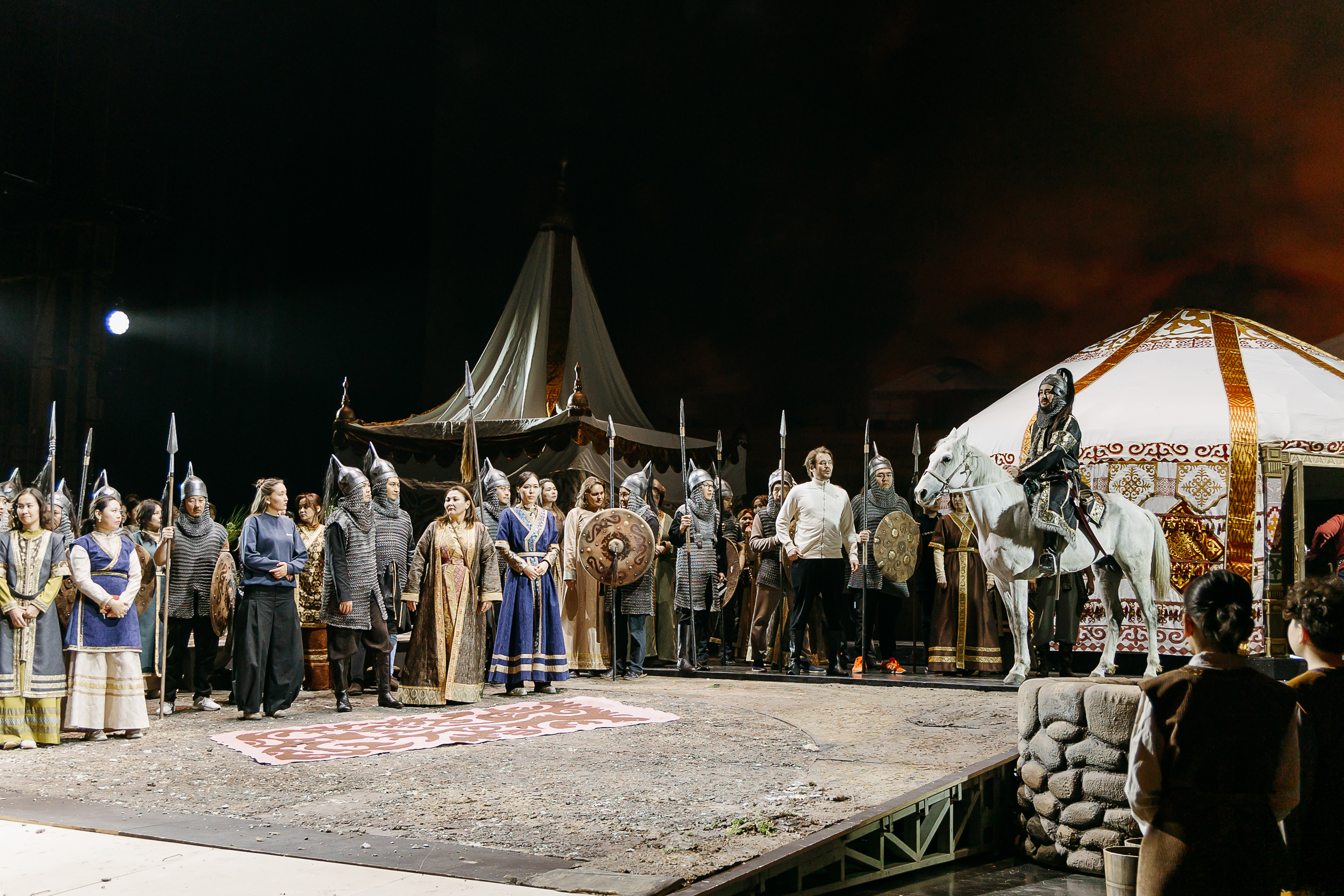
That is why the image of Appak in the production is not reduced to the usual theatrical symbol of beauty or suffering. She is not just a captive, not just a muse, and not just the heroine of a love line. In her, fragility and firmness, pain and dignity, personal feeling and responsibility to her people are combined. The production team, led by Mikhail Pandzhavidze, Laureate of the State Prize of the Republic of Tatarstan, deliberately moves away from straightforward characters. There are no ceremonial portraits here. There are people faced with a choice.
For Honored Workers of Kazakhstan Serikzhan and Alibi Abdinurov, this opera was their first experience working with a large operatic form. And in this, too, lies a special intrigue of the premiere: new music must pass its main exam not on paper, but on stage, in the living breath of the orchestra, choir, soloists, and audience.
The musical scale of the production is set by the Astana Opera team. The musical director is People's Artist of Kazakhstan Abzal Mukhitdin. At the conductor's stand of the symphony orchestra is the conductor-director, Honored Worker of Kazakhstan Yerbolat Akhmedyarov. An assistant, holder of the "Qurmet" order, Rustem Baimurzin, also works with the orchestra.
The choir plays a special role in the performance. Under the direction of Honored Worker of Kazakhstan Yerzhan Dautov and choirmasters Damir Musin and Yerzhan Sansyzbayev, it becomes not just a musical background, but part of the dramaturgy. In such a story, the choir enters as the voice of time, of the people, of memory. The children's choir under the direction of Aliya Akhmetova and Sholpan Akhmedzhanova will add a different emotional nuance to the performance – purity, tenderness, and a sense of the future, for the sake of which, perhaps, it is necessary to stop the war.
No less important is the visual world of the opera. Honored Workers of Kazakhstan, artists Saniya Tasmagambetova and Pavel Dragunov create sets and costumes that should not function as mere stage decoration, but as a continuation of the story itself. In a performance where the steppe, the palace world, memory, and war collide, the visual aspect becomes one of the languages of narration. Viktor Karare is responsible for the technical integrity of the project, whose task is to combine music, light, scenography, movement, choir, and orchestra into a single stage breath.
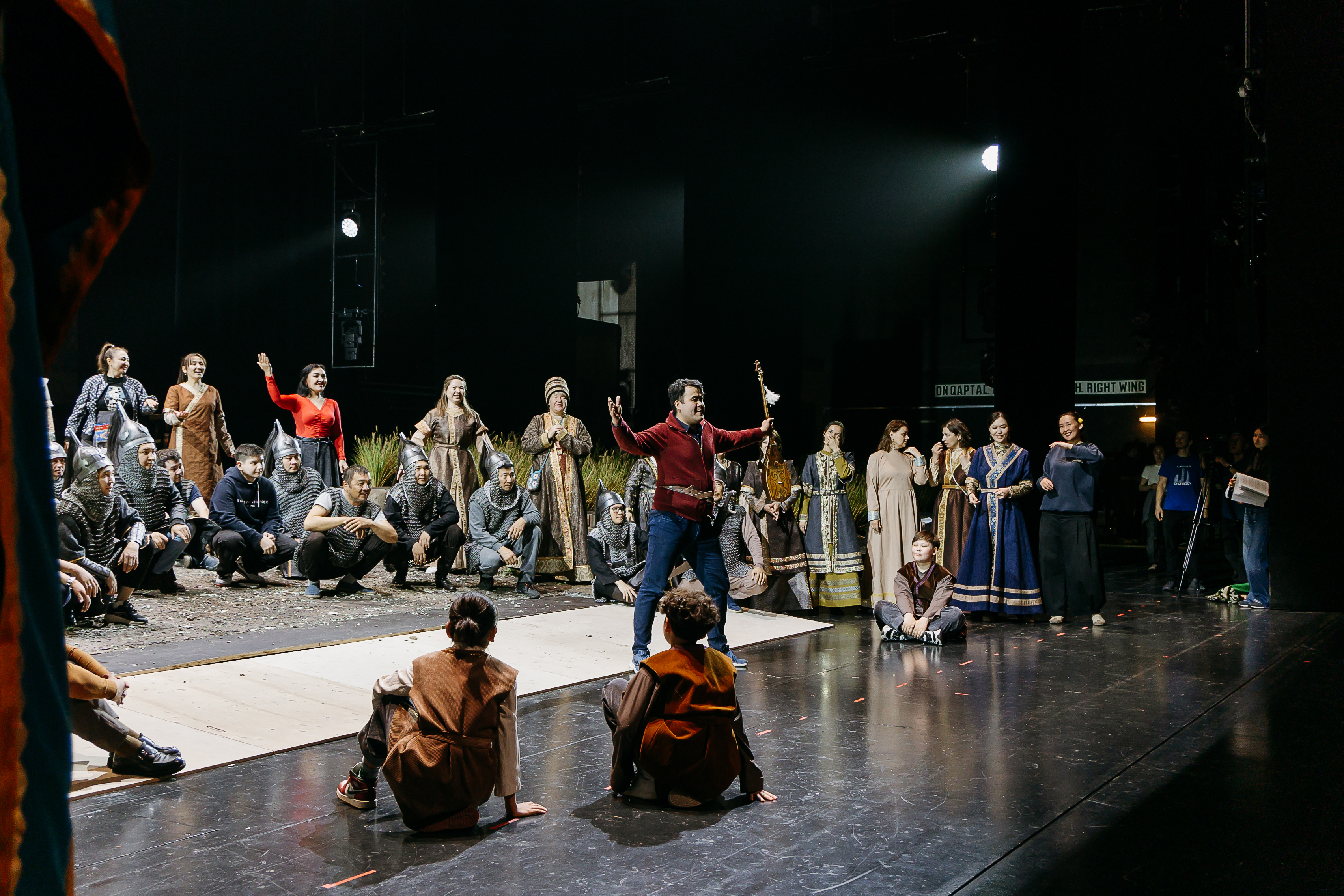
Currently, behind the scenes of Astana Opera, the part of the work that the audience usually does not see is taking place: fittings, run-throughs, rehearsals with the orchestra, refinement of staging, technical solutions. But it is in this backstage concentration that a performance of nine scenes is gradually born – one of the most complex productions in the theater's repertoire.
The role of Appak will be performed by Honored Worker of Kazakhstan Bibigul Zhanuzak, Nazym Sagintai, and Ulpan Aubakirova. The role of Nizami will be performed by Honored Worker of Kazakhstan Zhan Tapin, Ramzat Balakishiev, Talgat Allabirinov, and Sayan Isin. The production also features Talgat Galeev, Rasul Zharmagambetov, and Dinmukhamed Koshkinbaev, Sargis Bazhbeuk-Melikyan and Honored Worker of Kazakhstan Evgeniy Chaynikov, Honored Worker of Kazakhstan Tatyana Vitsinskaya, Saltanat Muratbekova, Gulzhanat Sapakova, Honored Workers of Kazakhstan Talgat Musabaev and Zhanat Shybykbaev.
However, the complexity of this performance should remain behind the scenes. What is more important for the audience is to feel a story where war clashes with wisdom, power with human dignity, and love ceases to be merely a personal feeling and becomes a path to peace.
"Appak – Daughter of Kypshak" refers to the past, but it does not sound like a museum reconstruction. This is a story about how memory can be stronger than violence, and the voice of one woman louder than the noise of war. That is why Nizami's steppe muse in the new opera appears not only as an image of inspiration but also as a symbol of inner freedom that cannot be given, taken away, or imprisoned.
The premiere of the opera "Appak – Daughter of Kypshak" will take place on May 21 and 22 at the Astana Opera stage. Performances begin at 19:00.