Zhumat Shanin: the man who became the support of professional Kazakh theater
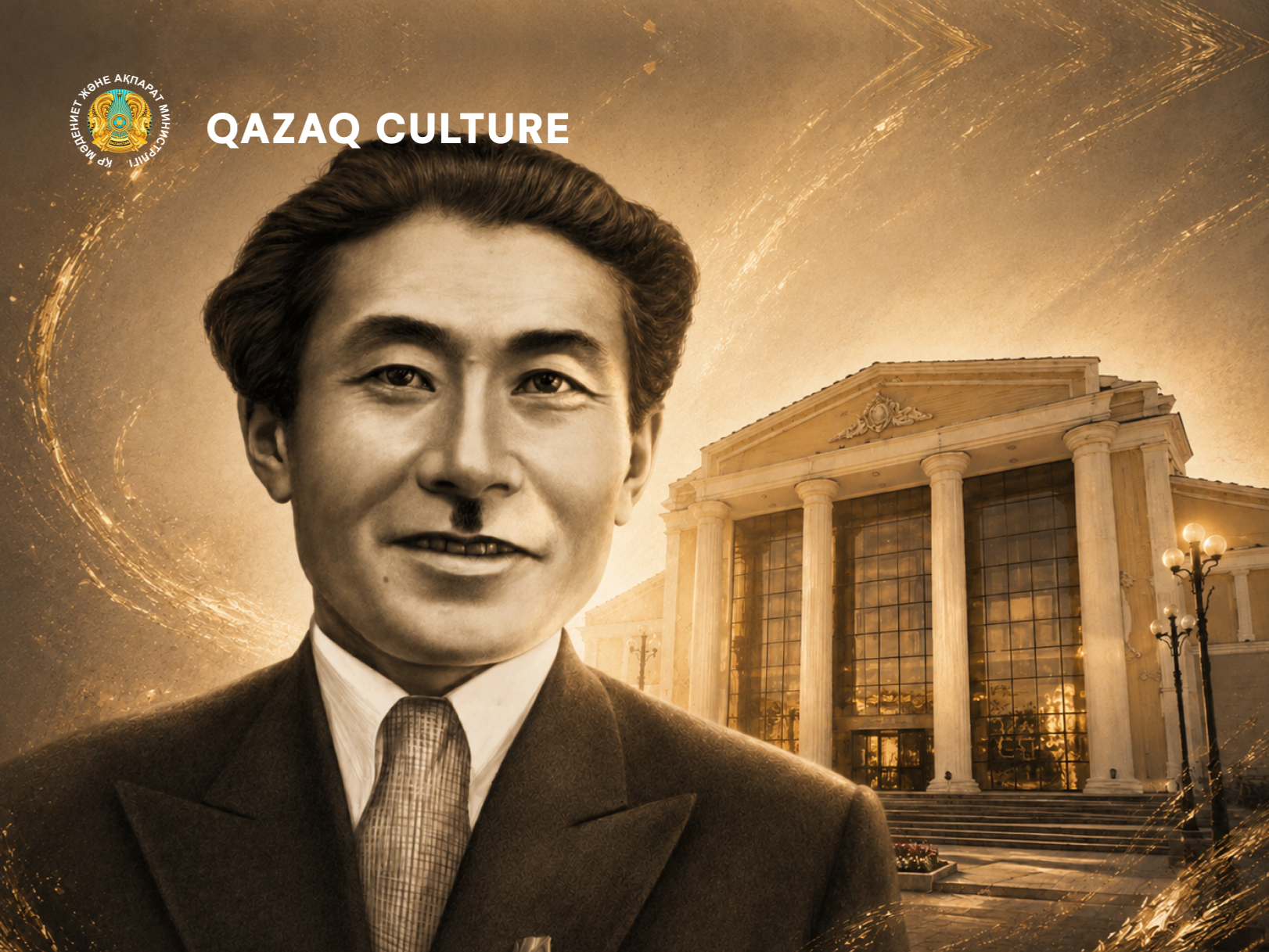
The history of professional Kazakh theater is impossible to imagine without the name Zhumat Shanin. It was he who had to live and work in an era when the national stage was just beginning to find its own voice. At that time, there was no established theatrical school, no stable repertoire or professional directing, and the very word "theater" remained a new phenomenon for many Kazakhstanis. In these circumstances, Shanin managed to do what few succeed in: not just create performances, but lay the foundation for an entire direction of national art.
The first professional Kazakh director, playwright, actor, teacher, and organizer of theatrical affairs, he managed to combine the richness of folk culture with the modern artistic searches of his time. His activity became the basis for the formation of the national directorial school, and many principles formulated almost a hundred years ago remain relevant today.
Zhumat Shanin belonged to a generation of people who created Kazakh culture almost from scratch. For him, theater was never just a place of entertainment. He saw it as a space where national self-awareness is born, historical memory is preserved, and the cultural identity of the people is formed.
Zhumat Shanin's path into theatrical art began in the early 1920s – a period of profound social transformations. At this time, education, literature, and culture were actively developing in Kazakhstan, and with them arose the need to create its own professional theater.
One of the first significant pages of his creative biography was his work in Semey. In 1920, he headed the theater troupe "Es-aimak", where he began his directing career. It was here that the plays "Arkalyk Batyr", created based on folk epic, and Saken Seifullin's play "Red Falcons" were staged. In these productions, Shanin acted not only as a director but also as an actor, playing the roles of Arkalyk Batyr and Erkebulan.
Even then, one of the main features of his work became apparent. He saw in folk epic, oral tradition, and folklore not museum relics of the past, but living artistic material capable of speaking to the audience in modern theatrical language. Concurrently, Zhumat Shanin was engaged in dramaturgy. His one-act comedy "Torsykbay" was published in 1925 in the magazine "Taң", becoming one of the young author's first works.
The year 1926 became truly historical for national theater. On January 13, the Kazakh State Drama Theater opened in Kyzylorda – an event considered the beginning of the history of professional Kazakh theater. Among the first productions were Koshke Kemengheruly's play "Altyn Sakina" and fragments of Mukhtar Auezov's famous tragedy "Enlik – Kebek".
Zhumat Shanin was among the first directors of the new theater. Together with Serke Kozhamkulov, Kalibek Kuanyshbayev, and other outstanding figures of art, he stood at the origins of the formation of the national theatrical school. Already in October 1926, Shanin was appointed director and artistic director of the theater.
This position required much more than just staging plays. The young collective needed to create a repertoire, train actors in stagecraft, organize tours, form artistic principles of work, and cultivate its own audience. In fact, Zhumat Shanin had to simultaneously be a director, artistic director, teacher, administrator, and strategist for the development of the theater.
The peculiarity of his directorial style lay in his ability to combine national tradition with the achievements of the European theatrical school. He carefully preserved the artistic power of Kazakh folklore, but at the same time introduced modern directorial techniques, paying great attention to scenography, lighting solutions, costumes, and the overall composition of the performances. It was thanks to this approach that the Kazakh theater gradually reached a new professional level.
In 1927, Zhumat Shanin led a delegation of Kazakh artists who went to Moscow to participate in an ethnographic concert. The performance was a great success and allowed a wide audience to get acquainted with Kazakh art. This trip also played an important role in the future fate of the outstanding singer Amre Kashaubayev, who soon had the opportunity to perform on stage in Paris.
However, Shanin's contribution cannot be measured only by the number of plays staged. He perfectly understood that theater cannot develop without a professional environment. That is why he paid great attention to educating young actors. Many representatives of the first generation of professional artists considered him their mentor. He taught not only stagecraft but also an attitude towards the profession, discipline, and responsibility to the audience.
An equally important part of his activity was his work on the development of theatrical art itself. Zhumat Shanin regularly published articles on repertoire policy, stage technique, acting skills, and artistic truth. Among the most famous are "Kazakh State Theater", "Artists of the State Theater", "From the History of Theater", "Mastering Stage Technique" and "Achieving Truth on Stage". These publications became a kind of program for the development of national theater and largely determined its further professional становление.
Zhumat Shanin's significant contribution received state recognition. In 1931, he became one of the first recipients of the honorary title "People's Artist of the Kazakh SSR". Yelubay Umurzakov was also awarded this high title. It is symbolic that these were the first people in the history of national theater to be honored by the state with such a high award.
In the early 1930s, Shanin's activities extended far beyond Kazakhstan. In 1932–1933, he worked as the chief director of the Kyrgyz State Drama Theater, continuing to develop professional theatrical art in the neighboring republic.
In 1934, Zhumat Shanin participated in the creation of a musical theater, which would later become the Kazakh State Academic Opera and Ballet Theater. Together with Kurmanbek Zhandarbekov, he staged Yevgeny Brusilovsky's first national operas — "Zhalbyr", "Kyz Zhibek", and "Er Targyn". These productions became an important page not only in the history of theater but also of all Kazakh musical art.
Zhumat Shanin's biography also contains one of the most tragic episodes, which still remains a symbol of his selfless service to culture.
In 1936, together with his wife Zhanbike Shanina, he went to Moscow to participate in the Decade of Kazakh Literature and Art. During the trip, their little son Ayan unexpectedly died. The couple faced a difficult choice. Relatives urged them to withdraw from the cultural program and return home.
But Zhumat Shanin made a different decision. He uttered the words that later became famous: "The child cannot be brought back. He is ours. But Kazakh art must live."
After burying their son in a Muslim cemetery in Moscow, the couple remained part of the delegation. The operas "Zhalbyr" and "Kyz Zhibek", staged by Zhumat Shanin, were presented on stage. Zhanbike Shanina's performance as Kamka made a particularly strong impression on the Moscow audience. The actress's personal tragedy gave her character such emotional depth that viewers perceived what was happening on stage as a genuine human confession.
This story became not only a testament to the personal courage of the Shanin family but also an example of the importance the generation of the first figures of Kazakh culture attached to their work. For them, art was not a profession, but a service, to which they remained faithful even in the most difficult moments of their lives.
Today, the name of Zhumat Shanin is firmly inscribed in the history of national culture. The Academic Kazakh Drama Theater in Shymkent, as well as schools and streets in various cities of Kazakhstan, are named after him.
However, the main monument to the outstanding director is not buildings and memorial plaques. His true legacy is the professional Kazakh theater, which grew out of the first bold productions, creative searches, and many years of labor of an entire generation of enthusiasts. Among them, Zhumat Shanin occupies a special place.
He not only stood at the origins of the national stage. He helped it find its own language, professional principles, and artistic power. That is why, almost a century later, the name of Zhumat Shanin remains a symbol of the birth of professional Kazakh theater and a man without whom the history of national performing arts is impossible to imagine.