Music of Light Sadness: One Evening to Stop and Hear Yourself
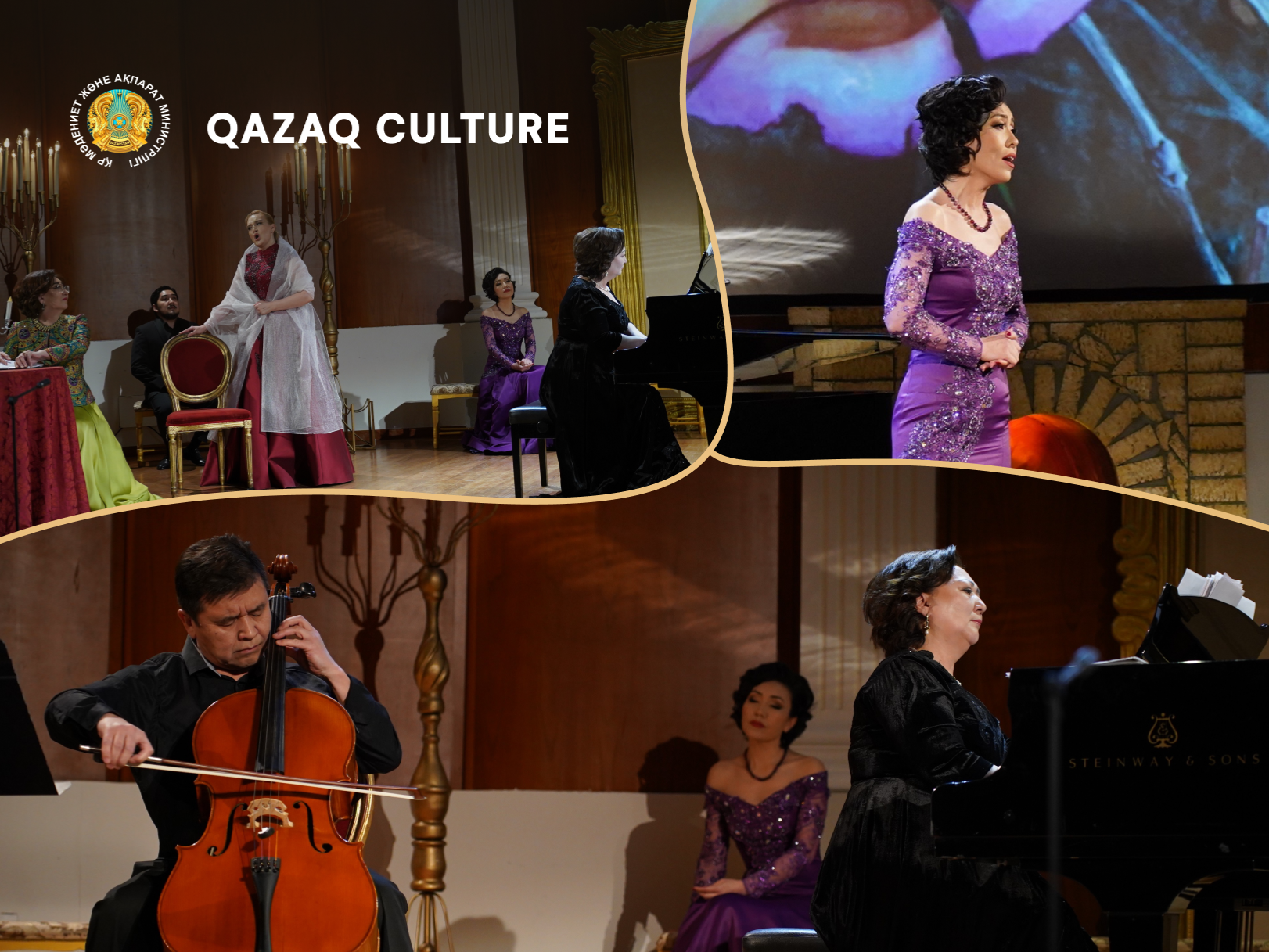
There is music that demands the listener's attention. And then there is music that initially demands silence.
Elegy belongs to precisely these genres. It lacks tragic anguish, but conveys a sense of something lost, memories of encounters, a subtle sadness, and that rare inner state when you want to slow down, even if only for a moment.
On October 14, this mood will form the basis of a chamber evening at the Astana Opera. The concert "Elegiac Mood" from the "Bel Canto Musical Salon" series returns to the Kulyash Baiseitova Chamber Hall—but not as a repeat of the previous program. Each year, its musical dramaturgy is assembled anew.
I. Pause
The author of the project, Honored Artist of Kazakhstan Raushan Beskembirova, defines elegy very precisely—as "a lyrical reflection with a touch of melancholy."
"It's sentimental melancholy, but without tragedy, precisely that state of mind when you want to stop and listen to yourself," she says.
Perhaps this is why this kind of music sounds so natural in the fall. There's no need to tell a single story from beginning to end. Instead, a plot emerges, conveyed by voice, violin, cello, flute, double bass, and piano.
At the same time, "Elegiac Mood" doesn't exist as a program found only once. According to Beskemblirova, the instrumental pieces are never repeated at these evenings, and the vocal sections are constantly updated. Therefore, the tradition retains a recognizable mood, but each time receives new musical content.
II. First Performance
The main discovery of this evening will be music the audience has never heard on stage before.
The first performance will be of "Kazakh Adagio" by composer Alibi Abdinurov, a work for flute and piano. The flute part will be performed by Honored Artist of Kazakhstan Zhibek Sapargalieva, with Raushan Beskembirova at the piano.
The composer himself explains that the work was conceived several years ago and has been awaiting its concert premiere all this time.
"You could say it's a world premiere," notes Alibi Abdinurov.
The title is significant. In the European musical tradition, adagio denotes a slow, calm tempo, but Abdinurov decided to infuse this form with Kazakh musical material.
"I decided to write an adagio in the Kazakh style, using Kazakh elements and themes, the so-called adagio in Kazakh, which is why I called it 'Kazakhsha Adagio,'" the composer explains.
It's a curious meeting of two traditions: a form that has existed for centuries in European academic music is given a new intonational content.
Such premieres are especially important for the chamber music scene. Here, the new work appears not amidst expansive sets and grand orchestral performances, but almost face-to-face with the listener.
III. Voices of One Autumn
But the evening will not be limited to the premiere.
The program will combine works by Kazakhstani composers and European classics – romances by Pyotr Tchaikovsky, Nikolai Rimsky-Korsakov, Sergei Rachmaninoff, and music by Robert Schumann, Jules Massenet, Antonín Dvořák, and other composers.
Another new composition will be Franz Liszt's romance "Like the Spirit of Laura," based on the poem by Victor Hugo. This work will be performed for the first time in the Bel Canto cycle, performed by tenor Alikhan Zeynolla.
The vocal palette will be unusually broad: from soprano to bass, from tenor to countertenor, a rare feature in opera. The stage will feature Asem Sembina, Madina Islamova, Elena Ganzha, Leyla Alamanov, Batyrzhan Smakov, Sayan Isin, Artur Gabdiev, Alikhan Zeynolla, Narul Toikenov, Sultan Bakytzhan, Bolat Yesimkhanov, and Sargis Bazhbeuk-Melikyan.
The instrumental lineup will develop in parallel. Zhibek Kalelova will perform the violin, Daulet Shakirov the cello, and Balzhan Saparova and Zhibek Sapargalieva the flute. Anatoly Yakushkin will play a special role: the double bass, often perceived as the foundation of an orchestral sound, will be given the opportunity to speak as a solo instrument in the music of Reinhold Glière.
Between the musical numbers, another voice will appear – human speech. Poems performed by host Saule Mauletova will form part of the evening's overall dramaturgy, uniting individual works into a unified emotional space.
This is the unique feature of "Elegiac Mood." This is not a concert centered around a single composer or a single historical period. Here, works from different eras are gathered around a particular state of mind.
A bright sadness may sound different in Rachmaninoff than in Schumann. The Kazakh intonation in Abdinurov's new adagio by Alibi will be completely different from Liszt's romantic melody. The double bass will tell its story differently than the human voice.
But at some point, all these lines must converge.
And then, elegy becomes not so much a genre as an excuse to pause amidst the familiar rhythm of life and, for an hour and a half, allow the music to speak a little more quietly.
The concert "Elegiac Mood" will take place on October 14 at 7:00 PM in the Kulyash Baiseitova Chamber Hall of the Astana Opera.