Music that comes home
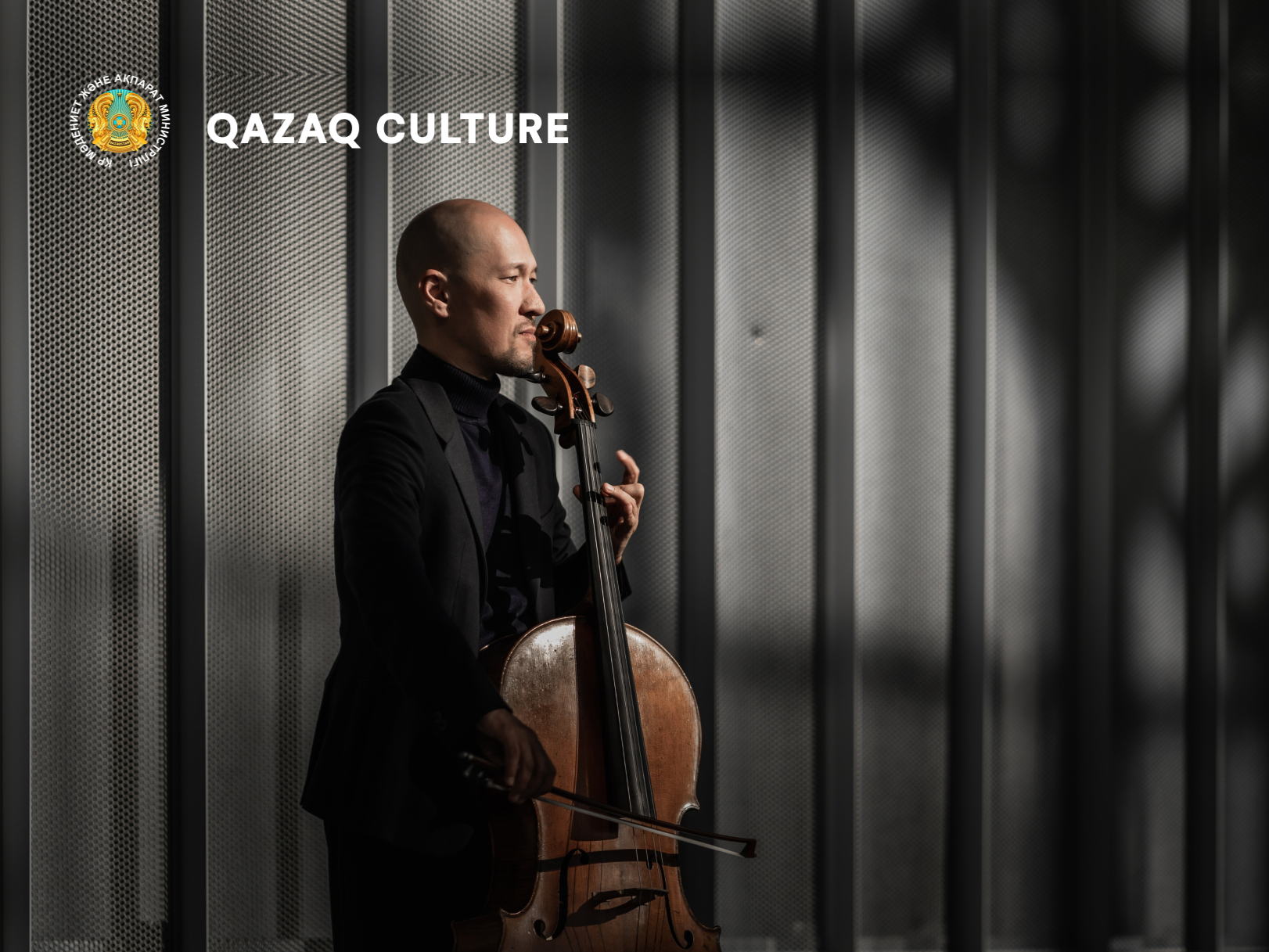
For a musician, returning to his home stage is rarely a simple concert. Over years of study, competitions, and performances abroad, his technique evolves, his repertoire expands, and his distinctive style develops. But it is at home that one can most clearly discern the artist's development and what he has brought with him from the wider musical world.
At the Operalia festival, this idea took on two distinct forms. The symphonic evening "Viva Cello" brought together a renowned master and a new generation of Kazakhstani cellists, while the concert "Piano Stories: From Chopin to Prokofiev" featured young pianists continuing their education at the Moscow Conservatory.
The star of "Viva Cello" was renowned cellist Eldar Saparayev. Today, he performs at major venues in Europe and Asia and teaches at the Academy of Music in Ljubljana, but considers supporting the Kazakh cello school an important part of his work.
Joining him on stage were his students Batyrkhan Issak and Danagul Azhikenova. Both have already made a name for themselves beyond their borders. Batyrkhan won the CellEast competition in Bucharest and was a laureate at a competition in Italy. Danagul has performed in France, Prague, and Ljubljana, performed solo with the New European String chamber orchestra, and participated in a tour with the American ensemble iPalpiti.
However, in Astana, their achievements weren't just a list of awards. It was far more important to hear how the young performers handled the music, which was being performed for the first time by a Kazakh audience.
Batyrkhan Issak presented Camille Saint-Saëns's Second Cello Concerto—a vibrant, intense work, and considerably less well-known than the composer's First. Here, the soloist barely gets a break: the music demands composure, strength, and the ability to maintain clarity even in the most intense moments.
Danagul Azhikenova performed Arthur Honegger's concerto. For Eldar Saparaev, this score evokes images of Japan. In the first movement, he hears the train moving between ancient Kyoto and modern Tokyo, with rice fields and the silhouette of Mount Fuji changing outside the window. The second movement reminds him of Kabuki theater—with its conventionality, expressive gestures, and inner drama.
Thus, a rare work becomes more than just an unknown score. It is imbued with the performer's personal associations and becomes, for the listener, a journey between European music and Japanese aesthetics.
The evening's culmination was Giovanni Sollima's Caravaggio for three cellos and orchestra. Saparaev performed it with his students.
The work is based on the story of an ancient chorale discovered by Sollima in a church in southern Italy and associated with Caravaggio's painting "The Flagellation of Christ." The composer incorporated the ancient melody into the beginning and finale of the work, transforming the central movement into a tense musical drama.
The three cellos here sound not as individual soloists, but as participants in a single action. Their voices converge, argue, overlap, and seem to extend the pictorial scene in sound. Hearing this work for the first time, the Kazakhstani audience was introduced not only to rare music but also to an unusual facet of Caravaggio's story.
The trio's very composition gave the performance a special meaning. The teacher and his students found themselves within a single score, where experience did not suppress youth, but rather helped it to blossom. Continuity here existed not as an abstract idea—it could be heard.
Another evening of the festival told the story of return through the piano. "Piano Stories" featured Bekzat Rakymov, Sanzharali Kopbayev, and Beybars Smail—Kazakh pianists studying at the Moscow State Tchaikovsky Conservatory. Their program traversed various eras and moods: from the noble sweep of Chopin's Polonaise to the almost extreme virtuosity of Brahms's Variations on a Theme of Paganini, from the oriental energy of Balakirev's "Islamey" to the unsettling rhythm of Prokofiev's Seventh Sonata.
Maurice Ravel's "Waltz" held a special place. It begins as a reminiscence of a brilliant dance, but gradually loses its balance and transforms into an unstoppable whirlwind. Beauty coexists alongside a sense of destruction, and the familiar waltz rhythm becomes increasingly tense and almost frightening.
One concert showcased the young musician before a large orchestra, another left the performer alone with the piano and his own interpretation of the classics. Together, they form a story about a new generation of Kazakhstani artists.
This is precisely why the "Concerts in the Homeland" project is important. Musicians return not for a formal report on their successes abroad, but to bring new works, performance ideas, and experience gained on the international stage.
They leave to study, compete, and find their own voice. But the true meaning of this journey is revealed most clearly at home—when the artists bring back music previously unheard here.