Asel Mekebayeva translated the atmosphere of "Dune" into the landscapes of Mangystau
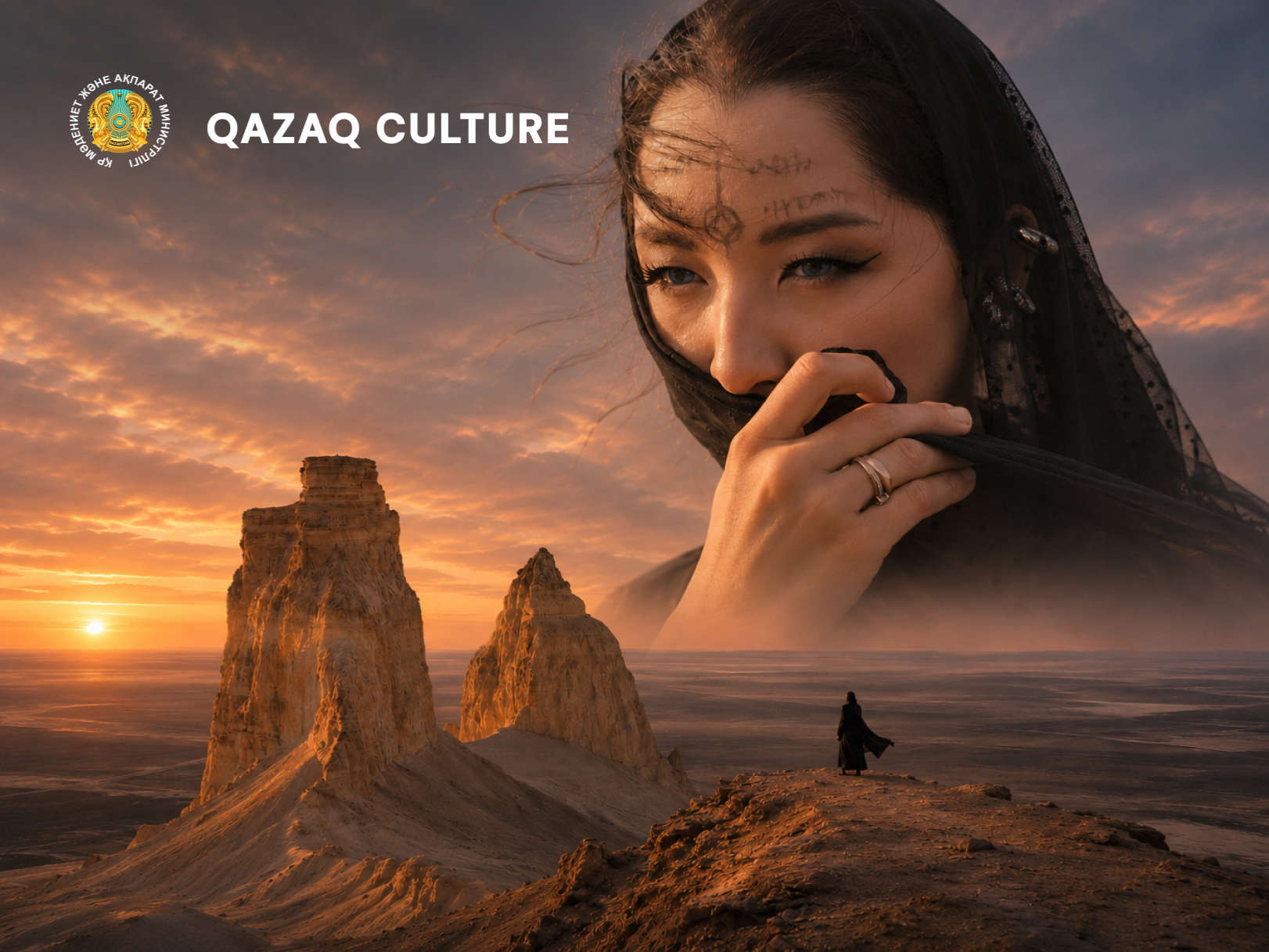
Kazakh violinist Asel Mekebayeva presented a new video project inspired by the universe of the film "Dune." Instead of computer-generated deserts and fantastical sets, the team chose the real landscapes of Mangystau—the sand dunes near the village of Senek and the Bozzhyra Canyon. These became the natural backdrop for the musical story.
One of the project's distinctive features is the complete rejection of artificial intelligence in the creation of the video. All scenes were filmed directly on location, and the team achieved the desired atmosphere through the natural landscape, lighting, costumes, and camerawork.
Mangystau proved a practically ready-made film set for this idea. The vast expanses, light-colored cliffs, desert terrain, and the bizarre shapes of Bozzhyra easily evoke associations with Arrakis, the desert planet from the world of "Dune." But for Asel Mekebayeva, it was important not only to reproduce recognizable film aesthetics. The project was also conceived as an opportunity to showcase the natural beauty of Kazakhstan through contemporary visual culture. "We chose Mangystau for a reason. Its amazing nature and almost cosmic landscapes truly create the feeling of another planet. I wanted to combine music and cinematic language and, through them, showcase the beauty of Kazakhstan. Essentially, we tried to bring together the world of 'Dune' and the natural landscape of our country in one project," the violinist explains.
Preparation took about three months. Work began in April, and by June, the creative team traveled to the Mangystau region. During one trip, the team filmed several music videos, including projects dedicated to Kazakh literature.
Working on the shoot with Asel Mekebaeva were videographer Shemshat Atanazarova, drone operator Serikbay Zhanibekov, makeup artist Aigerim Takayeva, photographer Asylbek Akzhol, and videographer/colorist Adilzhan Musapirov.
The musician's idea to focus specifically on 'Dune' came to him after watching the first two films. She was particularly impressed by Hans Zimmer's music, one of the key elements of the film franchise's atmosphere.
"The first two Dune films really impressed me. Hans Zimmer's music, the film's visual language, the scale—it all worked as a unified whole. It's rare to see films where music and imagery complement each other so perfectly. I wanted to convey this feeling through the violin," says Asel Mekebayeva.
Thus, the musical project gradually evolved into a dialogue between several dimensions. On the one hand, a fantastical universe created by literature and cinema. On the other, very real Kazakhstani landscapes, which didn't require digital sets to appear almost otherworldly.
The video work was planned to be released closer to the release of the next installment of the film franchise. For the team, this became another way to connect the local cultural project with the global cinematic context.
Bozzhyra has long been considered one of the most recognizable natural landmarks of Mangystau. However, in Asel Mekebaeva's project, it no longer functions simply as a tourist destination. The landscape becomes part of the artistic statement—almost a character in its own right in the music video.
This, perhaps, is what defines the project's main idea. Its creators weren't trying to turn Mangystau into a replica of Arrakis. On the contrary, the recognizable aesthetic of "Dune" became an opportunity to once again see how cinematic Kazakhstan's very nature can be.